"Check Before Transfer" 10 Checklist of Expenses Before Transferring a Condo: What You Need to Prepare
For first-time condominium buyers, there may be concerns and uncertainty about what expenses to prepare on the day of the condo transfer, aside from the transfer fee. Today, TerraBKK has compiled a checklist of 10 expenses to help you get ready for the transfer day.

1. Additional Expenses for Unit Area
This expense can arise in condos because many projects start selling units before construction is complete, meaning the saleable area in the quotation may not cover the usable area that could increase after the condo is finished.
You may need to prepare a little extra money, but there's no need to worry too much. According to the law, the increase or decrease in usable area must not exceed 5%. For any excess beyond 5%, the condo project owner cannot charge the buyer, and the buyer can refuse to accept the unit as it exceeds what was stated in the sale contract.
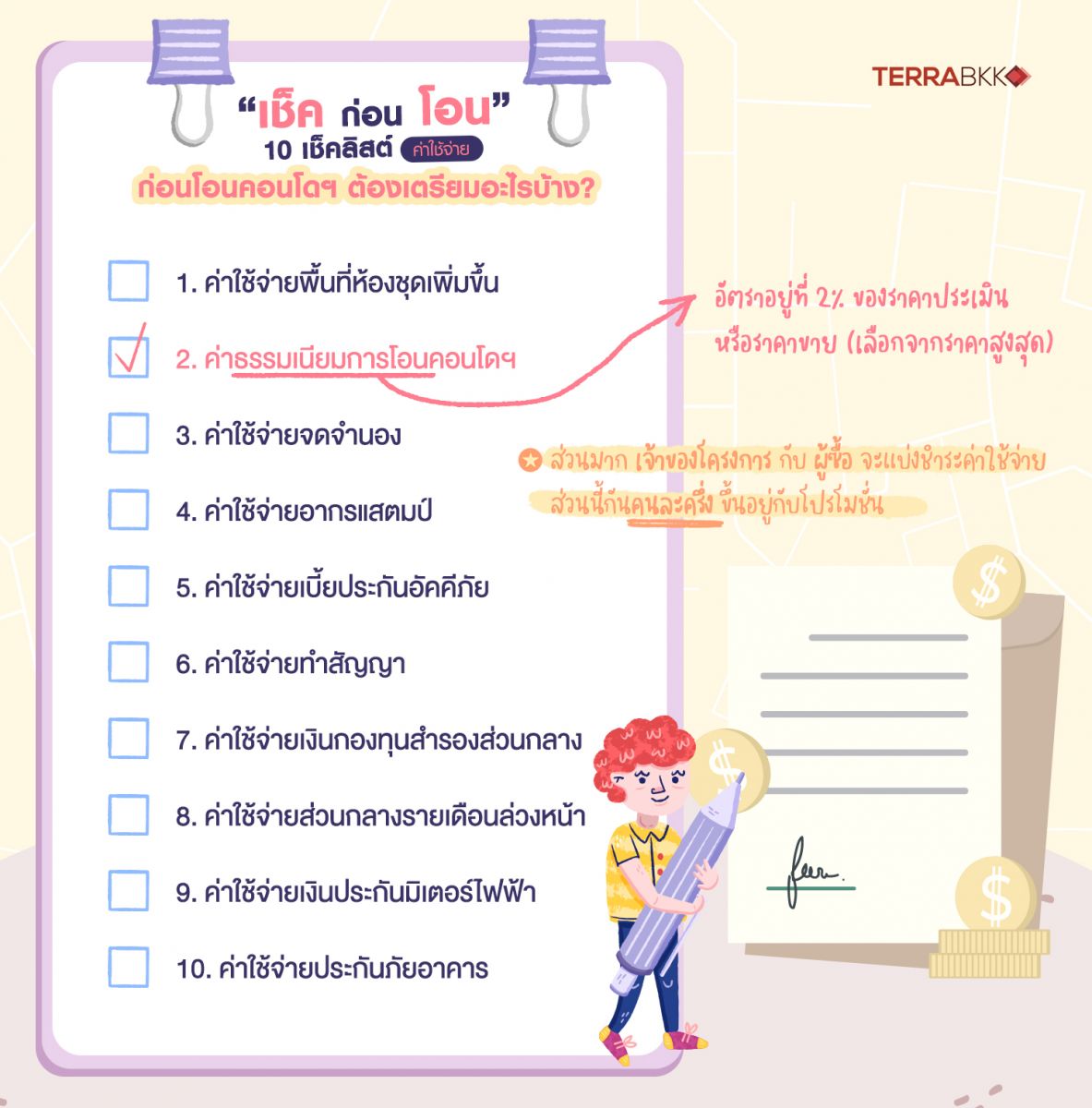
2. Transfer Fee for the Condo
The transfer fee is a major expense for buyers, set at 2% of the appraised value or sale price of the condo (whichever is higher), paid in one lump sum. Typically, the transfer fee is shared equally between the project owner and the buyer, depending on the promotions of each condo project.
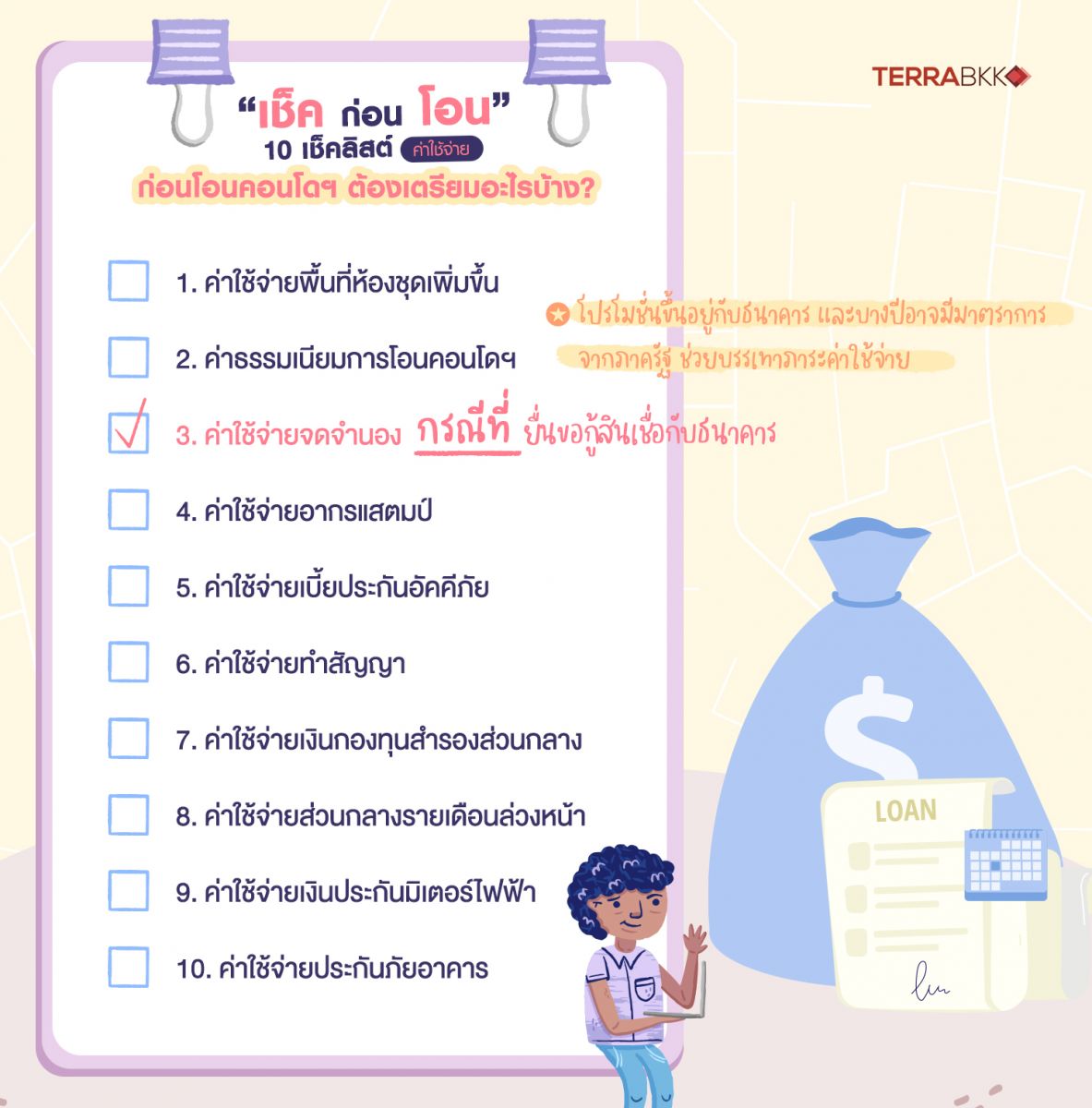
3. Mortgage Registration Fee
If you apply for a loan from the bank to purchase the condo, there will be a mortgage registration fee of 1% of the mortgaged value. This is another one-time expense on the transfer day, serving as collateral for the bank. Promotions may vary by bank, and some years the government may implement measures to alleviate the burden of transfer day expenses for buyers.
**(As of 2021, the government has a policy to reduce transfer and mortgage fees to 0.01% for new homes priced up to 3 million baht to mitigate the impact of the COVID-19 pandemic.)
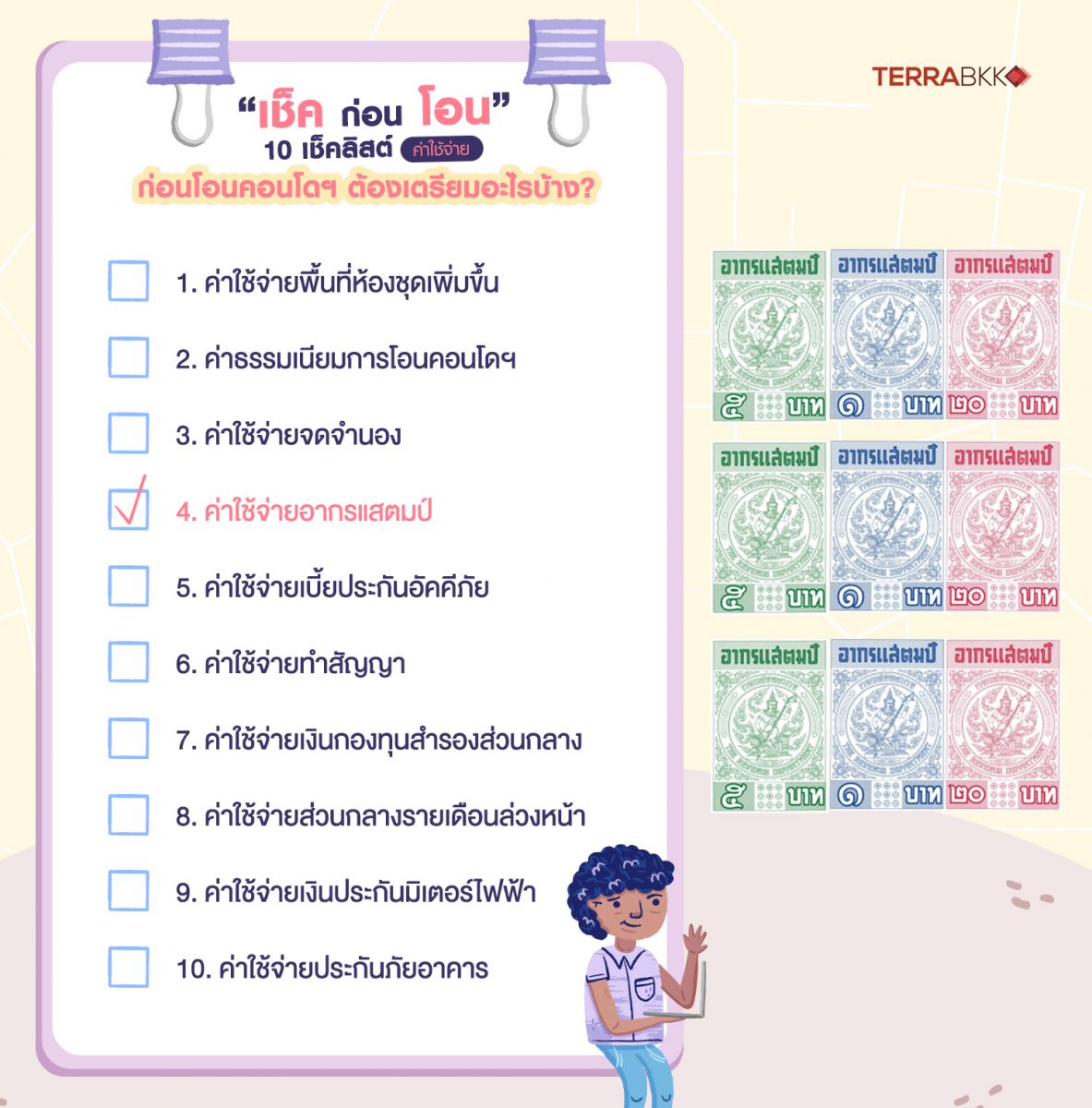
4. Stamp Duty
The stamp duty expense on the transfer day is charged by the bank to the loan applicant to pay to the Revenue Department. If no specific business tax is paid, stamp duty is charged at a rate of 0.5% of the sale price but must not be lower than the appraised value from the Land Department.

5. Fire Insurance Premium
For those who take out a loan to buy a condo, you must pay the fire insurance premium for the unit to the bank, which will be the beneficiary in case of unexpected events. This amount will be deducted from the loan. The payment conditions for this expense on the transfer day depend on how the bank chooses to collect it.
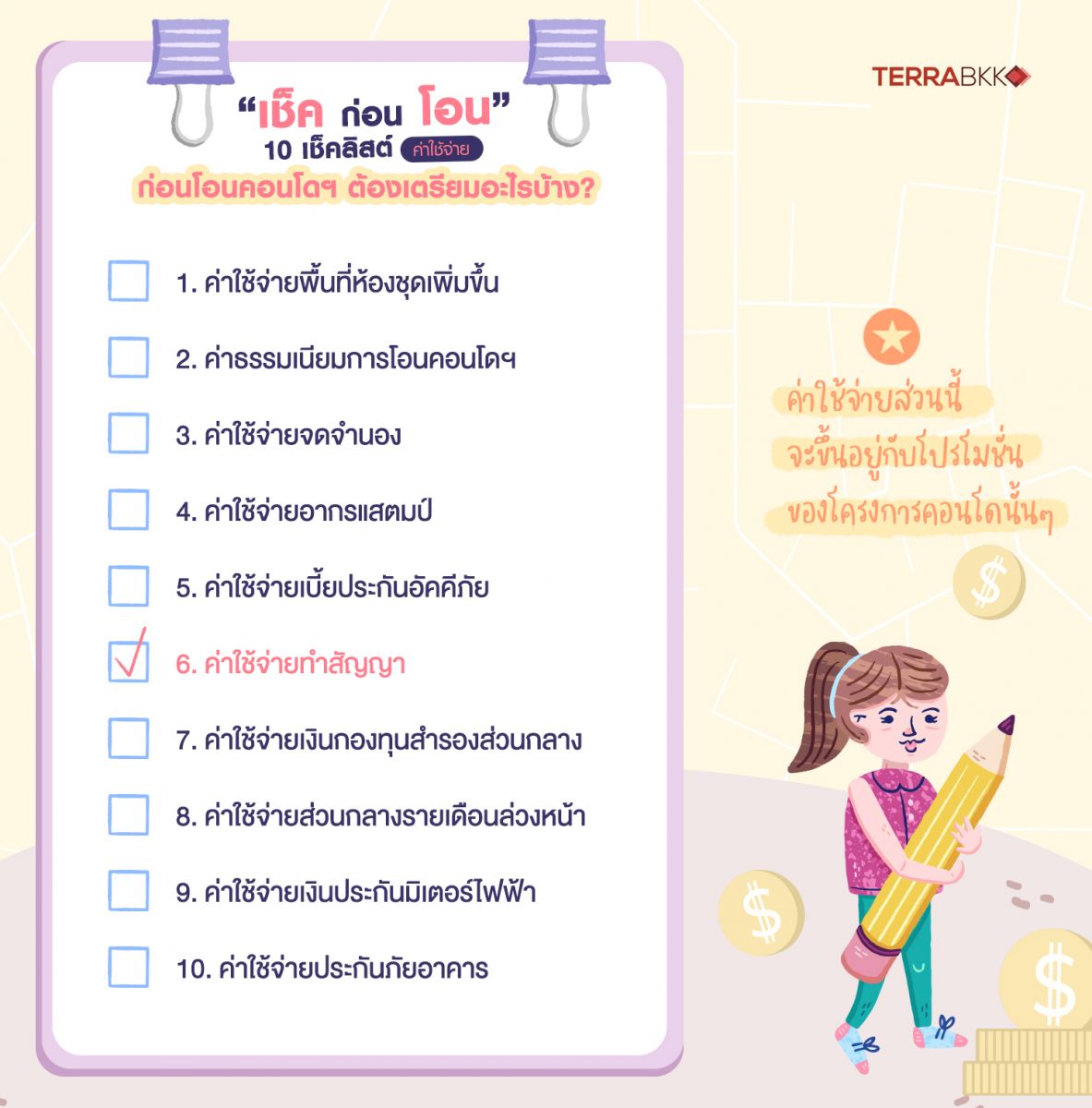
6. Contract Fee
This is usually not an expense on the transfer day, as projects typically collect this fee after booking within 7-15 days or on the transfer day, depending on the project's timeline. However, it must be paid before applying for a loan, and the amount depends on the promotions of that condo project.
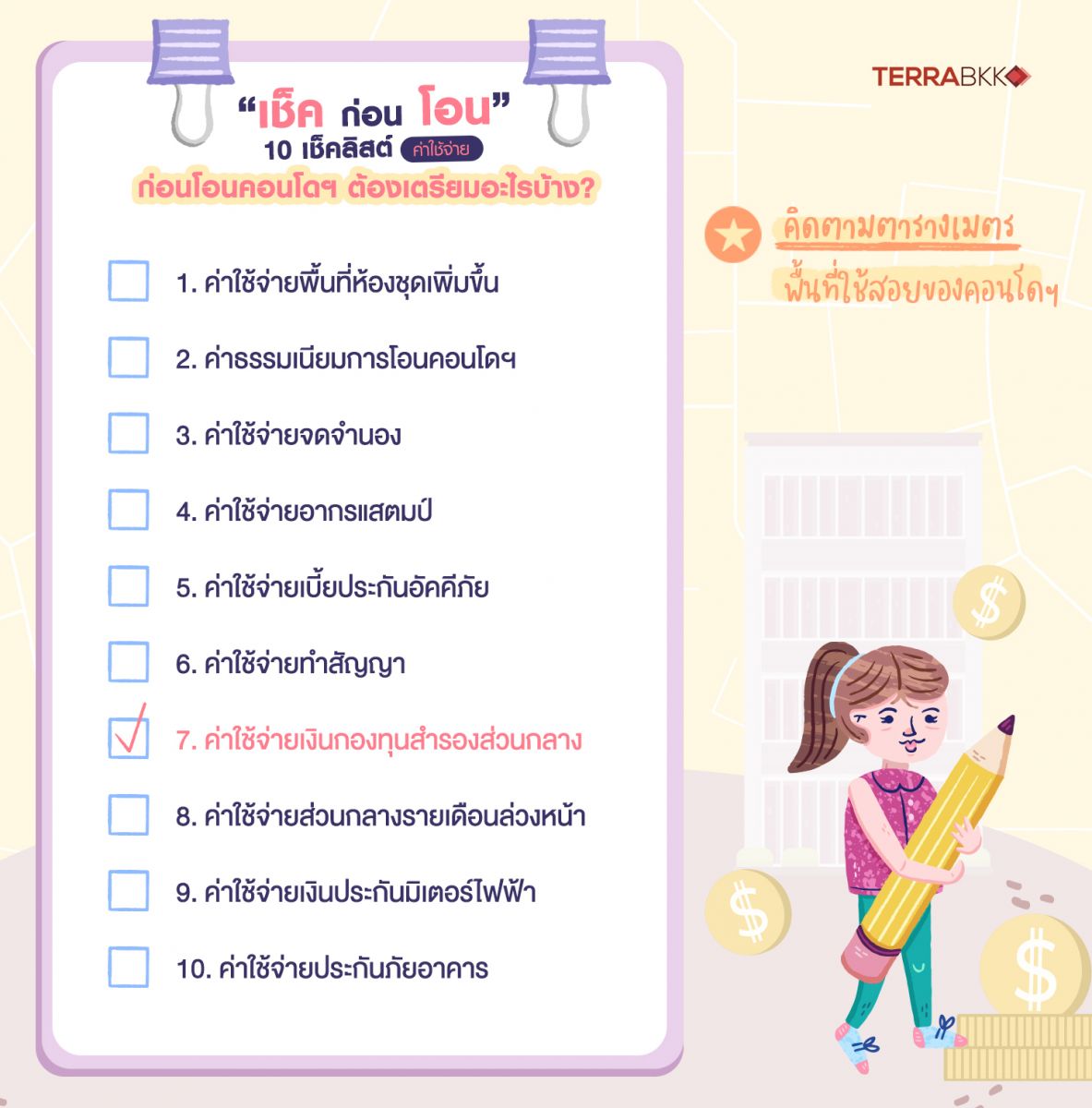
7. Common Fund Contribution
This is a one-time large payment on the transfer day, collected by the condominium juristic person from condo buyers to create a "reserve fund" for long-term management of the condo project.
It is calculated based on the square meter area of the condo, and there may be additional fundraising from residents if there are significant expenses for improvements or changes in the condo project.
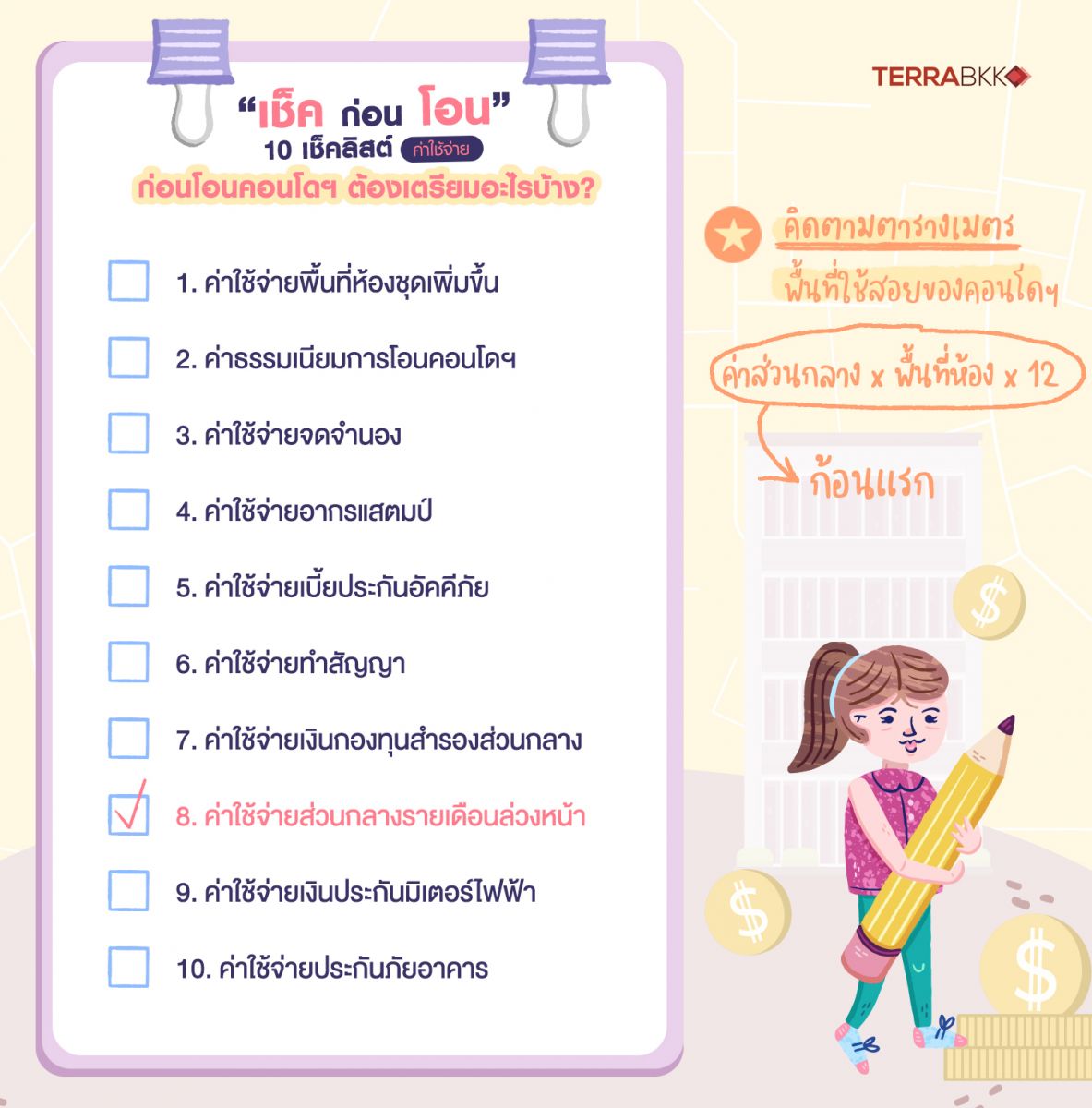
8. Advance Monthly Common Fees
This is calculated based on the square meter area of the unit and is charged monthly. The project will collect this fee in advance for 1 year or more on the transfer day, depending on the terms of the sales contract.
The project sales team must inform buyers from the start about how much the monthly common fee will be and how many years it will be collected in advance. Some projects may offer promotions for free monthly common fees under certain conditions.

9. Electrical Meter Deposit
This is a one-time payment made on the transfer day, with the amount depending on the size of the electrical meter and the project's conditions, usually not exceeding 7,000 baht.
As for the water meter deposit, condo buyers do not use water directly from the municipal supply but use water within the project itself, so there are no expenses in this regard.
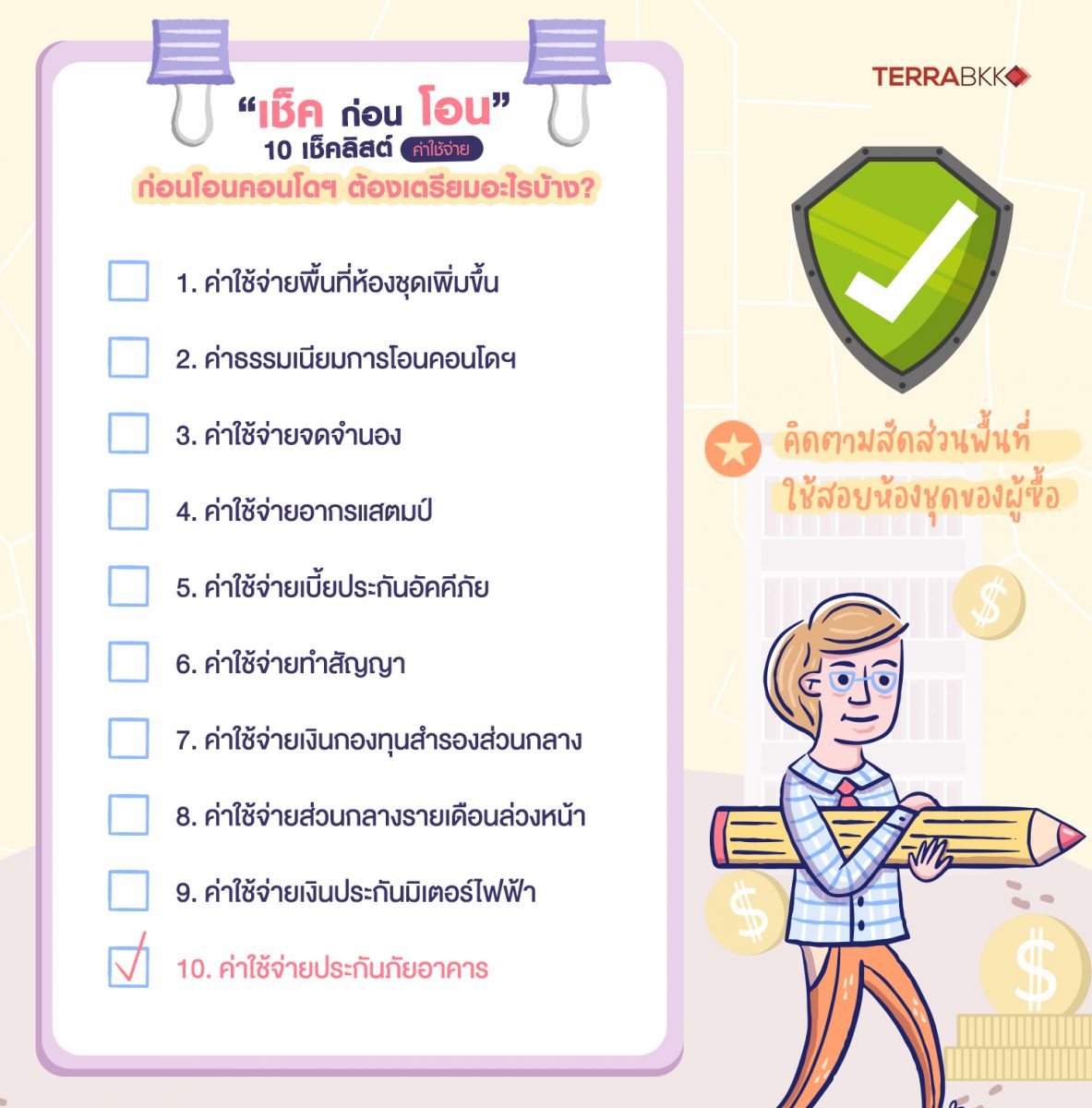
10. Building Insurance Cost
If the condominium juristic person has taken out insurance for the building and/or property damage insurance for the project, the buyer must also contribute to this insurance cost, calculated based on the proportion of the usable area of the unit. This is usually paid in one lump sum on the condo transfer day.
At this point, many may see that the 10 Checklist of Expenses Before Transferring a Condo may require a significant amount of money. However, you can alleviate your worries as many new condo projects currently offer attractive promotions, especially the promotion of “Free Transfer Day Expenses”, which can simplify the transfer process and make it easier for you to purchase and own a condo.