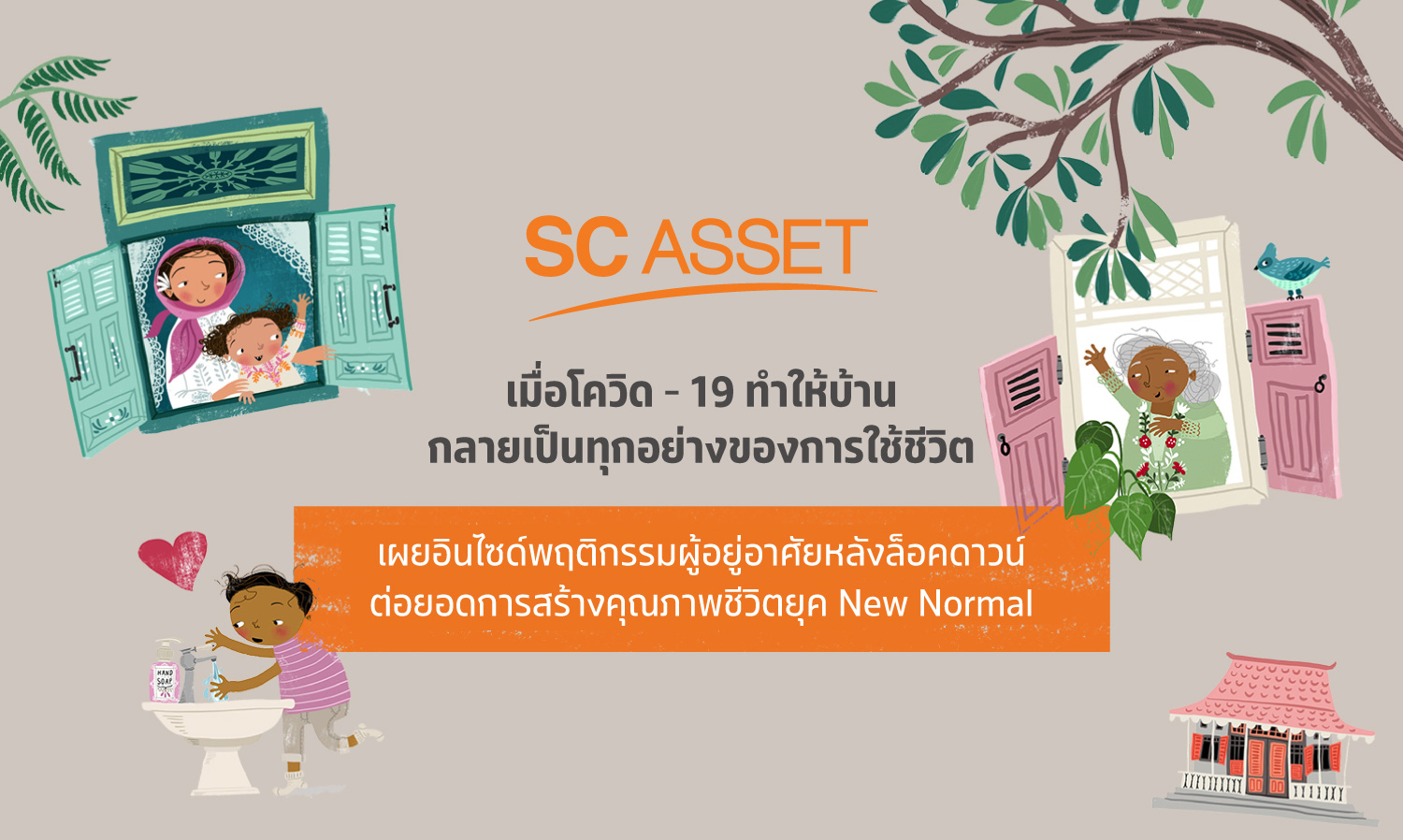
SC Asset Reveals Insights on Resident Behavior Post-Lockdown to Enhance Quality of Life in the New Normal, Shaping 'Home as Everything in Life #HomeIsEverything'
As we all know, the outbreak of COVID-19 has led to a significant revolution in various aspects, especially in perspectives and lifestyles that have suddenly transformed, particularly as people in this era have all experienced lockdown situations.
The arrival of the New Normal era has affected the demands of consumers and home buyers, who no longer consider only location, project quality, developer reputation, and price, but have delved deeper into details.

To connect with consumers and residents of the New Normal era with understanding and empathy, in order to develop better housing quality, SC Asset Corporation Public Company Limited or SC Asset, a quality real estate developer providing Living Solutions that emphasizes creating projects that are more than just housing, reaffirming its leadership in the housing sector, has conducted surveys and research on consumer behavior and attitudes towards housing post-COVID-19.
COVID-19 is over, but the New Normal will remain
This research involved both quantitative and qualitative surveys, collecting data during August 2020, divided into two survey methods.
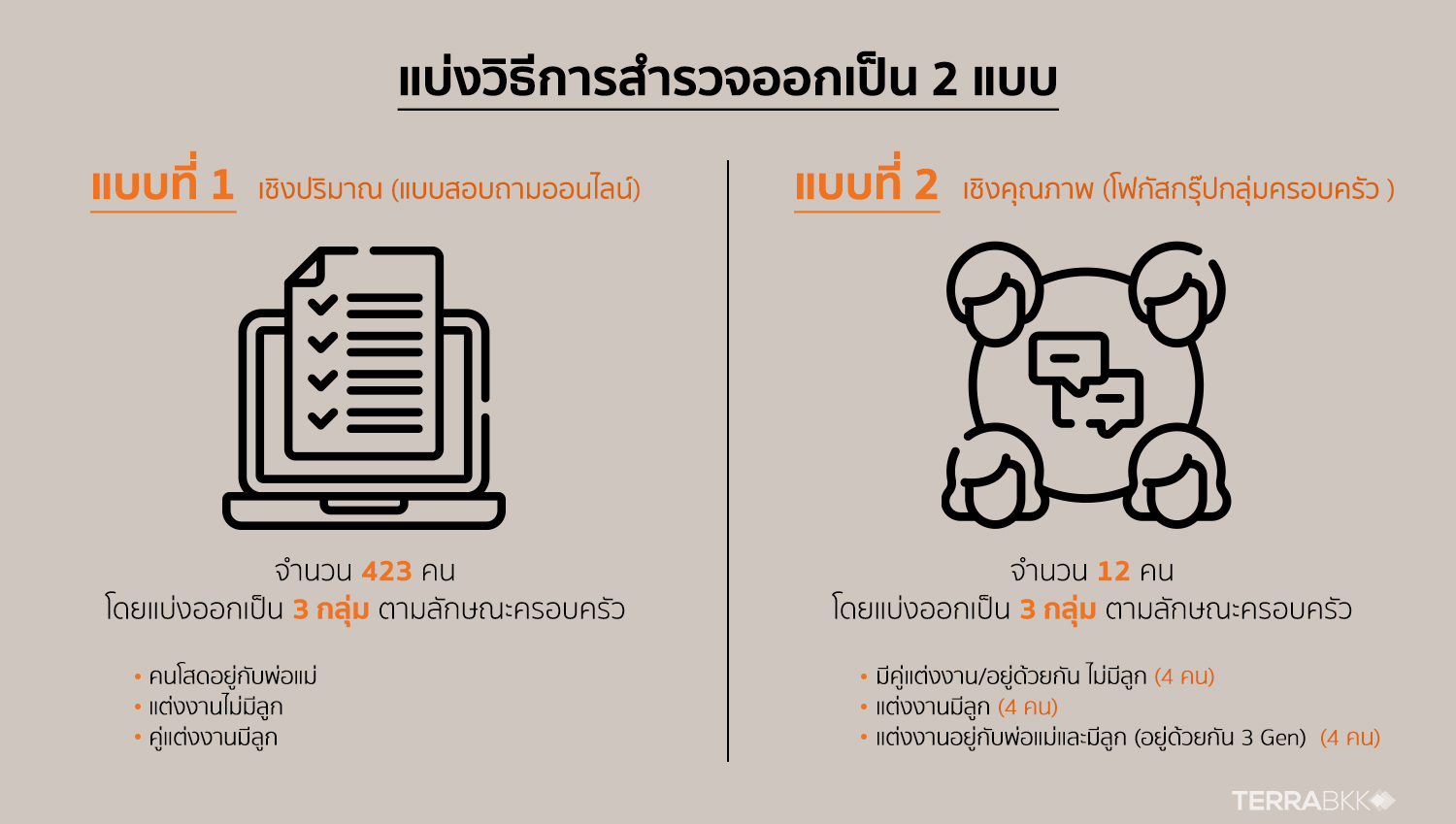
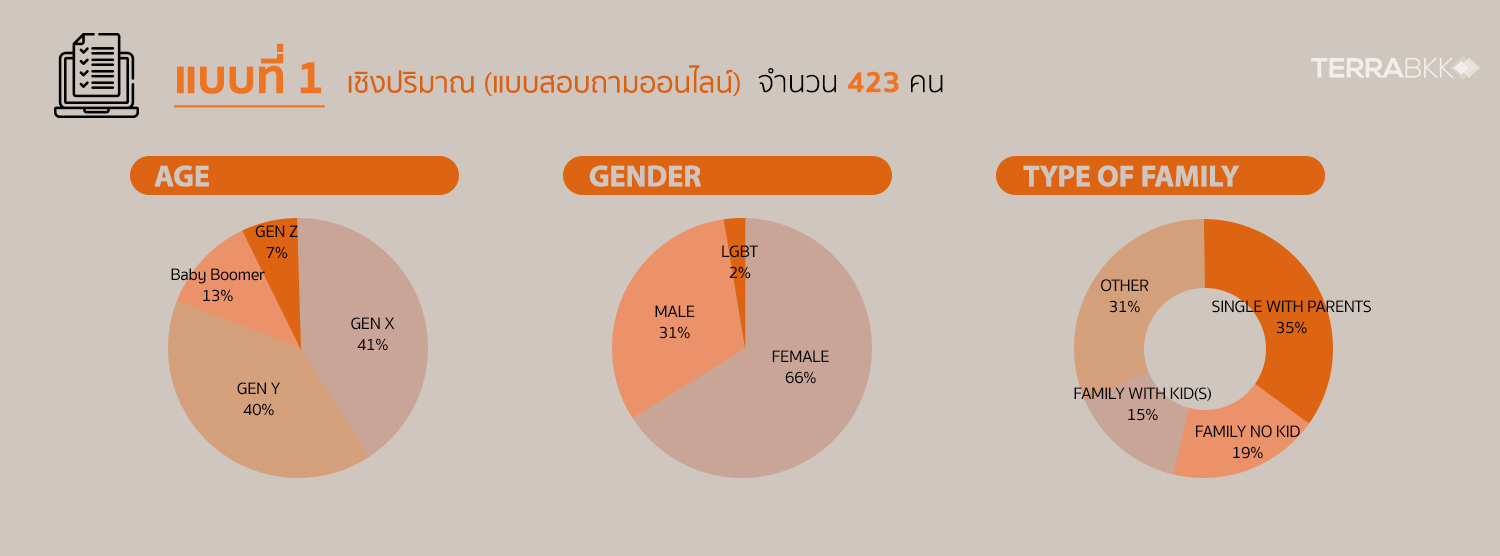
Method 1: A quantitative survey using online questionnaires, with a total of 423 respondents. Among them, 41% were Gen X (ages 40-54) and 40% were Gen Y (ages 25-39), while the remainder were Baby Boomers and Gen Z, who generally have less purchasing power. Additionally, the respondents were categorized by family type, which influenced their housing choices. Of these, 35% were singles living with parents, 19% were married couples without children, and 15% were married couples with children, with the majority being in the Middle Income bracket, earning between 25,000-50,000 THB per month.
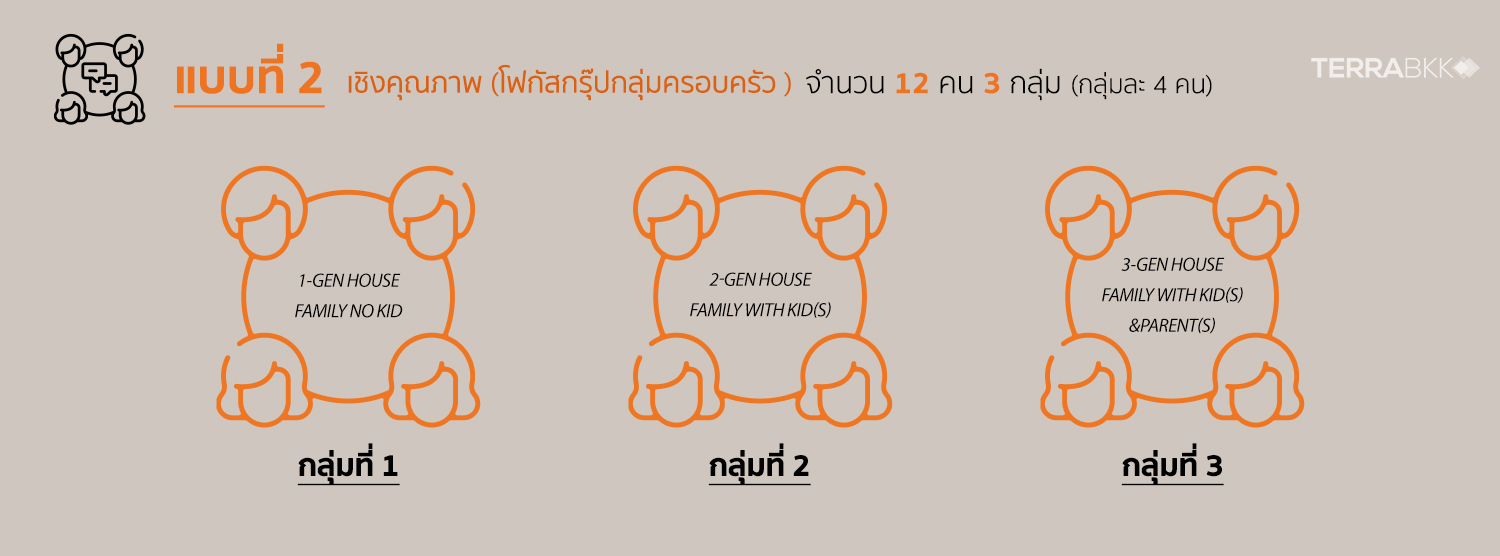
Method 2: A qualitative survey through focus groups of families, which are consumers likely to live in houses rather than condos, accommodating extended families.
The summary results from all sample groups indicate that although the COVID-19 crisis has ended, the New Normal will continue to persist among the population. Even after the lockdown, their lifestyles have not returned to how they were before.
Staying at home was the same, but the needs were different
Research Findings Method 1 can categorize consumers based on the impacts they experienced into three types. Regardless of the sample group, the primary factors they desire from their homes include needing more space, energy efficiency, openness, good ventilation, ample natural light, ease of cleaning, and well-defined areas to accommodate activities for family members and themselves, such as studying, working, and light exercising. However, the specifics vary according to lifestyle and the challenges they face, which include:
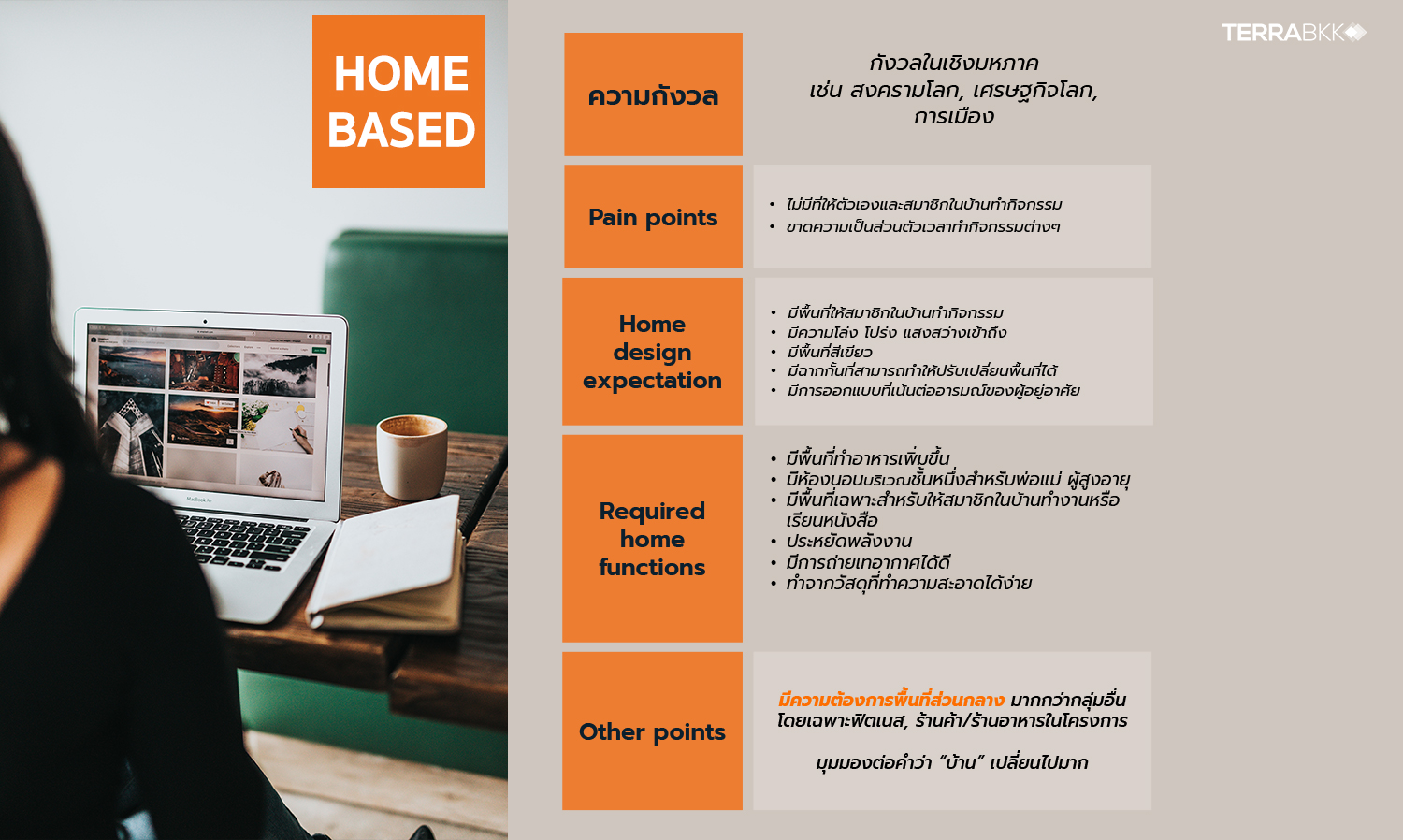
Type 1 HOME-BASED 55%: This group has increased their home-based activities, often doing things they used to do infrequently, such as online meetings, working from home, and exercising at home. However, as they engage in these activities more, their residences do not accommodate them, leading to daily challenges such as lack of personal space and privacy for various activities.
Most residents in this group are managers and mid-level executives or business owners. Their concerns regarding the COVID-19 situation are more macro, such as worries about the global economy and politics. Since they conduct all their routines at home during the lockdown, this group has developed a new perspective on the term 'home', expressing a greater need for communal spaces than other groups, especially fitness centers and shops/restaurants within the project.
Desired functions to add to homes include adaptable partitions, designs that consider residents' emotions, increased cooking space, and a first-floor bedroom for parents or elderly family members.
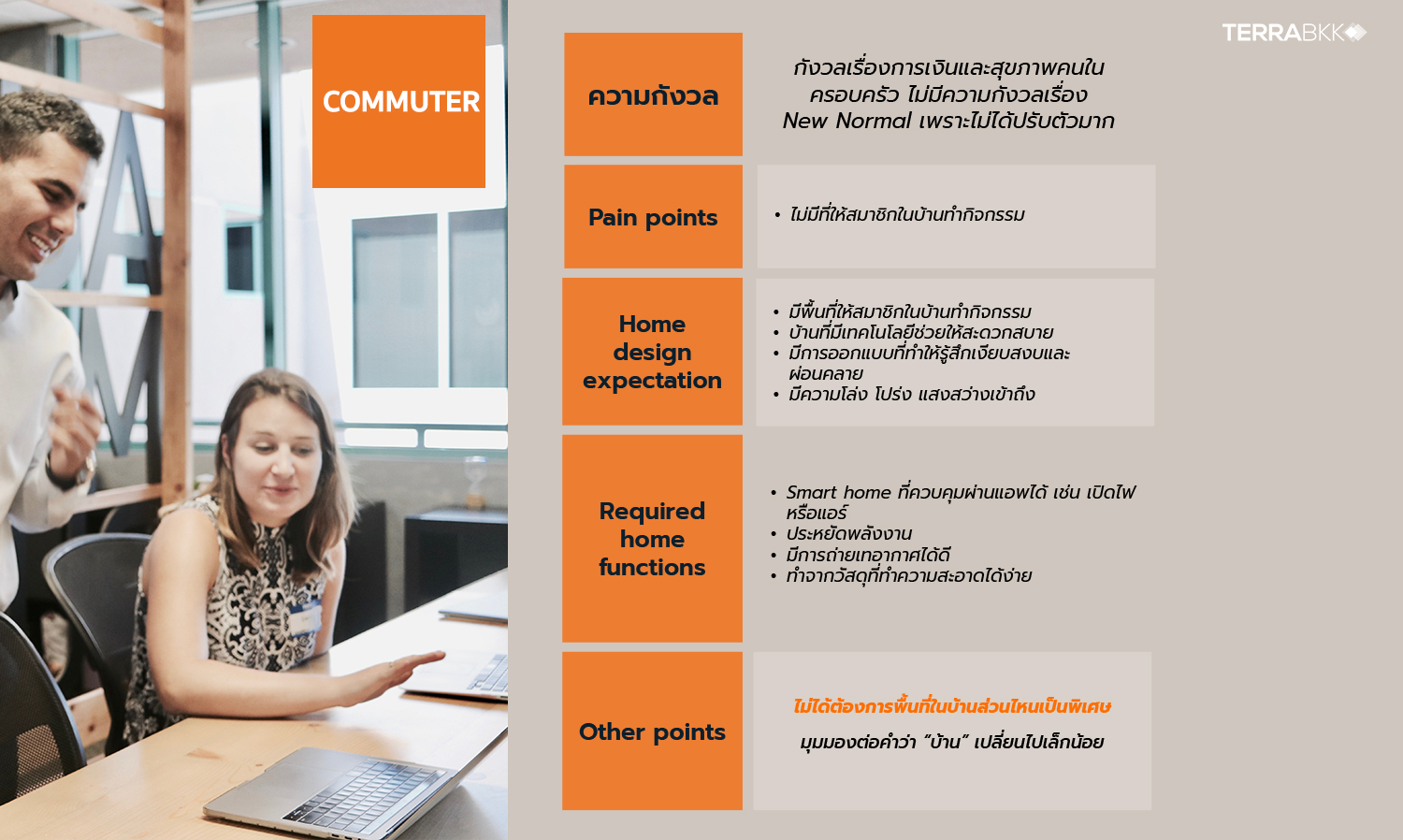
Type 2 COMMUTER 35%: This middle-income group, earning between 25,000-85,000 THB, experienced little change during COVID-19, thus not transitioning into the New Normal significantly. They still work outside the home and return in the evening. Since they were not heavily impacted, this group does not have specific spatial needs in their homes and their perspective on 'home' has changed only slightly.
They are primarily concerned about financial issues and the health of family members, not about adapting to the New Normal as they have not had to adjust much. Their expectations for home design include minor technologies that enhance convenience, such as smart home systems controlled via apps for lighting and air conditioning, energy efficiency, and a preference for designs that feel calm and relaxing.
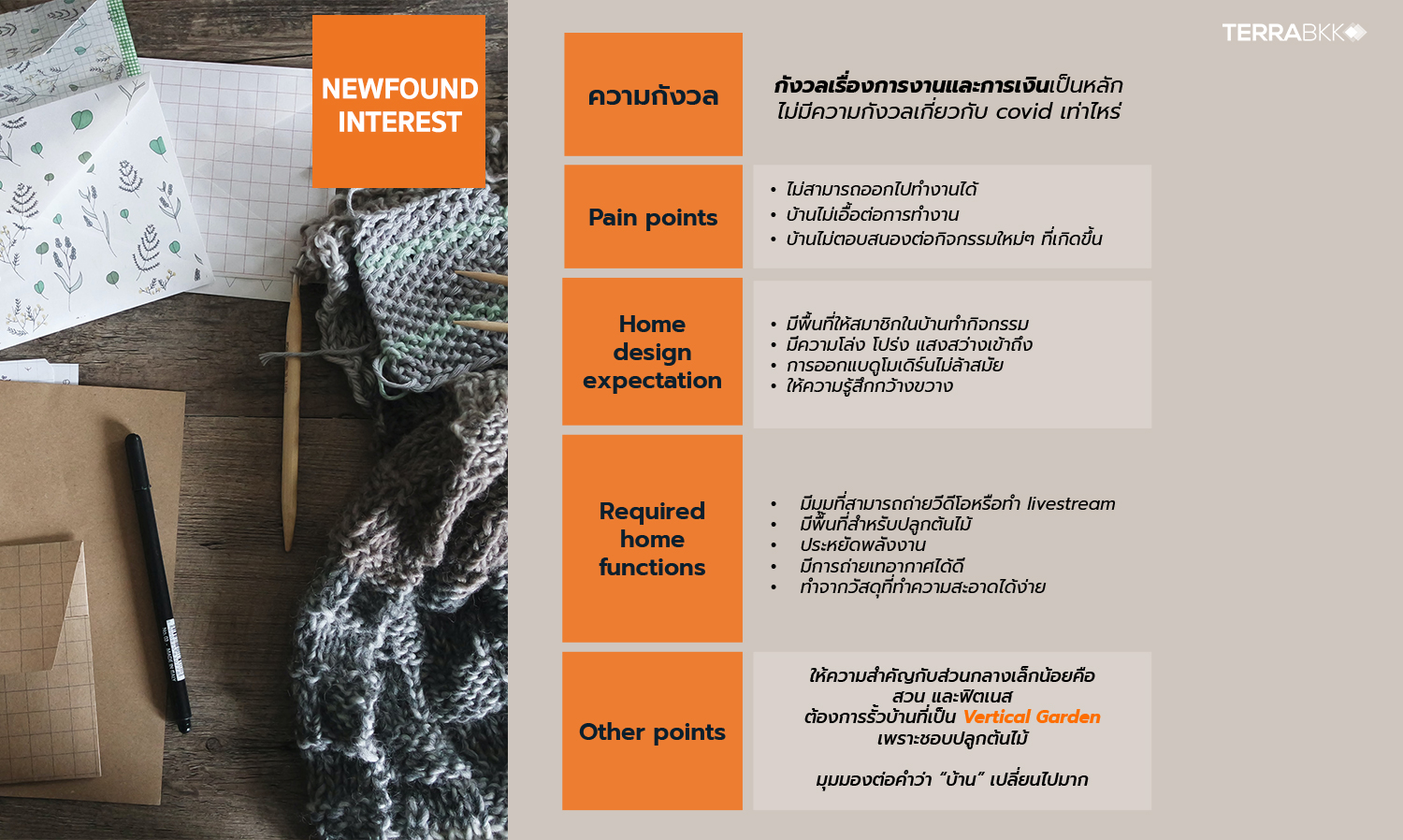
Type 3 NEWFOUND INTEREST 10%: This group, with an income below 18,000 THB, has been significantly impacted and is more concerned about their livelihood than about COVID-19. They have taken on new activities during the lockdown, such as selling online, cooking for themselves, and watching more movies at home.
Due to their inability to work outside and their homes not being conducive to new activities, their perspective on 'home' has changed significantly. They desire homes with spaces for family activities and areas suitable for video recording or live streaming. They prefer modern designs that are not outdated, with space for gardening, such as vertical gardens along fences, and place some importance on communal areas like gardens and fitness centers.
Lockdown life led to the discovery of new identities, but the spaces are not accommodating
Results from Method 2, based on focus groups of families living in Bangkok and surrounding areas, aged 30-49, indicate a tendency to buy homes priced between 8-15 million THB within six months or to participate in home loan repayments, with incomes exceeding 100,000 THB (in the case of joint loans) and over 160,000-200,000 THB (for single loans). Families were categorized into three types:
- Married couples without children (one-generation family)
- Married couples with children (two-generation family)
- Married couples with children who also care for parents (three-generation family)
In-depth interviews concluded that due to the lockdown, many have tried new things, discovering new skills they never thought they would 'like' or 'be good at', such as cooking and gardening, spending more time with family, exercising at home, and increasing online shopping. They want to exercise at home or try cooking various dishes, which means purchasing more kitchen equipment, but their existing spaces are too small.
Spaces are not conducive to working through online meetings
Even after the lockdown, lifestyles have not returned to how they were before. For single-generation families with only couples, they may return to some outdoor activities, such as dining or exercising outside. However, for two-generation and three-generation families, returning to outdoor activities will never be the same. For example, they avoid taking children to crowded places or often choose to go at times when there are fewer people.
In the view of this group, even if the situation returns to normal, their lifestyles are expected to remain different, continuing as a New Normal. They will avoid crowded places, be more health-conscious, stay home more, and cook for themselves more.
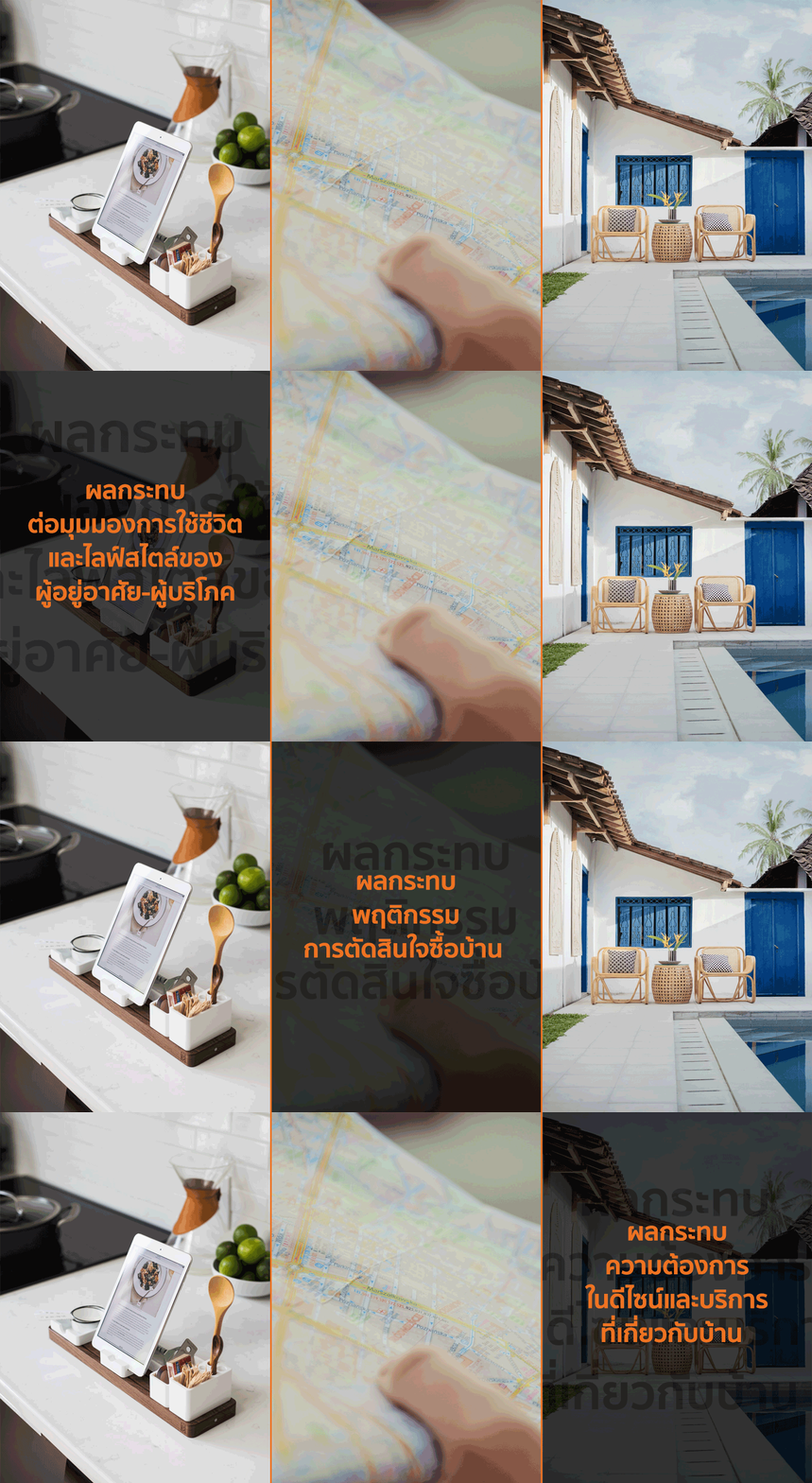
The research was divided into three important dimensions: 1. The impact on the lifestyle and perspectives of residents-consumers 2. The impact on home-buying decision-making behavior 3. The impact on design and service demands related to homes.
The impact on the lifestyle and perspectives of residents-consumers
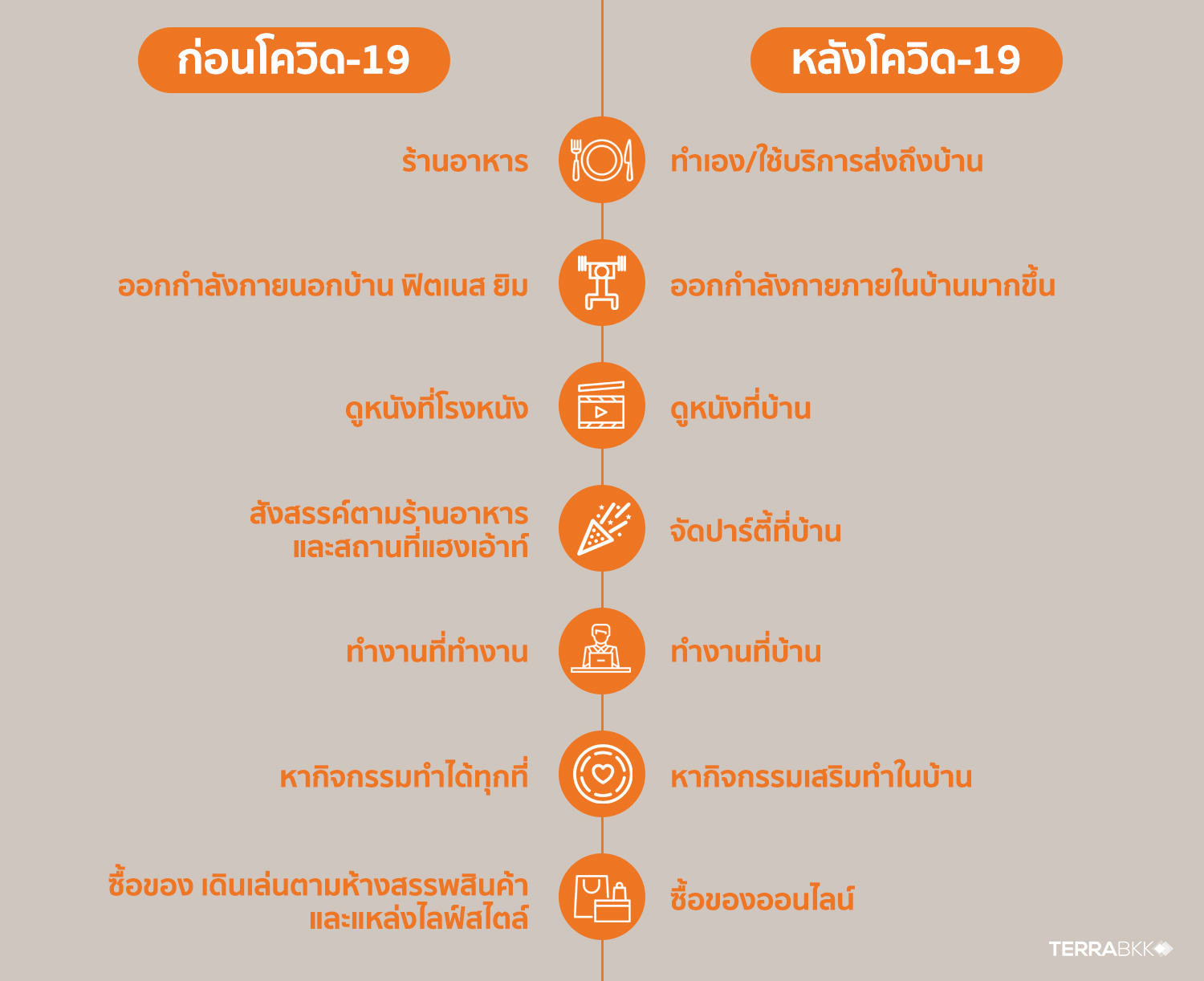
Before the COVID-19 situation: This group enjoyed spending time outside, whether shopping in malls, seeking new experiences from dining out, watching movies in theaters, partying in restaurants and bars, working in offices, and finding new inspiration from various places.
After the COVID-19 situation: They had to conduct all activities at home, changing their lifestyle to use food delivery services and cook at home, work from home, watch movies and party at home, and start seeking inspiration in life from home, cooking, or gardening more, including shopping online instead of traveling to shops.
A key reason for the rapid lifestyle change is the fear of contracting the virus and the concern about spreading it to loved ones
This change in behavior has impacted life in their existing residences, primarily because the spaces were not designed to accommodate the new lifestyle and activities that emerged. COVID-19 has led residents to discover new activities, such as a newfound love for cooking, but the spaces are insufficient for cooking, and there is not enough designated space for family members to study, work, and exercise.
The perspective on the definition of home has changed: After experiencing the lockdown, the meaning of 'home' must play a more significant role, responding to both entertainment and work needs. Before COVID-19, home was merely a place to sleep. There is now a greater appreciation for homes, with desires for them to be clean, beautiful, livable, spacious, and private.
The impact on home-buying decision-making behavior
The factors influencing home-buying decisions have not changed significantly, still considering location, proximity to essential amenities, reputable brands, and safety. However, factors influencing purchasing decisions have increased, with a greater demand for home designs and related services that are more detailed.
The impact on design and service demands related to homes
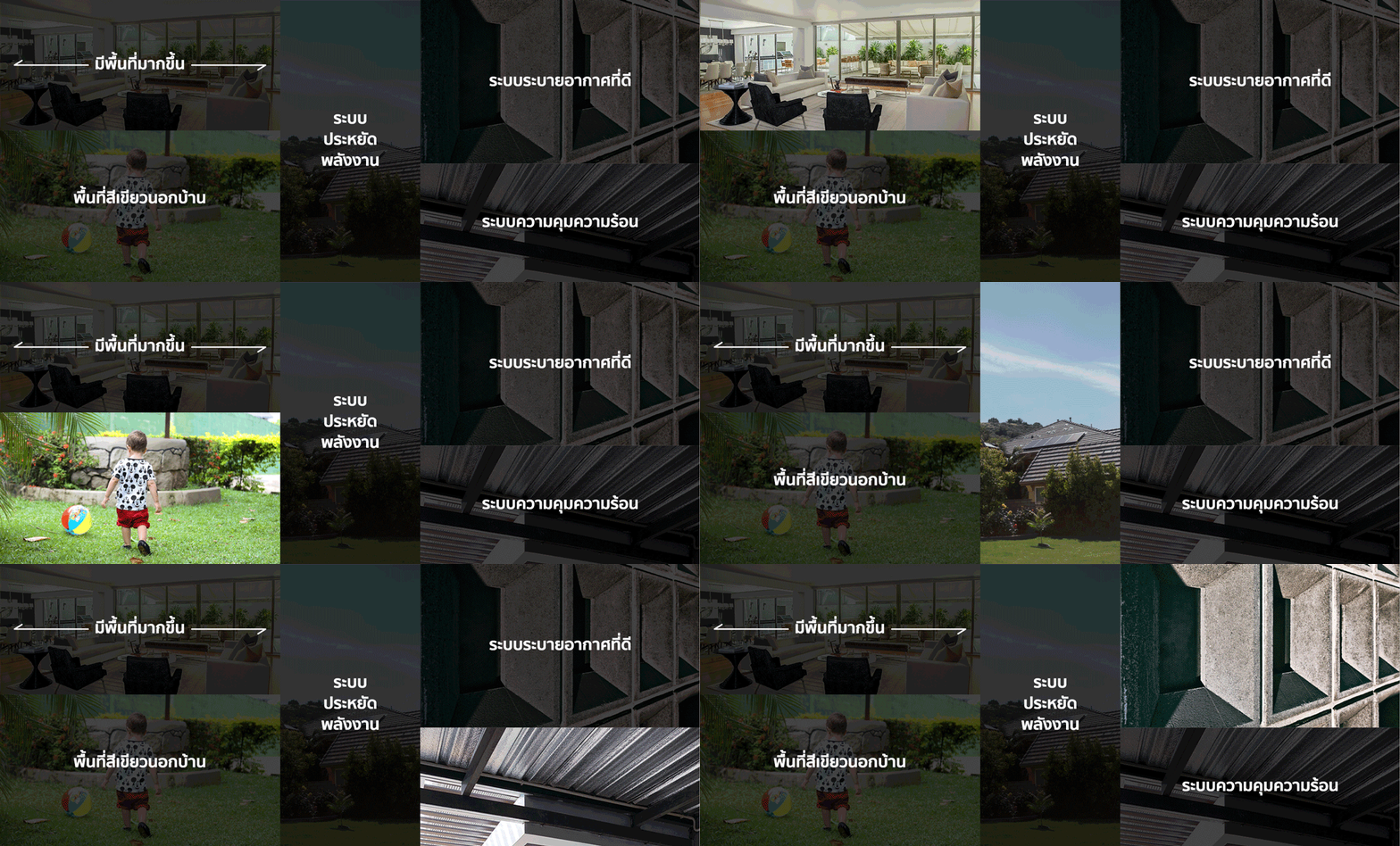
Awareness during the COVID-19 situation and the experience of staying home have significantly changed residents' expectations. What consumers want, regardless of family generation, includes more space, outdoor green areas, energy-saving systems, temperature control systems, and ventilation systems.
'Small homes' and 'large homes' have different needs based on the type of residents
- Single-generation families and families living together across two generations: They believe that small homes must have basic rooms that every house should have, such as bedrooms, bathrooms, kitchens, and living rooms, but they desire additional parking space (1-2 cars). In contrast, large homes need to offer more, including spacious interiors and the ability to separate different rooms, as well as a walk-in closet function.
- Families living together across three generations: Since this group consists of parents, children, and grandparents, with a larger family size, they believe that the necessary functions according to the size of the home should include at least 3 bedrooms/3 bathrooms, including 1 master room, a kitchen, and a dining area, parking space for 2 cars, a living room, and a yard that allows walking around the house. For large homes, they should have more than 250 square wah, with every room spacious enough to accommodate family members without feeling cramped, including bedrooms with master bathrooms, a two-story living room, a walk-in closet with a luggage storage area, and high ceilings.
Surprisingly, despite concerns about the COVID-19 situation, research found that body temperature check points and disinfection systems before entering homes are not facilities that residents of the New Normal desire. They view body temperature checks as inadequate screening since many know that some COVID-19 carriers may not show symptoms or may not show them immediately. Additionally, disinfection systems are seen as unnecessary equipment that does not provide 100% protection against germs, and they also believe that shops and co-working spaces are no longer necessary.
Moreover, single-generation families view playgrounds, fitness centers, and communal swimming pools as unnecessary since they rarely use these services, preferring to engage in these activities outside. In contrast, two-generation and three-generation families see communal cooking areas and green spaces within the home as unnecessary components since they rarely have time to cook in these areas and require maintenance. Similarly, they do not require communal fitness centers; having a jogging track or safe walking paths for children and the elderly within the project is sufficient.
Demand for after-sales services: Maintaining homes in good condition remains a factor that all resident groups desire, but they still feel apprehensive about inviting strangers into their homes during the COVID-19 outbreak. However, they will still call for repair services when necessary. For minor repairs, they will learn from the internet or YouTube, but for repairs requiring expertise, they still seek professional services, such as wall repairs, painting, plumbing, electrical work, and roof repairs.
Revealing the dream home blueprint in the New Normal
Inside the home: More space and openness
Outside the home: Green spaces / Common areas: Swimming pools, jogging tracks, and green spaces
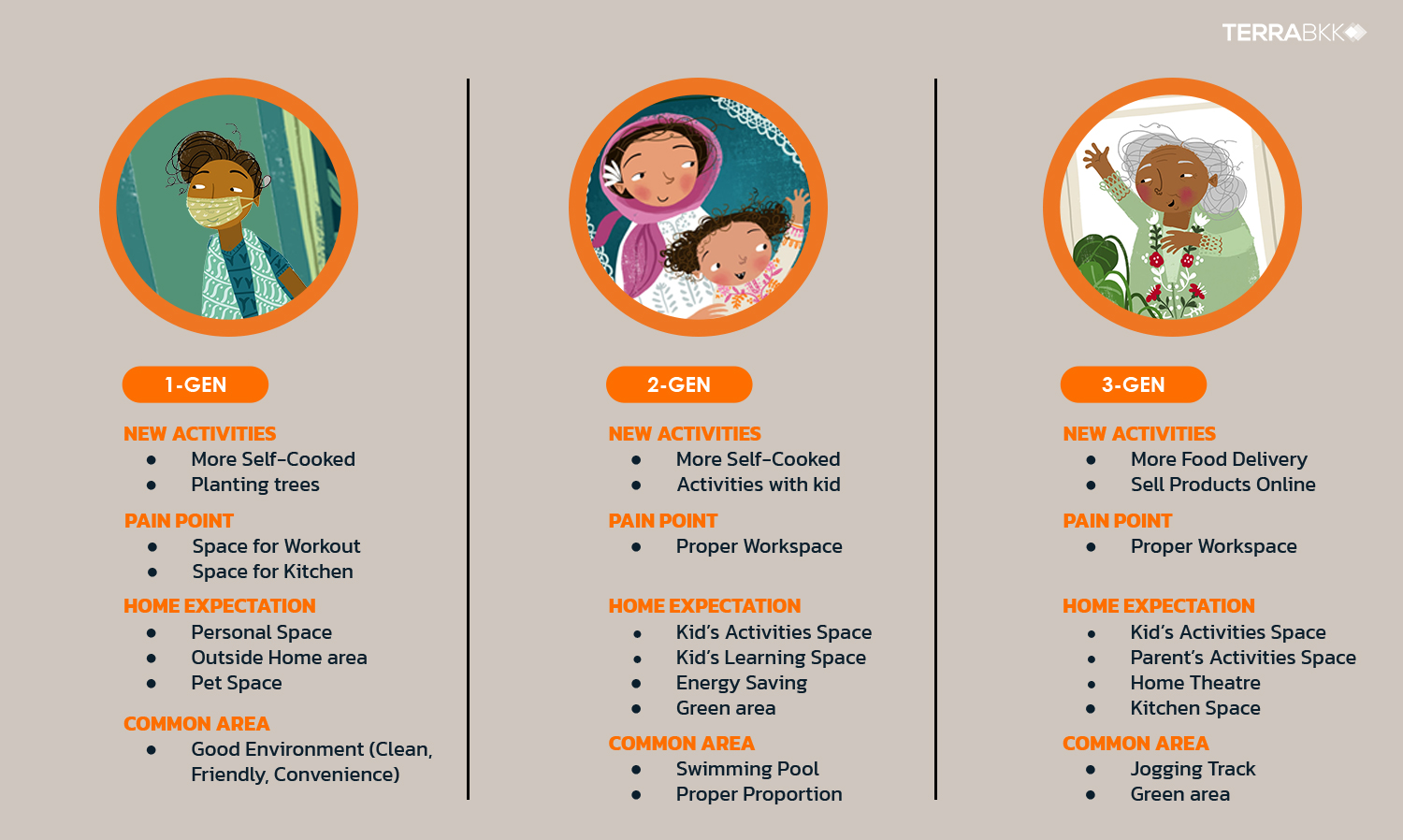
- Married couples without children (one-generation family): During COVID-19, new activities emerged in their lives, such as increased cooking and gardening, but their existing residences do not accommodate these activities, leading to a desire for homes with more private space, more outdoor areas, and space for pets. For communal areas, they expect a good environment that meets cleanliness, friendliness, and convenience.
- Married couples with children (two-generation family): During COVID-19, in addition to cooking more, they also engage in more activities with their children. However, what they lack is a designated workspace, so they desire homes with areas for activities with their children, spaces that enhance learning for kids, green areas, and energy-saving systems. For communal areas, they expect swimming pools.
- Married couples with children who also care for parents (three-generation family): Different from the activities of families living together across three generations, new activities include increased food delivery and online shopping. The demands from homes for this group emphasize spaces for activities that can accommodate all three generations, requiring home theater spaces and larger kitchen areas. For communal areas, they want jogging tracks and green spaces to provide areas for family activities.
This research set is expected to provide clearer insights into what residents of the New Normal truly expect from their housing. Therefore, the direction of SC Asset is focused on creating a new Conceptual Design under the concept of '#HomeIsEverything - Home is everything in life' to meet the demands for living in a Post-COVID future, utilizing research findings to collaborate with the design team to develop a Conceptual Design under the Methodology of SC Asset.
It is believed that the real estate industry will soon see new Prototype homes from SC Asset.
#SCAsset #LivingSolutionsProvider #HomeIsEverything