One day, while I was at a real estate company for work, I finished my tasks and was waiting for the elevator. As I looked for a trash bin to dispose of my plastic water bottle, I happened to notice a sign on the wall. It was a campaign encouraging donations of clear plastic water bottles to be sent to Wat Chak Daeng in Samut Prakan Province, where they would be transformed into fabric for monk's robes. I was surprised and thought it was a great and interesting idea.
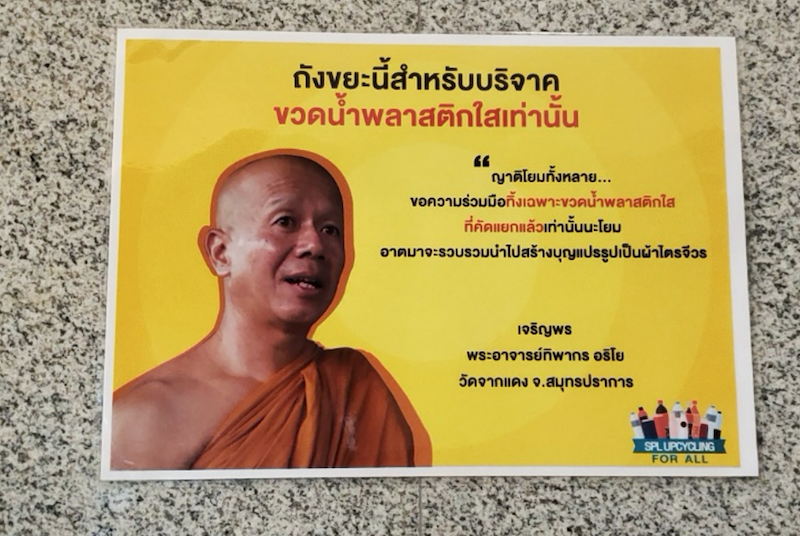
Upon researching further, I found that the project to recycle plastic bottles into robes originated from the Chaipattana Foundation, which aims to preserve green spaces in Bang Kachao and improve the living conditions of local residents. They designated Wat Chak Daeng as the central hub for collecting plastic bottles to be recycled into fibers for making robes for monks, which can also be sold to generate income.
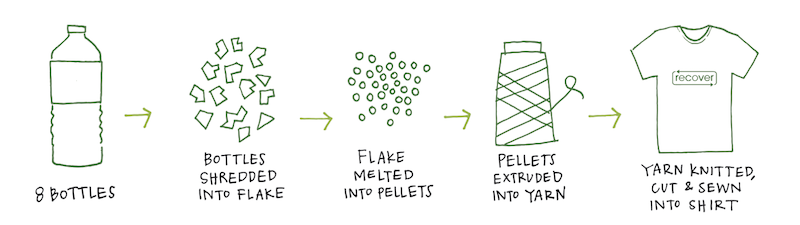
Source: recoverbrands.com
The process of transforming plastic bottles into fibers for clothing starts with cutting the bottles into small pieces (flakes). These small pieces are then melted down into tiny plastic pellets. The pellets are then melted again and formed into fibers. The recycled fibers can be made from 100% used plastic bottles or a mix of used bottles with other fibers or fabrics. In other countries, fibers from these plastic bottles have been used to create various clothing items, including graduation gowns. In Thailand, they have been used to make robes in the project at Wat Chak Daeng in Samut Prakan.

Recently, I came across shoes from a brand known as
Parley
for the oceans, which is a collaboration aimed at reducing the amount of plastic entering the oceans. This initiative stems from the fact that plastic waste has been discarded into rivers and oceans, significantly impacting marine ecosystems and aquatic life.
One of the tangible activities is recycling plastic bottles and transforming them into synthetic fibers for clothing products and various sports shoes. Another competing brand has a project called
Move to Zero
, which focuses on production processes aimed at reducing waste and carbon emissions, using materials sourced from recycling.
With the advancements made, blending fibers from plastic bottles with other materials has resulted in fibers that reduce odor, inhibit bacteria, and provide comfort. For example, the fibers from plastic bottles mixed with cotton in the robes from Wat Chak Daeng. If we think further about this concept, it would be great if community centers could manage waste systematically and collect various types of waste for recycling into different products like Wat Chak Daeng. This would not only help generate income but also significantly reduce waste and pollution.