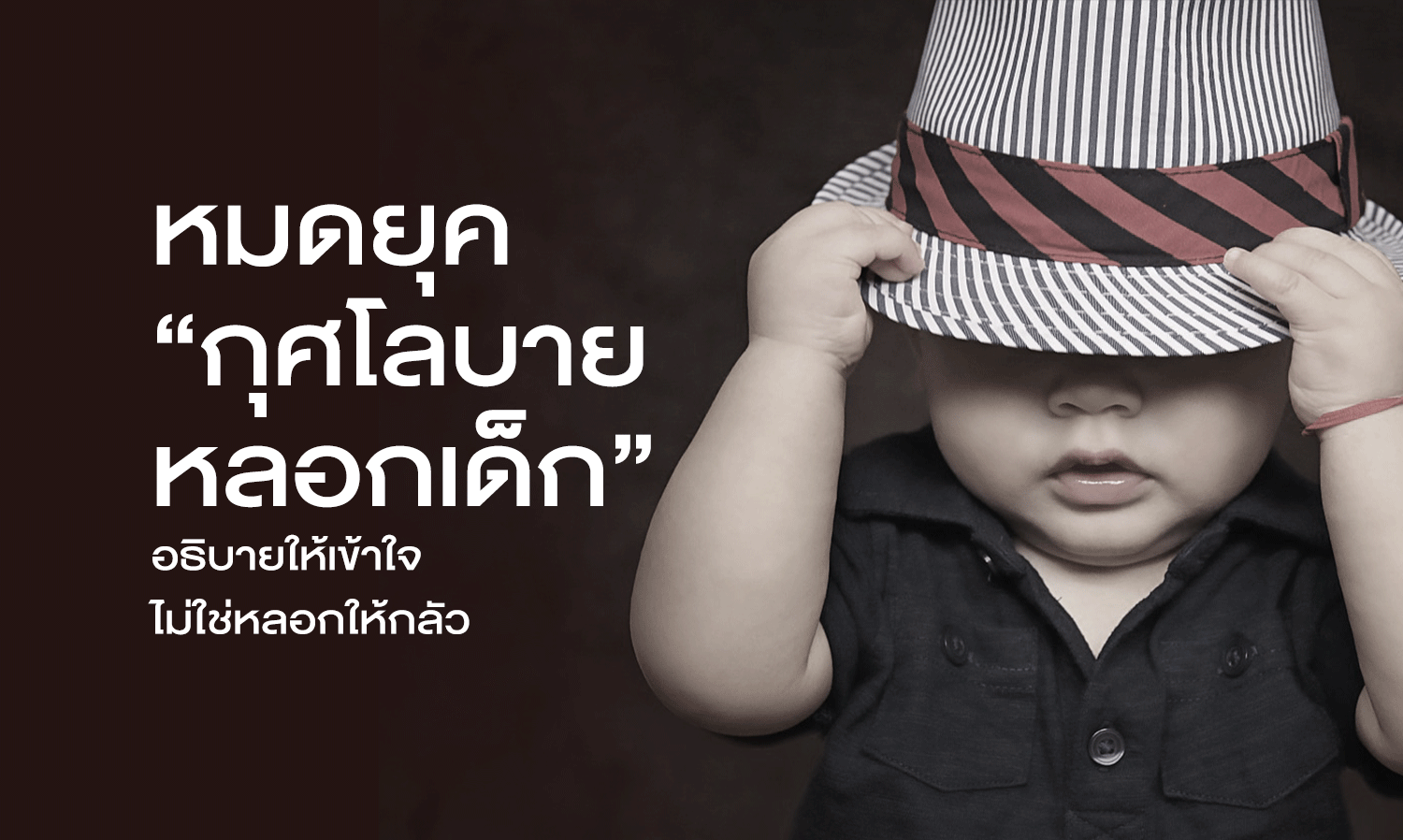
The End of the Era of 'Fear Tactics' in Parenting: Understanding, Not Scaring
Children, being playful and curious, often lack the maturity and reasoning skills of adults. Many of their actions stem from impulsiveness or a lack of awareness. Moreover, warnings from adults often have little effect; in fact, they can provoke resistance and disobedience in children.
As a result, adults sometimes resort to using tactics to encourage obedience, often relying on fear as a tool. The term tactic comes from the word goodness (กุศล) and deception (อุบาย), which together imply enticing someone to do good.
However, when applied to children, these tactics often manifest as instilling fear. We have all encountered such fear-inducing phrases, such as:
- "Don't go out to play at night, or the ghost will come to get you." Children often lose track of time while playing, and fabricating ghost stories can instill fear and make them aware that playing until dark may lead to encountering ghosts.
- "Don't cut your nails at night, or your ancestors' spirits will be disturbed." In the past, poor lighting at night could lead to accidents while cutting nails, and invoking ancestors was a way to emphasize respect for them.
- "Don't sing while eating, or you'll end up with an old spouse." Singing or talking while eating can lead to choking, and no one wants an old partner.
- "If you eat lying down, you'll turn into a snake." The posture of eating while lying down is considered inappropriate.
- Or simple scare tactics like, "If you don't eat, the gecko will eat your liver," or "If you're naughty, the doctor will give you a shot."
In reality, using tactics that instill fear for certain outcomes is no longer acceptable today. This approach is overly simplistic and lacks reasoning. Children raised with such fear-based teachings do not understand the true reasons behind the rules; they comply solely out of fear.
In Thai society, where many are accustomed to using authority to govern within the home, the approach often involves instilling fear to ensure compliance without logical justification. Some children may question, "Why?" but often, the response is simply that it was how things were done in the past, perpetuating flawed teachings through generations.
From a psychological perspective, instilling fear in children is detrimental. The fears ingrained in them can have lasting psychological effects. For some, these fears may dissipate with age, but for others, they can persist throughout life. For instance, telling a child not to play in the water because a ghost will pull them under may lead to a lifelong fear of water, when it would be more appropriate to explain that they should play in water only under adult supervision to prevent drowning accidents.
Even if children may not fully grasp the reasoning behind adult explanations, it is better to gradually teach them the actual reasons for prohibitions. Helping them understand the underlying principles is far more beneficial than simply scaring them.
SOURCE: tonkit360