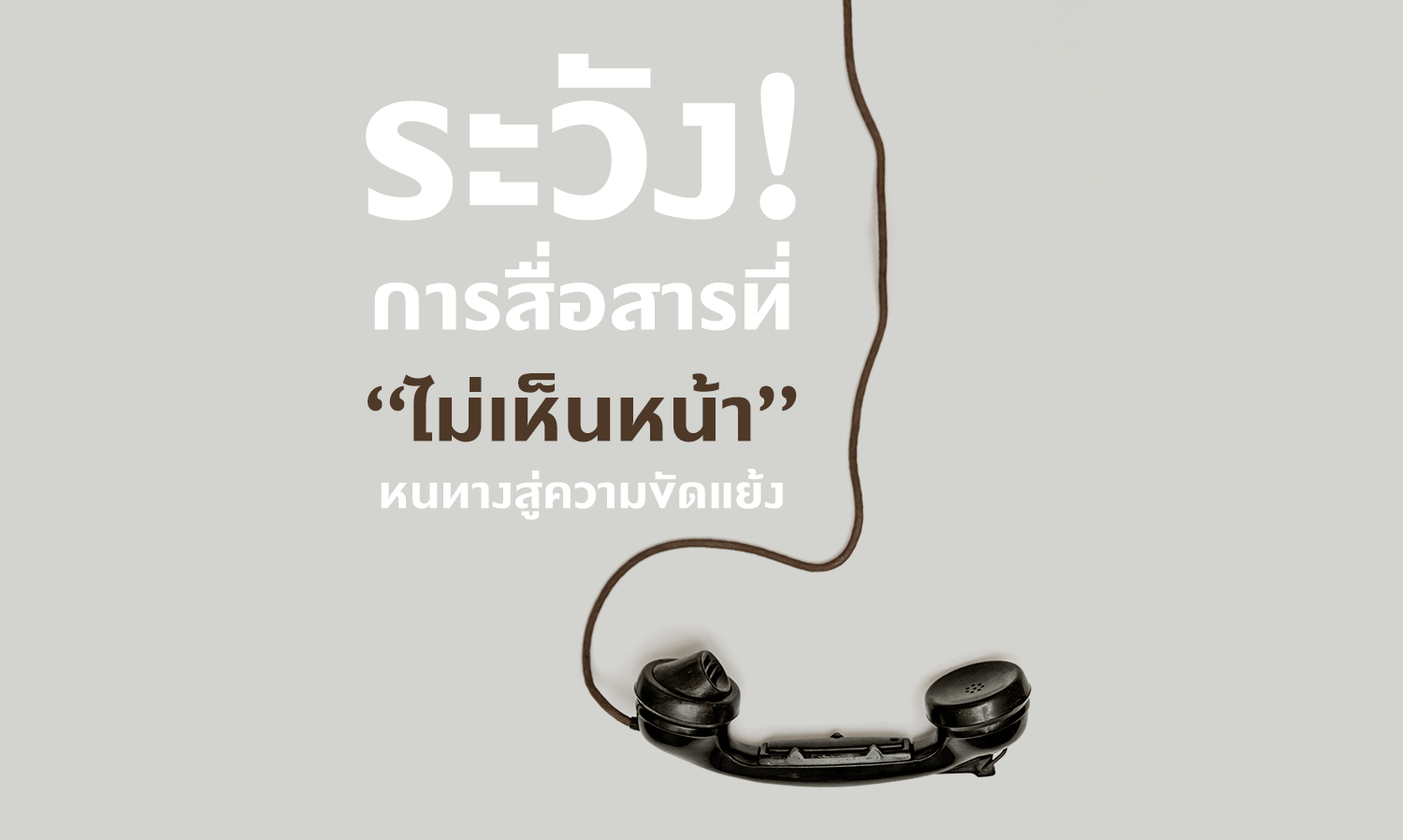
Beware! Non-Face-to-Face Communication: A Path to Conflict
Non-face-to-face communication often leads to misunderstandings. For example, when you ask a friend via a social media chat, "Have you eaten yet?" and two hours later, they reply, "I have." Many might start to feel anxious, wondering, "What's wrong with my friend?" The brevity of their response can come across as curt, leading one to think that the friend might be upset or annoyed. Additionally, the long wait for a reply can heighten these concerns.
In reality, during those two hours, the friend may have simply been too busy to read or respond. When they finally had a spare 5-10 minutes, they replied briefly without any particular thought, not considering that the reader might misunderstand. They are perfectly fine, not irritated, upset, or angry with anyone.
Today, we are accustomed to chatting with friends through text, and our conversations often include emojis that convey "tone." These emojis soften the conversation; for instance, when chatting with friends, we often include "555" to express humor and friendliness. However, when these elements are absent, and only terse words remain, we immediately start to feel suspicious about the relationship.
Communicate for Understanding, Not Just Words
Communication is an everyday aspect of our lives. It is nearly impossible to go a day without speaking, chatting, or communicating with someone. We often take communication for granted, viewing it as simple and straightforward. However, we may not realize that communication can be the root cause of conflicts. If we do not prioritize it, the success or effectiveness we expect from our communication may be far out of reach.
The success or effectiveness of communication is when the receiver understands the message that the sender intends to convey. In simple terms, it means mutual understanding and subsequent action. However, language as a communication tool is not limited to spoken words and written text, known as "verbal language." It also includes "non-verbal language," which encompasses various gestures and expressions that convey emotions, feelings, and desires, reflecting the sender's feelings and personality. This includes visual and auditory cues (not just spoken sounds), which can be perceived through sight and hearing.
Therefore, successful communication requires both verbal and non-verbal language to work in tandem, especially non-verbal language. People often perceive the meaning of a message through expressions more than through words. For example, when someone’s words do not match their feelings, their facial expressions and body language can reveal more than the words they say.
The Importance of Non-Verbal Language in Non-Face-to-Face Communication
Talking through text while missing out on non-verbal cues like "body language" often leads to misunderstandings and conflicts, especially concerning the two types of non-verbal language.
Tone of Voice
The first thing we cannot know is the "tone of voice" of the person we are communicating with. For instance, if a friend is having a fight with their partner and is crying when we message them to invite them to dinner (they could choose not to read it, but if they leave it too long, we might call), they might reply with a simple "OK" followed by an emoji. Upon seeing this, we might assume (incorrectly) that everything is fine and that they are agreeing to dinner, continuing the conversation without realizing that the friend behind the screen is feeling "not OK."
Facial Expressions and Body Language
In addition to tone, we also miss out on "facial expressions, eye contact, and various gestures." If a friend is crying while typing a response to us, we cannot perceive through text that they might need help. We would not know they are crying, nor would we realize that the sticker they sent does not reflect their true feelings at that moment.
Texting only provides written words; we cannot hear their tone, see their facial expressions, or observe their body language until we meet in person. Only then can we detect a shaky voice, sobbing, red eyes, or a sad expression, prompting us to ask what is wrong.
This illustrates that in non-face-to-face communication, we can only perceive what the sender wants us to know. We cannot grasp their true feelings. When we are unaware of their feelings, we may continue to chat normally, potentially provoking them to genuinely become angry with us.
Misunderstandings from Conversations: A Factor Leading to Conflict
Given the factors mentioned, when we communicate through text, we cannot discern the emotions, tone, facial expressions, gestures, and true intentions of the other party. What we perceive from the other person is merely what we "assume." When both parties cannot recognize each other's true emotions, misunderstandings arise. If they cannot reconcile, the situation can escalate into a conflict that is difficult to resolve.
Text-based communication cannot "hear tone" or "see facial expressions" that convey the other person's feelings, making misunderstandings easy. We cannot guess the tone and emotions of the sender accurately, and by the time the sender and receiver have a chance to communicate directly, they may have already misunderstood each other.
It is evident that effective communication requires both the sender and receiver to understand the same message. Thus, "interpretation" is crucial and must consider context and linguistic background. If the sender and receiver have unequal knowledge and observation skills, the chances of misunderstanding are high, leading to conflict.
Avoid Misunderstandings by Communicating Face-to-Face
While reading chat messages allows us to catch some tone and intent, we must be cautious that it may not reflect the sender's true tone or intent. As mentioned earlier, if the sender tries to steer the conversation positively but their emotions do not align, the receiver may still misinterpret the sender's emotional state.
Over time, the sender may feel uncomfortable having to "pretend" they are fine when they are not, eventually leading to an emotional outburst that shocks the receiver. The receiver may have been unaware that their friend was not okay, resulting in a conflict that could lead to a fallout.
Therefore, to avoid misunderstandings, choose face-to-face conversations. This way, we can see each other's body language and emotional states, understanding what the other person is thinking and feeling, thus avoiding actions that could lead to conflict. If a conflict does arise, it can be addressed immediately, clearing the air before any relationships are severed.
SOURCE: tonkit360