The Sky After the Rain for Thai Real Estate: Moving Forward or Hitting the Brakes?
After the COVID-19 situation, many perceive that the real estate market is on a downward trend, with sluggish sales and stagnant cash flow. Everything has come to a halt, prompting developers to hit the brakes on new projects.
However, a deeper look reveals that this isn't entirely the case. Various surveys indicate that the real estate market is still active, albeit gradually. Most consumers still desire homes for living and have not abandoned their purchasing decisions; they are simply exercising more caution. This aligns with a survey conducted by Terrabkk regarding 'Real Estate Purchase Decisions After the COVID-19 Crisis', which found that 61% of respondents are still interested in buying real estate post-crisis, demonstrating that there remains a segment of buyers. Thus, it depends on which companies can adjust their 'strategies' to turn 'crises' into opportunities.
For example, AP, a major real estate player, surprised many by increasing its land acquisition budget for the fourth quarter of this year to 9.5 billion baht, up from the 8.5 billion baht set at the beginning of 2020. Although there was some slowdown during the lockdown in April, they have bounced back and are ready to push forward before the year ends, characteristic of a large brand with strong financial liquidity and forward-looking projections.
This signals that AP is gearing up to launch new projects in anticipation of a better year in 2021.
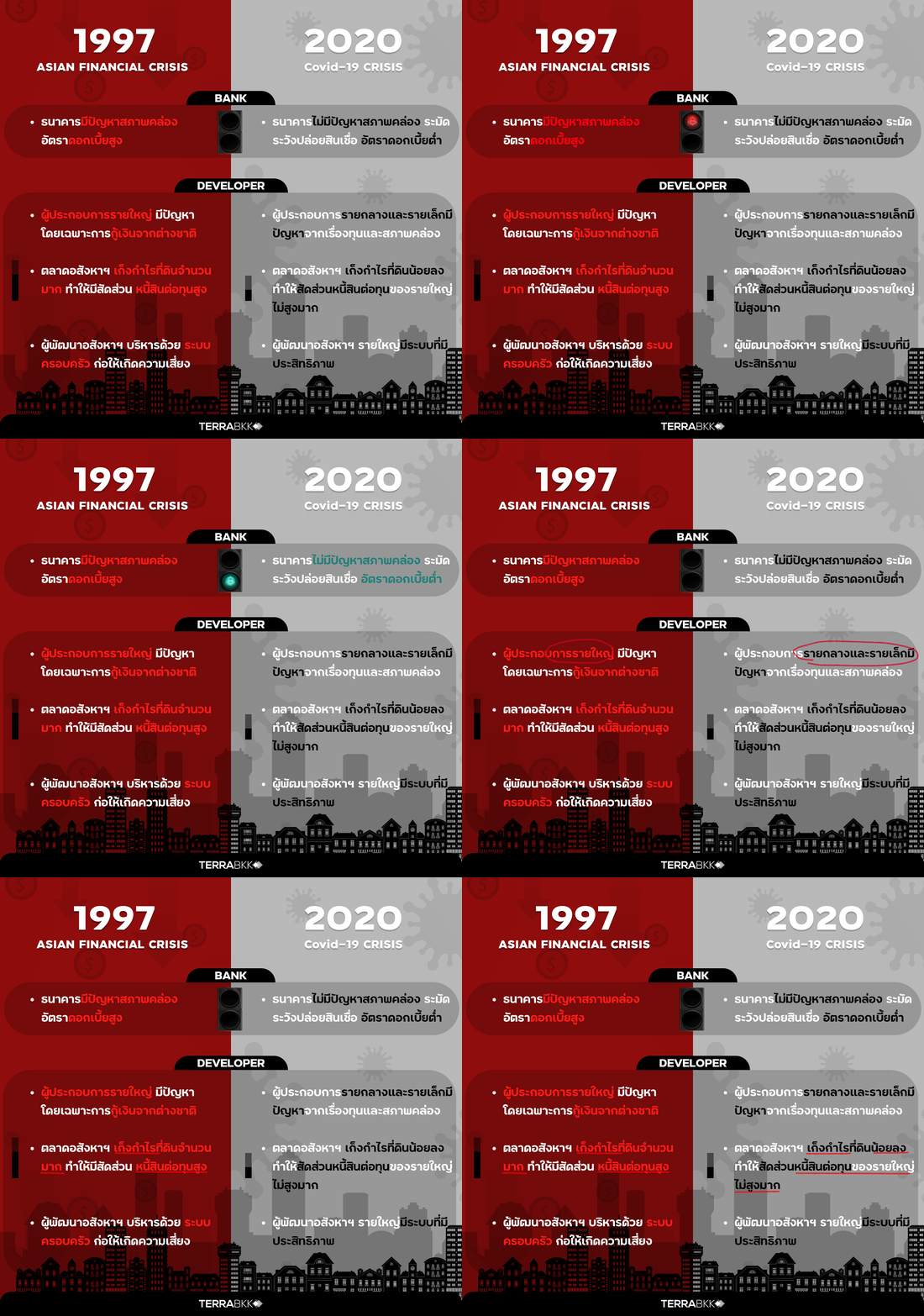
From the aggressive budget allocations by major real estate firms, it can be analyzed that the impact of COVID-19 on the economy differs from the Asian financial crisis of 1997, known as the 'Tom Yum Goong Crisis', which instilled fear in investments and spending. This has led to a painful conflation with the COVID-19 crisis, despite the differing impacts on the overall Thai real estate market.
Given these factors, it can be assessed that real estate developers with strong financial backing will have an advantage, benefiting from low-interest loans and reduced land costs. It will be interesting to see which projects emerge next to shake up the industry...