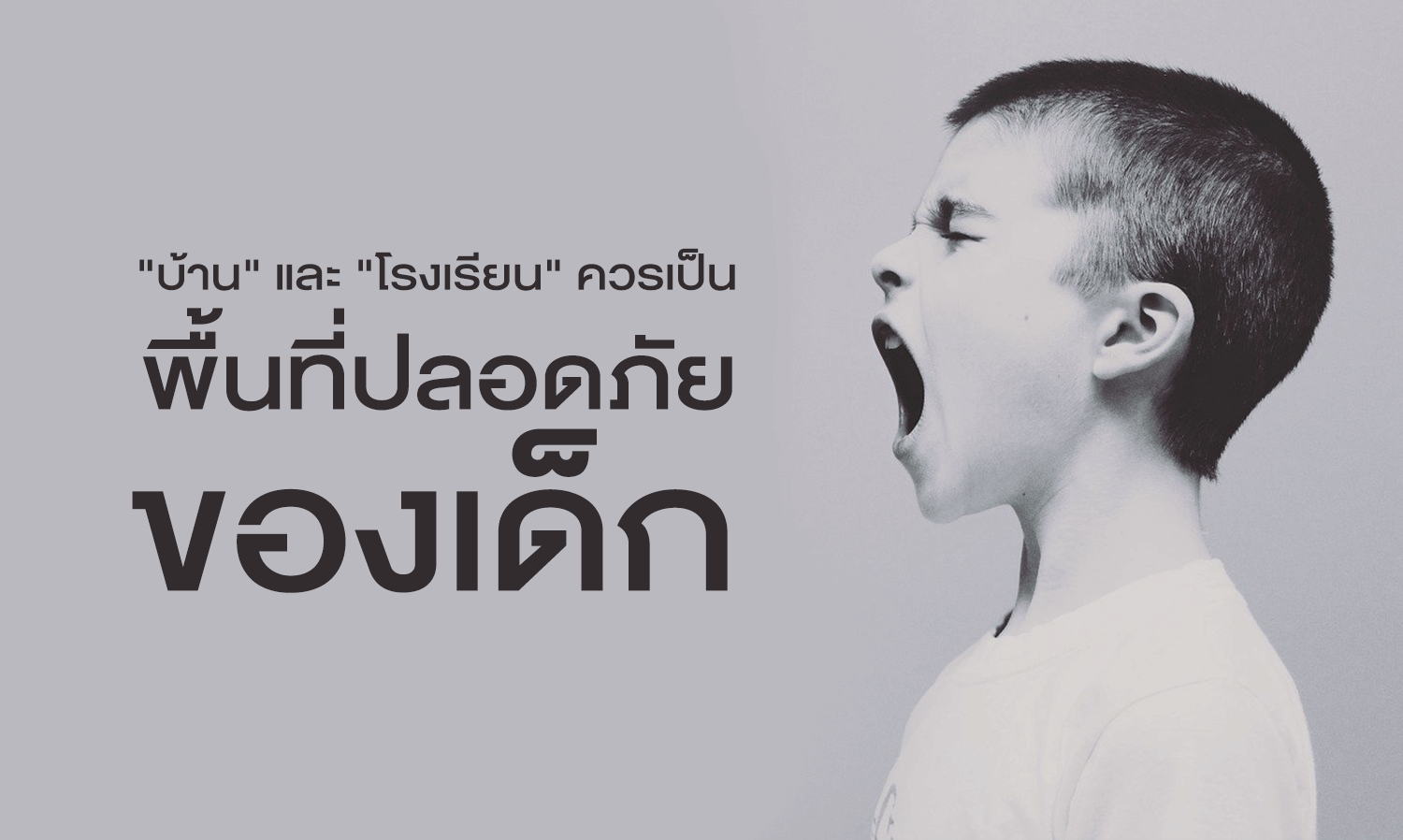
"Home" and "School" Should Be Safe Spaces for Children
In light of the recent news about a kindergarten teacher abusing a child, parents are understandably concerned about sending their children to school. Many are willing to pay high tuition fees to provide their children with a good environment, but that does not guarantee their safety from harm.
Today (October 1), the Foundation for Children and Youth and Families, the Family Network Foundation, and the Parent Network in Educational Institutions, in collaboration with the Department of Children and Youth, Ministry of Social Development and Human Security, held a forum titled "Solutions... When Schools Are Unsafe and Children Are Abused" at the Mandarin Hotel, Sam Yan.
During the event, a representative parent, Mr. Akkarapong Boonmee, whose son attends the school in question, shared his experience as a father. He recounted that the reason he chose this school was due to its good environment, as it is considered one of the top schools in the area. In the first year of sending his son there, he had to enroll him in a summer program for a month with the teacher involved in the incident. After about a week, he noticed a bruise on his son's cheek and approached the teacher in the morning to inquire about it. The teacher claimed it was likely from playing with friends and apologized. After that, there were no further signs of injury, so he thought his son was just being mischievous, especially considering the school's high tuition fees, which raised no suspicions.
“However, after seeing the clip in the news featuring the same teacher, I felt I could not remain silent. I wondered where the school's measures were and how they could guarantee our children's safety. It’s not just one classroom; parents in every classroom are concerned. Therefore, the school needs to address the systemic issues. Even if there are good teachers in other classes, the question remains: what can assure us that our child will not be harmed if they continue attending?”
Thus, he suggested that schools should provide verifiable information about teachers' qualifications, install surveillance cameras, and hold parent meetings, which the school currently lacks. Parents want to see clear guidelines and measures from the school to ensure their children's safety.
We should prioritize our children over anyone else.
Dr. Jiraphorn Arunakoon (Doctor Oh), a pediatrician in adolescent medicine at Ramathibodi Hospital, commented that when we suspect a child is being harmed, we should not just wonder about it. Some parents refrain from taking action out of concern for the teacher, fearing their child may face more harm or that the teacher may neglect them. This reflects a power structure where many parents feel subordinate to teachers. It is crucial because when we see signs that our child is being harmed, we should not overlook it; we must seek answers. Often, we see that nothing happens, which makes the perpetrator feel justified in their actions, and the child may believe they deserve the treatment. Therefore, we should not prioritize anyone over our children because they are the ones we must protect above all.
When children are in unsafe situations, they typically respond in three ways: “fight,” such as a child who retaliates when hit; “flight,” where they instinctively want to escape, cry at the sight of the teacher, or fear going to school; and “submission,” where they comply with the teacher's actions, believing they have no power to resist. These children may feel bad about themselves, leading to withdrawal and low self-esteem, which are primary causes of depression found in 15-25% of adolescents, stemming from childhood trauma.
“These are signs to observe in our children. We should discuss their daily lives and what makes them happy or upset. This incident teaches us that even if we spend a lot of money, we cannot truly buy a good environment. Even with surveillance cameras, we cannot guarantee our children's safety. Therefore, we should engage in conversations about their daily experiences, encouraging them to share while parents must genuinely listen without interrupting or judging. Whenever something seems off, do not dismiss it out of concern for the school. Parents who stand up to protect their children will help them feel safe and believe that no one has the right to violate them.
“Raising children” should involve positive power dynamics.
Doctor Oh continued, stating that authoritarian structures exist everywhere in Thai society, including families, schools, media, government, communities, and workplaces. This is problematic because oppressive power can lead to resistance and conflict, causing parents to struggle with their children. One day, children may rise up in their own ways, such as through defiance, as they feel their parents' pain. This is why we must raise children positively, as parents can wield the power of love and connection in their parenting. Teachers can also foster a cooperative environment, making it easier for children to listen.
“Many children are in situations with no choices. Schools without surveillance cameras leave many children vulnerable to violence. We all have rights, voices, and roles in driving societal change. When society prioritizes these issues, it will lead to transformation. This is not just a problem with one teacher; it is a systemic issue with many underlying problems beneath the surface, including educational inequality. The right to attend a safe school is a fundamental right and essential for human and national development,” Dr. Oh stated.
- Parents should play a role alongside schools.
Thanicha Limphanit, manager of the Family Network Foundation, suggested three main points: 1. The role of parents in educational institutions. Parents have significant power, and parent networks play a crucial role in schools. Do not leave the school to care for your child alone, as many parents believe teachers can take care of their children. Some parents have limited options or may consent to teachers disciplining their children. We want parents to engage with schools, to jointly monitor children, manage classrooms, assist as teachers, and build networks within schools. 2. Personnel involved with children. All places with children should screen personnel. Mental health checks alone are insufficient; there should be a thorough background check to ensure children's safety. 3. Policy. The Ministry of Education should have concrete policies, as child abuse occurs in many forms.
- Drive child protection policies.
In response to the situation, the Ministry of Social Development and Human Security, through the Department of Children and Youth, which focuses on child welfare, sent a team from Nonthaburi, along with local networks, including educational districts and health agencies, to investigate the facts on September 25. They also established a special line group to provide initial consultation to parents and scheduled meetings with parents and children to assess their mental state due to the various incidents. On September 29, based on voluntary participation, initial assessments revealed cases of children directly affected, with some exhibiting aggressive behaviors.
Orapin Sak-eiam, a child specialist at the Department of Children and Youth, stated that a multidisciplinary team meeting was held to create a support plan for the affected children, categorizing them into four groups: 1. Children directly affected, with parents filing complaints; 2. A group of about 34 children in the same classroom; 3. A group in the same kindergarten level; and 4. Children and parents in other classes.
For the implementation, focus will be on groups 1 and 2, with another assessment planned for early October. The Department of Mental Health will proceed with long-term therapeutic processes, as the psychological impacts are enduring. Additionally, regarding legal matters, the Ministry of Social Development is assisting with coordination and interviews, requiring the presence of social workers.
Furthermore, in terms of policy plans, the Ministry of Social Development has discussed with the Ministry of Education, Ministry of Public Health, Ministry of Interior, and relevant networks to establish guidelines for developing child protection policies. An MOU is also being prepared with the Ministry of Education regarding child protection in educational institutions, which includes: 1. Background checks and mental health assessments for personnel before they start working; 2. Providing knowledge about child protection to staff; 3. Establishing internal structures with evaluation indicators; 4. Implementing child-appropriate practices; 5. External communication; 6. Reporting on operations; and 7. Immediate reporting of any misconduct.
“All policies will be pushed for implementation in places working with children. The Department of Children and Youth and the Department of Women and Family Affairs are working according to the Child Protection Act. If anyone encounters or suspects that a child is not safe, please report it to the hotline 1300,” Orapin stated.
SOURCE: www.bangkokbiznews.com