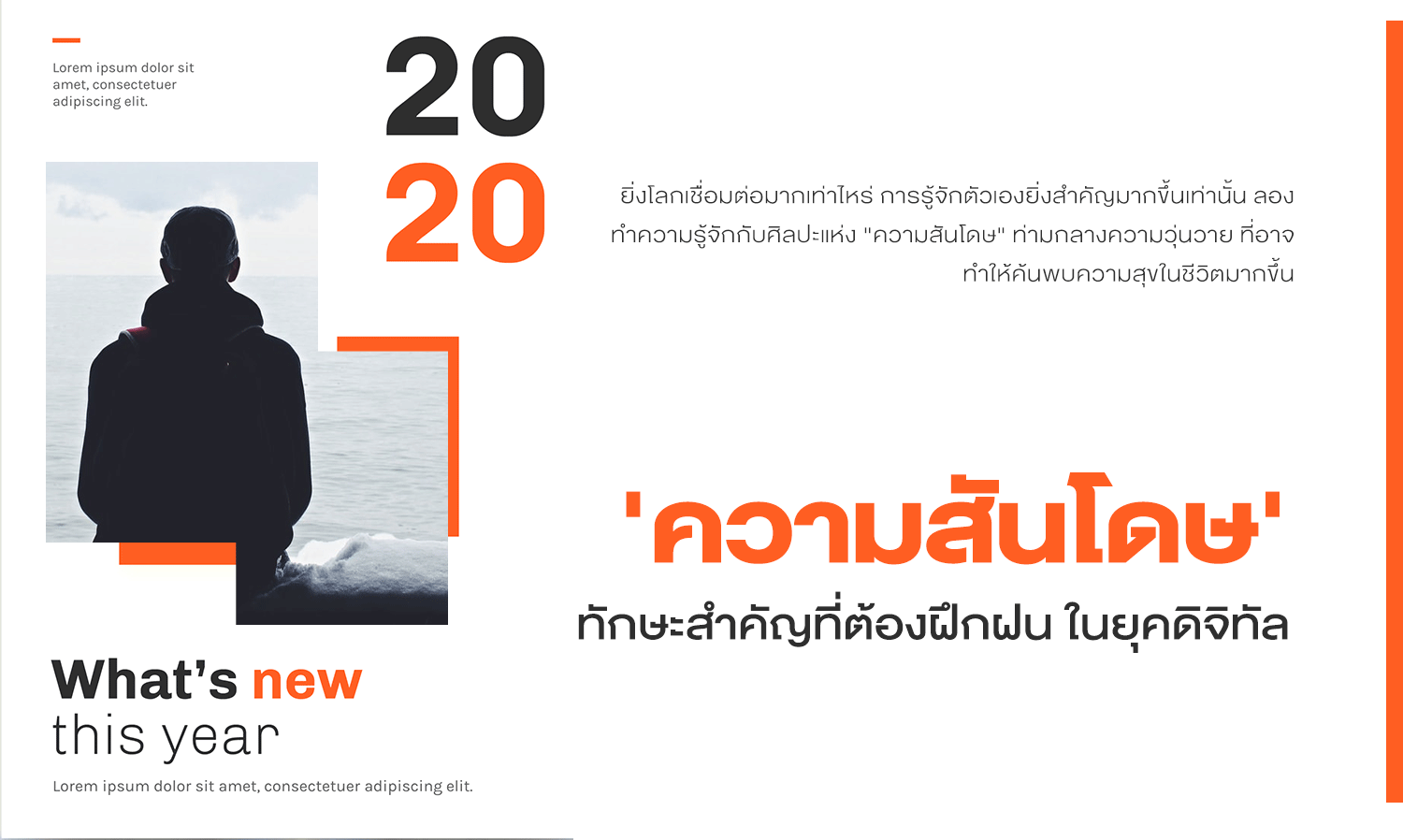
'Solitude' - An Essential Skill to Cultivate in the Digital Age
Many people may have felt a sense of loneliness even when surrounded by numerous acquaintances and friends on social media who cheer them on through every moment of life.
Modern technology and social media provide convenience in connecting and relaxing, all at the touch of a finger. However, on the flip side, the sharp edge of these instant connections has led to various impacts, including on health, mental well-being, and personal development.
The theory proposed by Pascal, the French mathematician, physicist, and philosopher, states, "All of humanity's problems stem from man's inability to sit quietly in a room alone. We fear the silence of existence, we fear boredom, and we choose aimless distractions instead. The real issue may arise from our failure to learn the art of solitude."
"Bangkok Business Online" explores the "Art of Solitude," which can help people in the digital age detach from unnecessary chaos and find greater opportunities for personal happiness.
- Solitude to Reduce Excessive Connectivity
"We live in a world where we are connected to everything except ourselves because there are other enticing distractions that seem more interesting."
Technology has increasingly influenced our lives from generation to generation, from the era of telephones, televisions, and radios to the internet and various communication innovations that humans have created to bring people closer together and maintain continuous connections to the world. Of course, these advancements have immense benefits but can also cause significant harm if misused.
The Department of Mental Health revealed in 2018 that there are nearly 600 million Facebook users worldwide, with around 10 million users in Thailand.
Every 20 minutes, over 3.7 million photos are posted, links are shared, and more than a million status updates are made. Hidden within these numbers is the increasing phenomenon of "social media addiction".
The primary reason people worldwide are increasingly drawn to social media is the fear of being alone. They desire a sense of existence beyond what they currently have, a curiosity about others, and a longing for support and acceptance from society.
Careless social media usage can lead many to forget that browsing social media does not eliminate those uncomfortable feelings; it merely suppresses them temporarily.
What is even more concerning is that the more we become addicted to social media, the further we drift away from understanding ourselves, which may lead to future self-development issues.
At the same time, the downsides of technology are becoming increasingly evident as users lose their privacy and have their data collected, which can have long-term impacts on their lives.
- Transforming boredom through technology into learning to embrace and confront it
Many may feel that despite having close relationships with everything around them, they still feel lonely and increasingly anxious. This may be because they have never faced the emptiness or confronted themselves and their issues.
The hatred of loneliness and boredom often drives most people to become more reliant on technology, justifying that the benefits derived from technology outweigh its drawbacks.
However, reports on the impacts of social media addiction from the Department of Mental Health reflect a contrary picture, indicating that heavy internet usage tends to have more disadvantages than advantages. Side effects may include food and shopping addiction (29.5%), depression (27.7%), and anxiety and mood swings (21.1%).
Moreover, social media addiction has severe negative effects on both individuals and society at different life stages. For preschoolers, it leads to attention problems, loss of social skills, and a lack of learning from experiences. For school-age children, it results in issues of violence, obesity, vision problems, loss of discipline, and declining academic performance. Meanwhile, adolescents face consumerism, cyberbullying, seduction, inappropriate values, and abnormal sexual behaviors.
Therefore, the solution to feelings of loneliness, isolation, and anxiety is not to rush towards large crowds but rather to confront these feelings. Allow boredom to guide you to where it needs to go, enabling you to genuinely manage everything that arises with your emotions.
Spending time with these feelings, whether daily or weekly, by sitting quietly alone will surround you with yourself. You will hear your own thoughts. This is a moment of solitude and tranquility, allowing you to gradually become more familiar with your environment and understand yourself better.
“Embracing boredom at times can help you discover new things you never knew before. It’s like being a child seeing the world for the first time without conditions. It also resolves internal conflicts.”
All of this reflects the oldest philosophical wisdom in the world, which may never have been taught in textbooks but is a path that attempts to help humans know themselves, understand solitude, and connect internally, which is more important than connecting everything that nearly everyone is currently doing.
Source: Quartz and Department of Mental Health
SOURCE: www.bangkokbiznews.com