Consumers also want to return to normal life. A survey by Ipsos, a global market research company, revealed that the top four activities Thai people want to do the most after the lockdown are: 1. Going to the hairdresser 2. Traveling 3. Dining out 4. Shopping at malls. However, even as workplaces and shops become bustling again, traffic on the roads is returning to its usual density.
Although the overall economic stability remains good, it has become more fragile. Private consumption is still weak, partly because consumers are being more cautious and thoughtful in their daily lives due to concerns in two main areas: 1. Hygiene and safety 2. Livelihood and food security, stemming from decreased job stability and income, as well as uncertainty about the economic recovery.
If we look at the situation in China, which experienced the crisis before other countries, the recovery there is still slow. While about 90% of businesses have reopened, it is expected that this will continue until a vaccine is developed and produced in sufficient quantities for the global population.
This means that for at least the next 12-18 months, entrepreneurs must adapt to a situation that can change at any moment, aligning with new consumer behaviors and insights that will bring new opportunities.
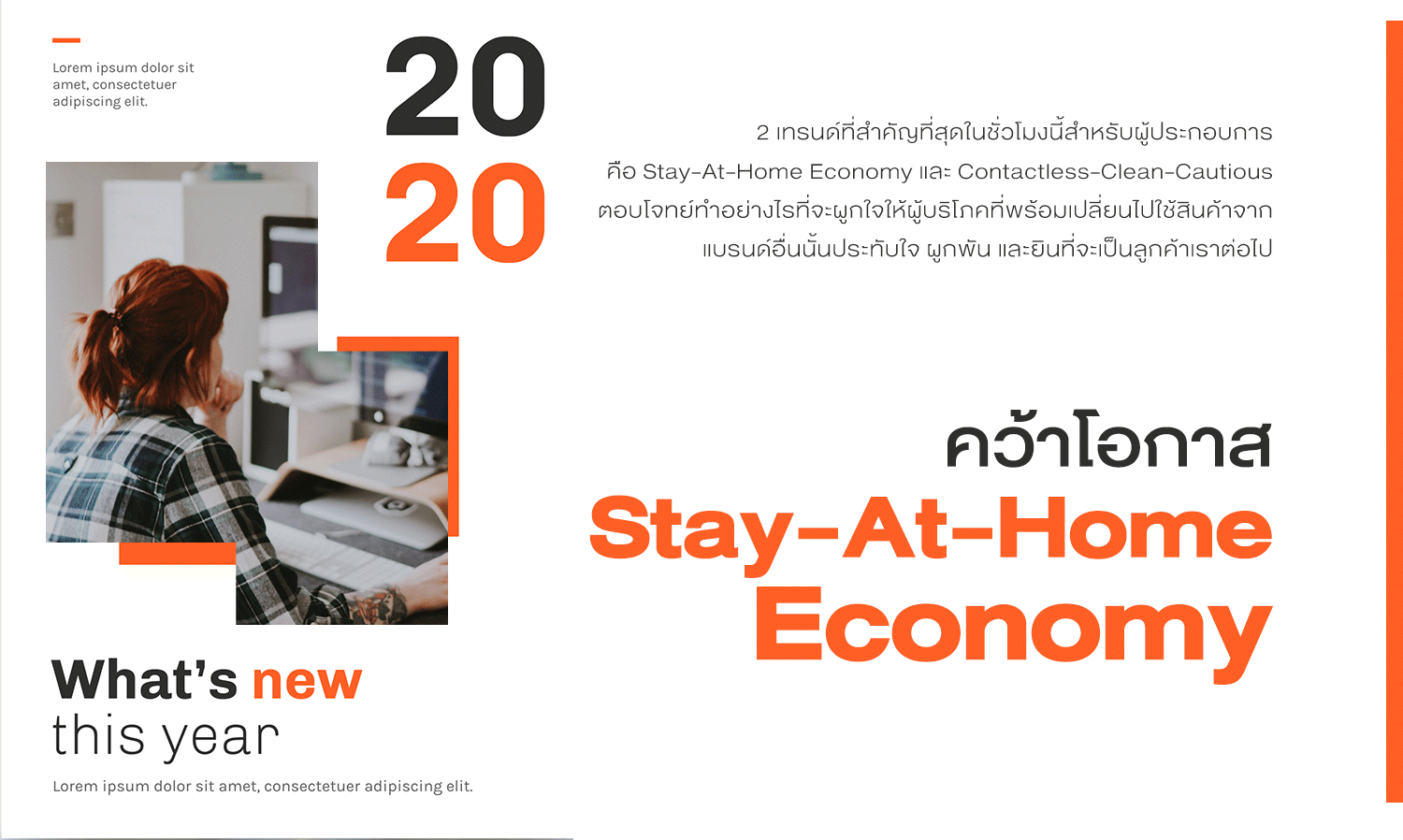
The two most critical trends right now are "Stay-At-Home Economy" and "Contactless-Clean-Cautious."
"Stay-At-Home Economy" involves bringing brands into the personal space of consumers. As 'home' becomes a 'multifunctional space' for various activities—working, studying, shopping, exercising, enjoying entertainment, or even socializing—brands need to find ways to integrate themselves into the personal space of consumers.
Increase availability through online channels. Consumers are still willing to try new products and online services that they wouldn't have considered in normal times, such as online shopping, delivery, e-payments, and live streaming. Therefore, the opportunity lies with those who can effectively integrate online channels and digital tools with existing marketing strategies to maximize customer reach, especially among the 'Hibernate & spend' group aged 18-44, who continue to purchase various products even while staying at home.
Create experiences—connect brands with consumers through technology. How can we impress consumers who are ready to switch to other brands or services, making them feel connected and willing to continue being our customers? Meanwhile, "Contactless-Clean-Cautious" will become the new characteristics of consumers.
Starting with Contactless, people remain concerned about safety when engaging in activities in public spaces and interacting with service providers. Consumers will look for long-term cleanliness and safety measures from businesses, especially in service-related industries that involve human contact in limited spaces, such as restaurants, hair salons, beauty clinics, hotels, airlines, and public transportation.
The Clean Generation has become the norm, with consumers carrying hand sanitizer or alcohol spray. Many businesses are opting for single-use products to provide peace of mind to customers during this New Abnormal. It will be interesting to see how we can balance safety and sustainability after the COVID-19 crisis ends.
Cautions—consumers are being more cautious, as seen in their avoidance of unnecessary travel and their heightened awareness when using public transportation, while also keeping up with real-time news.
Therefore, if we want to attract consumers to leave their homes and shop at physical stores, clearly communicating cleanliness and safety measures is a basic necessity that brands should not overlook.
SOURCE: www.bangkokbiznews.com