Listening and Believing: Why We Shouldn't Just Trust What We Hear
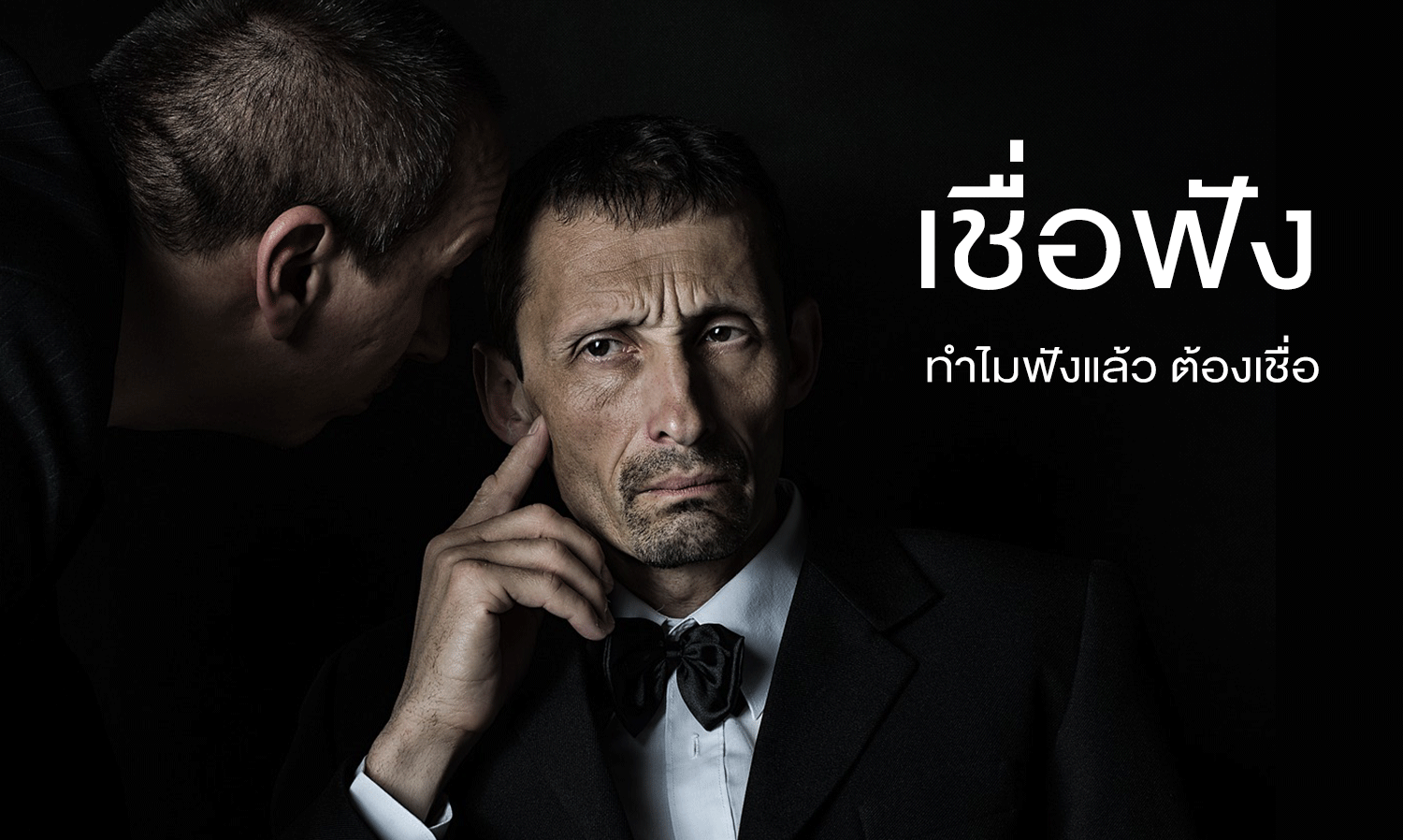
The distinction between believing and listening is crucial; we shouldn't accept everything we hear.
Do you remember? Thai children are often taught from a young age to listen to their elders. As they grow older, they hear that listening to leaders will protect the nation.
Years ago, Hugo, or Chulachak Chakrapong, a famous singer and actor, expressed his surprise at how Thai people are taught to obey their elders. In his view, the concepts of 'believing' and 'listening' should be clearly distinguished, as they carry different meanings.
Hugo, a mixed-race child educated in England, stated that we should 'listen' to everyone, regardless of who they are. However, 'belief' is a matter for us to consider carefully; we shouldn't automatically believe everything that is said.
Hugo's perspective may clash with the feelings of many Thais who are accustomed to obeying their elders or those in authority. Even the Royal Institute Dictionary of 1999 defines 'to obey' as 'to follow or act according to orders or teachings.'
Thus, 'to obey' has become synonymous with listening, reflecting Thai culture's approach to receiving information. Historically, those allowed to speak were often bosses, elders, or authorities deemed knowledgeable and educated, such as monks and teachers. Most Thais in the past received information and knowledge through listening to their superiors rather than reading, and the culture of reading has long been limited to the upper classes.
Even though printing began in Siam during the late reign of King Rama III, when those in power spoke, Thais were ready to listen and believe without questioning or doubting their words.
Thus, the culture of obeying elders has been ingrained in the DNA of Thais for a long time. Knowledgeable or powerful individuals are automatically believed, even though this contradicts the first principle of the Kalama Sutta, which states, "Do not believe merely what you have heard."
The Kalama Sutta outlines ten principles for Buddhists to avoid blind belief. Therefore, it is not surprising that in classrooms, when teachers finish their lessons and ask students if they have any questions, almost no one raises their hand.
This does not mean that students understand everything without doubt; rather, it implies that Thai children have been unconsciously taught not to question their elders. Asking questions is seen as challenging or doubting the teachings of adults. In other words, questioning is viewed as a form of disobedience.
Hugo, who grew up abroad, is puzzled by the Thai culture of obedience because he insists that the words 'believe' and 'listen' have different meanings. Correct belief should arise from listening to various perspectives before forming one's own conclusions.
Today, in a Thai society marked by division and polarization, part of the problem stems from the culture of obedience. Many people believe what they hear without analysis, as long as the speaker aligns with their views. Furthermore, some believe even before hearing what the person has to say.
Those who speak eloquently or passionately are often more accepted.
It is not surprising that in the past, successful politicians or those in power were distinguished by their speaking abilities, whether in parliament, at rallies, or on public platforms. The more engaging and captivating their speech, the brighter their future seemed.
Whether they speak the truth or fabricate stories is often not the main concern. Nowadays, besides politicians, professions regarded as knowledgeable and respected in society are also believed without question. When they speak, they are always right; their words are accepted as law, as many fans and listeners are ready to believe even before they say anything.
The conflicts in Thai society may need to be addressed by helping people understand that believing and listening are different concepts. We should not believe everything we hear, but we should patiently listen to all sides, not just one. Belief is a personal decision made after hearing from all parties, whether we agree or disagree. Starting with this simple approach may help alleviate some issues.
Please don't just believe what I've written; read and think for yourself.
SOURCE: www.bangkokbiznews.com