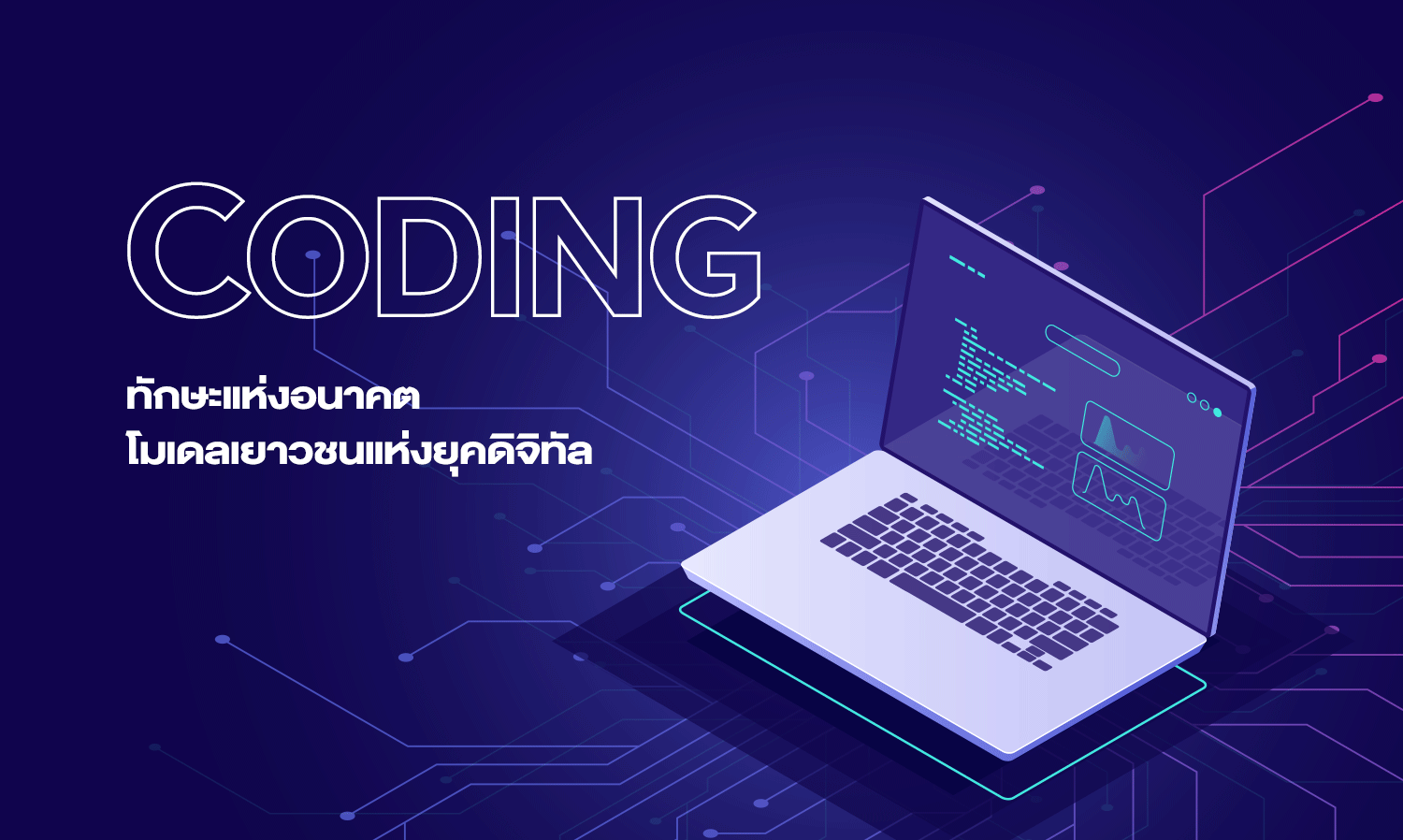
'Coding' Skills for the Future: A Model for the Youth of the Digital Age
Samsung has learned from the success of the Samsung Innovations Campus, which successfully teaches 'Coding' online by focusing on content development, platforms, and partnerships. Feedback from the 'Digital Youth' participants shows that over 80% are satisfied and have gained knowledge and skills that can be applied in the future. In the second half of the year, plans are underway to expand the initiative to create young innovators, building on the model that integrates Coding knowledge with innovation understanding and development.
Warit Jaranayanont, Senior Marketing Manager at Thai Samsung Electronics Co., Ltd., and project manager for the Samsung Innovation Campus, stated that this project was developed to enhance the potential of Thai children in the digital age through Coding training, aligned with Samsung's global vision of empowering people and creating a better future together (Together for Tomorrow!).
This year, the transition of the project to an online format received positive feedback from participants. A survey of student satisfaction revealed that over 80% were pleased with the format and content, and felt they could apply the knowledge and skills gained to future work. Despite the limitations of being an online-only training program, the success of this year's project resulted from several factors.
Firstly, the project adapted the Coding content to focus on languages that enhance mutual understanding, using basic languages that are easy to learn in an online classroom setting. The content was also tailored for youth with no prior Coding background, while also incorporating knowledge and understanding of innovation and tools for innovators, preparing participants comprehensively for future skills and enabling them to create innovative designs.
Additionally, the support system for online learning, including live learning programs, content tracking, and consultation, along with collaboration from partners who helped develop the content, further enhanced the project. This year, the Thai-Japanese Institute of Technology partnered to develop Coding content in three languages: Scratch, C, and Python, while Siam Mentis Co., Ltd. contributed to developing content and designing activities to enhance understanding of the importance of innovation design and development.
Professor Adisak Suasaming, Deputy Dean for Academic Affairs at the Faculty of Information Technology at the Thai-Japanese Institute of Technology, noted that the project revealed the potential of the students in various aspects, including their ability to learn challenging university-level content despite having no prior knowledge. The students asked insightful questions about the material, demonstrating their curiosity, problem-solving desire, and ambition to improve their work. It is clear that the participants are true 'Digital Youth'.
"They can quickly grasp IT content because they already have a good foundational understanding. They can apply their knowledge to everyday life effectively, as they see examples all around them, such as smartphone applications, and can creatively and beneficially build upon that knowledge in ways that previous generations have not seen before," he added.
Thus, the sooner we start laying the groundwork and supporting young innovators, the more knowledge and success they can achieve. The knowledge gained from the project will benefit their career paths as innovators, designers, developers, and innovation researchers, which are in high demand in today's job market.
For the youth participating in the young innovator program, many already had an interest in Coding, and after the training, they felt better prepared with knowledge and skills for future work.
Chanudom Thasanwittharakrit, a 3rd-year student at Triam Udom Suksa School, shared, "I have always been interested in technology, and when I grow up, I want to be a computer engineer because I believe technology will increasingly be involved in the future. Participating in the SIC program has made me feel more confident about pursuing this path because it was fun to learn and I understood how to write programs in different languages and learned more commands."
Meanwhile, Chitnupong Lertpitaksit, a 2nd-year student at Suankularb Wittayalai School, described his experience in the training, saying, "The SIC program allowed me to learn new programming languages, and through learning about technology development, I realized that many things we use today are related to Coding, like the social media we regularly use or the games we enjoy, which require programming. In the future, I want to write a program that helps find personal belongings because I believe many people, like myself, often lose things. Right now, we can press a button to find our smartphones or headphones, but in the future, I want to create a way to find everything, and I see the knowledge I gained as very useful."
Similarly, Napak Wityadee, a 2nd-year student at Srinakharinwirot University Demonstration School, recounted, "Participating in the program allowed me to learn C language for the first time, which I had never had the opportunity to learn anywhere else, and I didn't have to pay for extra classes. The knowledge of C language will help me understand more complex programming languages. Besides learning Coding, I am now interested in food, and in the future, I want to use my Coding knowledge to write a program that helps manage orders in a restaurant. I believe Coding knowledge can be applied to many things."
Samsung plans to expand the success of the Samsung Innovation Campus project in the second half of 2023 by organizing short coding camps that build on the model integrating Coding knowledge with innovation understanding and development to create young innovators who will drive the world in the future.
SOURCE: www.bangkokbiznews.com