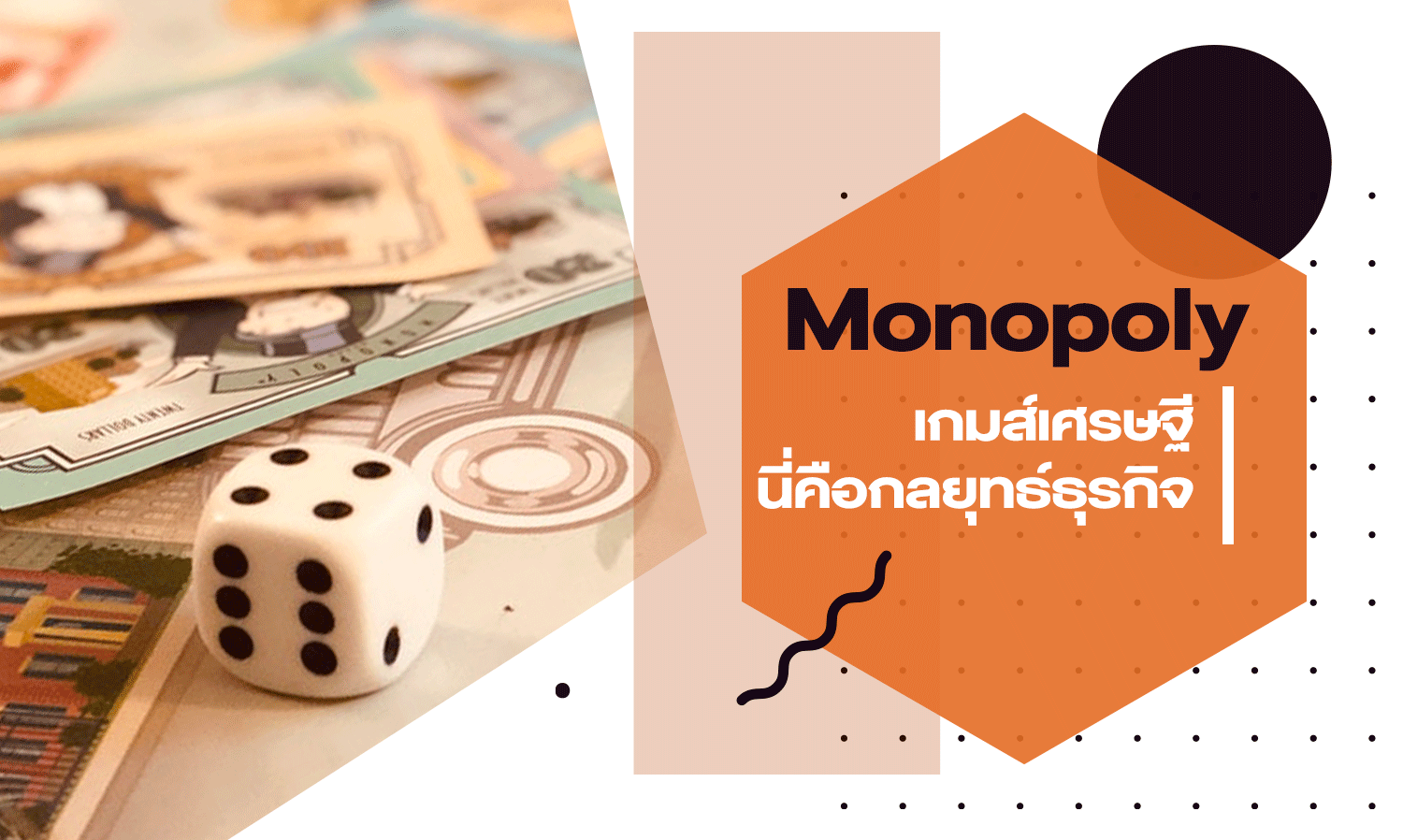
Monopoly: The Business Strategy Game
Are you familiar with the board game called Monopoly? When I was a child, I first played this game without knowing about the original version from abroad. I played a similar Thai version called "Super Millionaire," which has a box resembling the one shown below, though this image appears to be a newer version. Today, I want to discuss how this game relates to business strategies, and I believe this article will provide some valuable insights.
Understanding Monopoly
Let's get to know the game Monopoly a bit better. The name of this game is not just a coincidence; it comes from a real American millionaire named Elizabeth Magie Phillips. She created a game called The Landlord Game to simulate real estate business, income, and to foster an understanding of taxes (the single tax theory of Henry George). She patented it in 1904, but at that time, the game was played only within a limited circle. It wasn't until Charles B. Darrow played it at her home that he developed it further and sold it to Parker Brothers, which eventually evolved into the Monopoly we know today. As for the Thai version, it is believed to have been inspired by this original game (though I can't say for sure). You can find the full history of this game here: https://en.wikipedia.org/wiki/Monopoly_(game).
Game Format and Rules
Monopoly is a board game that involves taking turns rolling two dice and moving around the board according to the number rolled. If you roll doubles, you get to move again. Typically, up to four players can play. Each player starts with a certain amount of money, and after completing a lap around the board, they receive a salary each round.
As players move around the board, they may land on various properties or chance/community chest spaces, which involve luck—whether they gain or lose money or encounter different situations, which are revealed by drawing cards after landing on those spaces. If a player lands on an unowned property, they can purchase it. If they land on a property owned by someone else, they must pay rent, which varies depending on whether the owner has invested in houses or hotels. Ultimately, the player with the most money wins, while those who run out of money lose. The basic rules are straightforward, though some versions may have additional minor rules.
Business Strategy
The main idea of this game is to understand investment. Owning more properties increases the chances that others will land on them and pay rent, similar to running a large business where the potential for profit is higher. However, since all players start with the same amount of money, aggressively buying properties can be risky if you land on someone else's property, as you may not have enough money to pay rent and might have to mortgage your properties at a loss, putting you at a disadvantage.
In business, if you are not willing to invest like in this game, simply waiting for a salary will lead you to pay rent to others until your money runs out, resulting in a loss. This is akin to a business that fails to expand; if you do nothing, others will take over, and you will eventually fall behind (in real life, this may not lead to bankruptcy but can hinder progress). Conversely, investing recklessly without careful consideration can also be dangerous. While some may win in certain games by sheer luck, this is not always the case, and it can resemble gambling, which is not advisable in real business. One must consider cash flow and assets to determine if an investment is appropriate; otherwise, buying too much can lead to financial ruin.
One rule of the game is that owning adjacent properties (of the same color) grants a significant rent bonus, giving you a considerable advantage if opponents land on any of those properties. This mirrors a business growth strategy focused on concentration, which involves expanding in areas related to your existing business, minimizing risk and facilitating growth. If you invest wisely and wait for the right opportunities to connect properties, you can gain a significant advantage before diversifying into other businesses.
Similarly, buying land to block others from acquiring adjacent properties is akin to strategically limiting competitors in business to reduce your own risk. However, if you focus too much on blocking others without making any substantial gains yourself, that can also backfire. This is just one perspective to consider from the game.
The Real World
In reality, this game is not overly complex. There are strategies, such as gradually expanding properties and adding houses or hotels, or holding a majority of connected properties for bonuses. However, another critical factor that influences winning or losing, which you also encounter in real life, is opportunity and obstacles, or what we call situations, luck, or chance?! Just like moving pieces in a game, you never know what you might encounter. You may draw cards that bring unexpected fortune or misfortune. Certainly, real businesses can face similar situations; one day you might deal with floods, fraud, damaged goods, or suddenly receive a large order. It all depends on how you handle these situations and whether you can seize opportunities or overcome obstacles.
Those who have played this game know that Monopoly offers many opportunities to make money through growth. If you don't grow or expand, you won't become a millionaire. At the same time, don't assume that just because you're building a lot, everything will go smoothly. There can be unexpected twists and turns, such as cash flow issues when you need to pay but have no money, or engaging in unproductive investments. In Monopoly, these issues can arise during the game, but it doesn't take long—perhaps just an hour—and you can start over.
The reason I'm writing this is that in real life, I still see these situations occurring, but I wouldn't dare to teach anyone because they may be caught up in the illusion of growth without proper management. The rounds of the game and reality are vastly different; an hour versus ten years is a significant difference. Market trends, global currents, and innovations are like investment waves that can rise, but without understanding, they can also fall, as seen with many large companies. But we don't need to look far; even small businesses can expand, and if they can't manage it, they can become a domino effect. I've seen this up close, often because they thought they were doing well in the past and neglected management.
Today, I leave you with some business strategy insights. It might be good to play Monopoly (not just on Line) to reflect on what I've written. But if that's not convenient, that's okay. A simple thought is why many businesses that appear large and stable still need to plan? Because they don't know what opportunities and obstacles lie ahead. Additionally, why do owners hire others to manage? Or why don't they manage themselves as they grow? Because it's not a job that just anyone can do. This is how they play the game with strategy, not just relying on luck.
SOURCE: www.sirichaiwatt.com