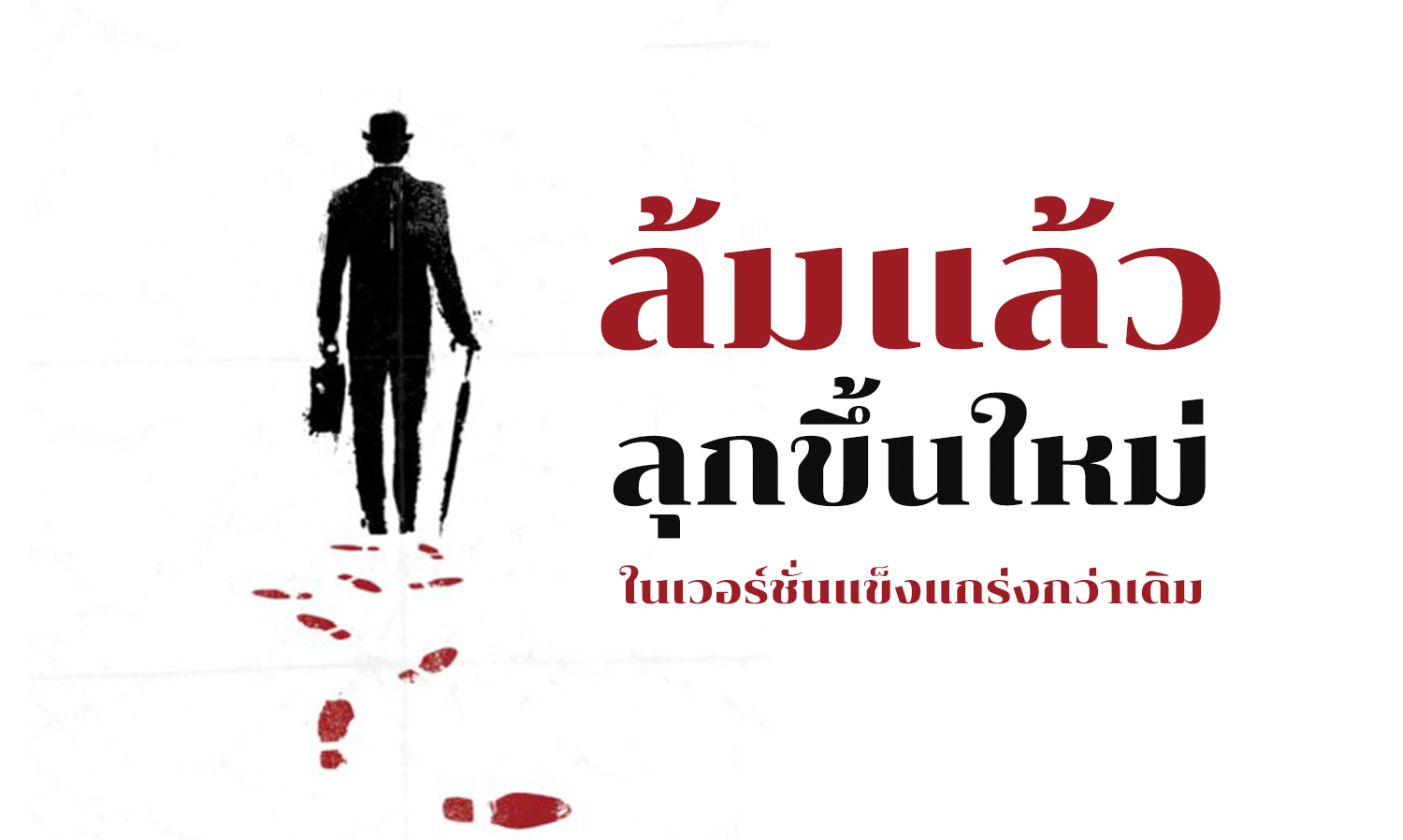
Fall Down and Rise Up Stronger: A New Version of Resilience
It has been said that "problems make us stronger," and I believe that to be true. In life, we face many significant challenges, whether it's unrequited love, financial issues, health problems, losing a loved one, divorce, work-related issues, and many more.
Each person takes a different amount of time to overcome these challenges. Some may take a short time and can shift their perspective on life and improve their coping strategies, which embodies the idea that "problems make us stronger." However, others may take years, remaining trapped in their issues and suffering as a result.
Have you ever wondered what differentiates these two groups of people? Which group do you want to belong to? And if we want to grow stronger from our problems, what skills or knowledge do we need to acquire?
Resilience, or in Thai, the ability to return to a normal and happy life after facing problems, is a skill that we can develop. It is an essential skill that allows us to overcome various challenges and return to a fulfilling life.
I read an article titled "Resilience 101: How to be a more resilient person," which discusses interesting strategies for building resilience as follows:
1. Break the cycle of negative thinking.
Often, when we encounter problems, we worry about the negative outcomes that may arise. We dwell on our past mistakes and wonder how we can fix them, or whether the same situation will happen again in the future. We think that if we can find answers, we can manage the problem. However, in reality, we are stuck in our own negative thought cycle instead of taking action and moving forward.
The question is, how can we stop negative thinking?
The article suggests that exercising or engaging in other beneficial activities can help us break free from this negative thought cycle. Even meditation, where we become aware of our thoughts and recognize them without further embellishment, can be helpful.
2. Question the worst possible outcomes.
Thinking about the worst possible outcomes can aid in planning how to manage life if those scenarios occur. For example, if we lose our job, we might think we will never succeed again. However, often the worst outcomes do not come to pass.
To manage this, we should also consider the best possible outcomes that could arise, such as landing a better job. We can keep something tangible with us to touch whenever we start thinking about negative outcomes, reminding ourselves that positive results can also happen and that dwelling on negativity is not beneficial for our lives. Once we manage our negative thoughts, we can take on challenges and work towards achieving the results we desire instead of just ruminating on the negatives.
3. Overcome the fear of failure.
Fear of failure is something many people, including myself, experience. To manage this fear, we should view challenges as opportunities to overcome rather than threats we need to fight against.
Simply changing our perspective can significantly help us manage our fears. For instance, if we fear being alone, we can reflect on past experiences where we were happy alone and think about the positive aspects of solitude, such as increased freedom to pursue our dreams and opportunities to meet new people.
4. Find the positives in past challenges or failures.
If we still feel sad about past events, it can be difficult to see the positives or lessons learned from them.
Try to recall past events that you have overcome and consider what benefits or lessons you gained from them. For example, mistakes made in the heat of the moment taught us to manage our emotions better and think more carefully.
Ask yourself these questions to uncover the positives and learn from what happened:
What good came from this event?
What have you learned that you didn't know before this event occurred?
How can you grow and become a better person from this experience?
5. View the situation from a third-person perspective.
When we are caught up in our problems, it can be hard to see the true causes. Stepping back and viewing our issues from a third-person perspective and asking ourselves the following questions can help us manage our problems better:
From someone else's perspective, do you understand what caused your disappointment and sadness?
From someone else's perspective, do you understand how the other party feels?
From someone else's perspective, how do you view this situation?
Do others see this differently than you do?
6. Remember that whatever happens will pass.
Try asking yourself these questions to envision what will happen in the future instead of getting stuck in your problems. If you can't think of anything, reflect on past issues and answer these questions:
What will you be doing in five years?
How will you spend your time?
How will you feel?
7. Look for the positives in what has happened.
For instance, unrequited love can lead to a better understanding of oneself and learning to love oneself more. Or, facing challenges in life can lead to better conversations and stronger relationships with those who matter to us.
8. Watch inspiring movies.
Sometimes, when we are overwhelmed by our problems, we may fail to see the positives or benefits of what is happening to us. Watching good movies can help us learn from the stories of the characters.
9. Face your fears.
For example, if we have financial issues, we might avoid looking at our bank account or credit card debt. Instead of running away from the problem, which we cannot escape, we should confront it and manage it mindfully.
10. Use negative feelings to benefit your life.
Feelings of anger or resentment can be powerful motivators to take positive actions in our lives. These feelings can drive us to make significant changes.
We cannot choose what happens in our lives, but we can choose how to respond to different situations and make the most of our lives. The choice is ours.
SOURCE : www.istrong.co