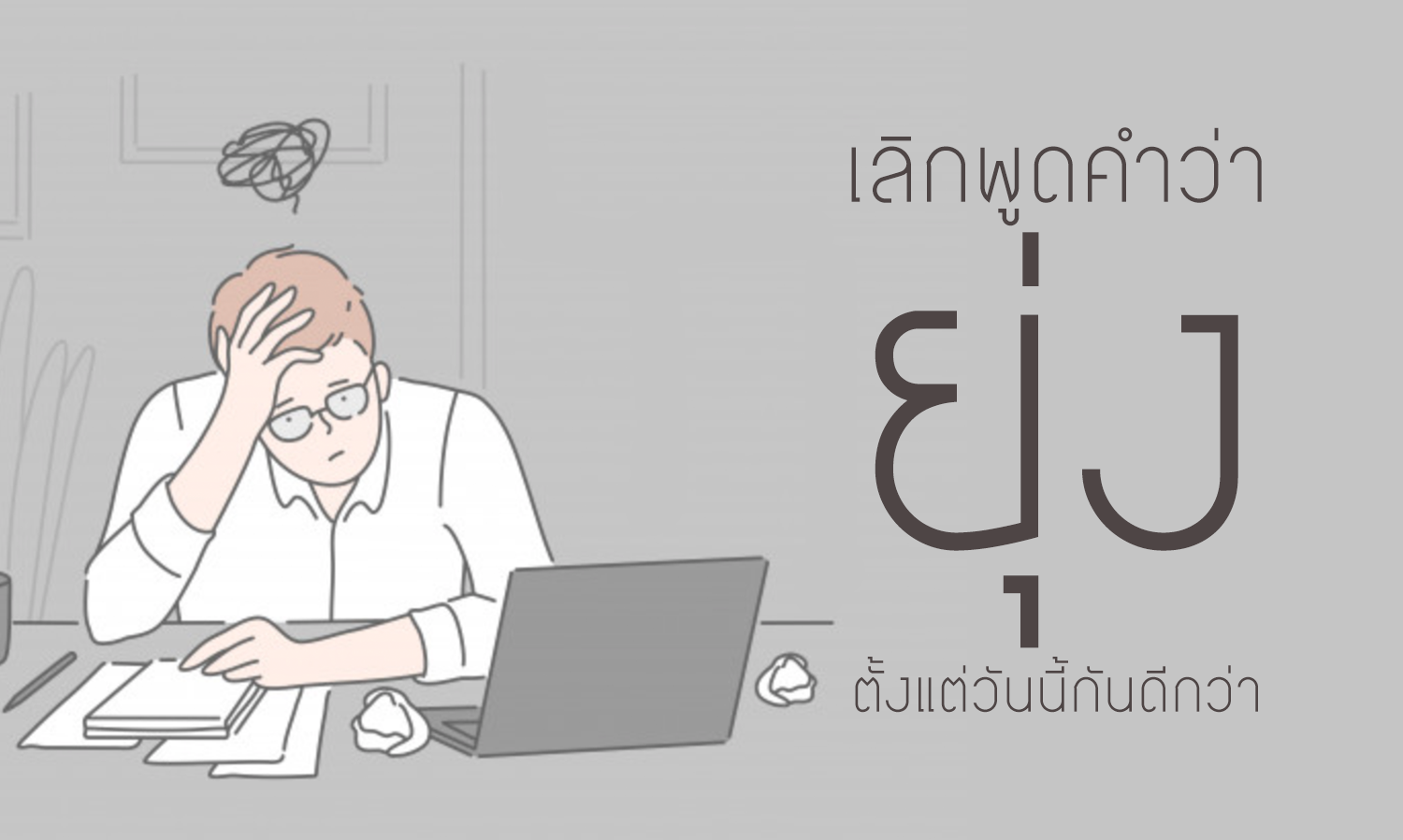
Let's Stop Saying 'Busy' Starting Today
People who often say they're 'busy' tend to be showing off, trying to demonstrate to others that “I am capable”, as a way to mask their own insecurities. They may not want others to know that they lack achievements, or they might be venting their frustration about not working to their full potential.
This is why no one takes seriously the excuse of someone saying, “Sorry, I’ve been busy lately...” when their work is delayed. It reflects a self-centered attitude, implying “I’m busy with my own work; what happens to others is not my concern.”
In essence, the word “busy” is an embarrassing phrase that reveals the speaker's self-centeredness, along with the weakness and insecurity hidden within.
Moreover, if you intentionally use the word “busy” frequently, you will actually start to feel restless and anxious, strangely enough. It’s similar to how one feels unsettled as December approaches, even if the tasks at hand remain unchanged.
When feeling this restless, people often do not have the time to observe their surroundings or to think seriously about why certain issues are problematic. This is because they fail to notice other changes. For example, when the environment shifts—whether it’s a broad view like the market contracting, the company struggling, or more specific issues like a partner's changing attitude requiring us to rebuild trust, or noticing that family members are not very happy and need attention—we might not realize the direction our lives are heading. Of course, sometimes it’s necessary to focus on the task at hand and ignore the surroundings, but if we feel 'busy' in our minds, we will miss the 'signals' that our environment or those around us are trying to communicate.
Therefore, you need to eliminate the word “busy” from your personal dictionary. A simple and clear method is to stop saying you’re busy and tell yourself, “I’m still available.” This approach has two benefits: first, it helps eliminate the excuse of being “too busy to do anything else”, and second, it encourages us to rethink how “this amount of work can be done well in what way.” This can lead us to find solutions, such as “writing a complete list and trying to prioritize it can enhance our work efficiency and improve our task management.”
Source: Let Go of Bad Habits and Find Happiness Amarin Publishing
SOURCE: www.goodlifeupdate.com