"Free": A Short Yet Powerful Word in the Business World
Once upon a time, jelly was considered "strange," "difficult to make," and "unsellable." However, the word "free" transformed it into a popular item.
In the past, anyone wanting to make jelly had to put scraps of meat attached to bones in a pot, simmer it for half a day, waiting for the collagen to break down into smaller molecules and separate from the meat scraps.
But Pearle Wait, a carpenter who decided to venture into the food business, experimented until he successfully created a gelatin powder in various flavors with a simpler preparation method, naming it Jell-O.
However, it still struggled to sell.
By the late 19th century, jelly was too unfamiliar; the brand was unheard of, and people were still using Victorian recipes, which required everything to be clearly categorized. No one could tell if this new jelly was a salad or a dessert.
Wait spent over two years trying to attract interest in his product but failed. He eventually sold the trademark and everything to Francis Woodward, a businessman from the same town.
Of course, Woodward had more business acumen, but he still couldn't sell the gelatin. He considered selling it to Jell-O producers, but they were not interested either.
The main problem was that people didn't know the product or what to do with it. When customers weren't interested, stores wouldn't order it. Then Woodward realized that producers of boxed ingredients or seasonings often included recipes in their boxes. He had the idea that if there was a recipe guide for Jell-O, it might attract more customers.
However, Woodward didn't include a guide in the box. He and his marketing chief planned to buy advertising space in Ladies’ Home Journal and printed guides for peddlers to distribute to homemakers in various towns. In some towns, if there was no permit for selling foreign goods, they wouldn't allow door-to-door sales. But distributing recipes wasn't considered selling, so peddlers knocked on doors and handed out cooking guides for free, with no strings attached.
After distributing guides throughout the town, the peddlers contacted local stores, warning them that soon many customers would be asking for the new product called “Jell-O.” Smart store owners wouldn’t want to miss the opportunity to stock up on Jell-O.
This time, the Jell-O boxes in the peddlers' trucks began to move, and just two years later, it became a fast-selling product, with annual sales reaching one million dollars. Jell-O became a household name and an essential item for American families.
===============
=A Book About "Free"=
“Free” is a powerful word. It changes customer psychology and makes almost any product or service seem more appealing. Chris Anderson recognized the influence of the word "free" and thought it would be worth exploring further, similar to his studies on the Long Tail and Makers.
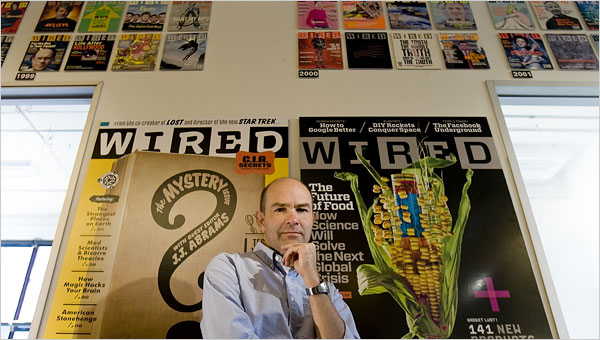
Chris Anderson wrote a book titled Free: The Future of Radical Price. He is a former editor-in-chief of Wired magazine, currently the CEO of 3D Robotics, and is a different Chris Anderson from the one associated with TED (whom we will discuss later).
Through his research, Anderson divided "free" into two eras: free in the 20th century and free in the 21st century. Each era is driven by different economic concepts.
Free in the 20th century saw people using "free" as a gimmick or marketing tool (like Woodward did). Some might use the term "free," but it didn't always mean no cost, such as "buy one, get one free," which actually meant a 50% discount if you bought two items, or "free shipping," which might have included shipping costs in the product price.
Thus, people's perceptions of the word "free" in the past differed from those today. They believed that "free" didn't mean no payment was necessary because sooner or later, someone had to pay. Whenever they heard the word "free," it meant they should prepare to reach for their wallets.
However, free in the 21st century is truly free, in the sense of being treated to a meal. This kind of free is not just a marketing tool but represents a new economic model altogether.
Anderson states that this new kind of free is based on a bit-based economic concept rather than an atom-based one, a characteristic of the digital age that believes everything, once it becomes software, will eventually be free. The cost becomes negligible, and often the selling price is also free.
“This new kind of free is creating a multi-billion dollar business market where nearly everything is priced at zero for the first time in history,” Anderson says.
The bit economy follows "Moore’s Laws," which state that integrated circuit chips in computer processors will halve in price every two years, but the price of bandwidth and storage will decrease even faster. The internet combines all three, further driving down costs. The result is that the prices of goods and services online decrease by more than 50% each year.
Thus, the trend of online business costs is heading towards zero (0).
With this concept and trend, people who grew up in the online world believe that free means truly free, with no money involved. Take Google, for example. We use Google's search service every day, but we've never received a bill for the search service.
This new form of free has led to new business models and created new markets where offering something for free yields returns other than money.
Freemium is a business model that emerged in this new era. Venture capitalist Fred Wilson coined this term. Businesses using this model divide their services into various versions, from free versions to expensive or premium versions, and of course, the premium version offers more features than the free version.
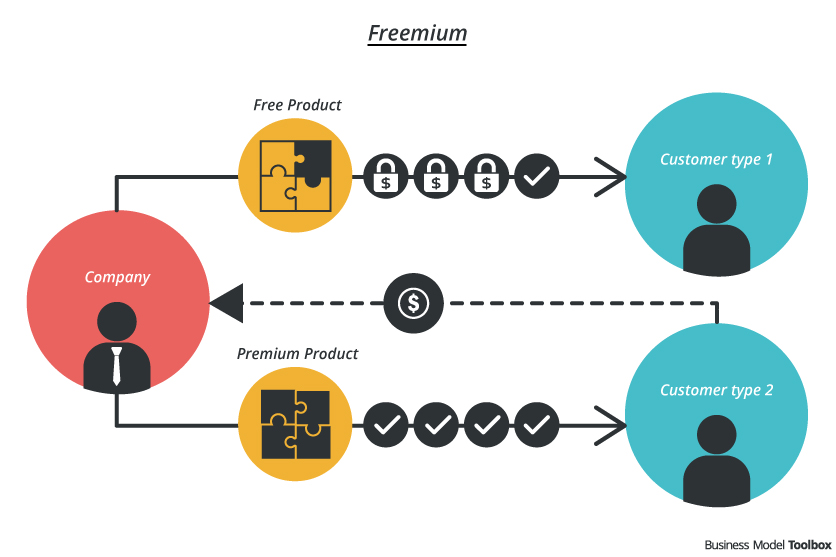
Businesses using this model often have digital products. They expect about 5% of users to opt for the paid version to cover the costs for all users. In other words, for every one person who buys the premium version, there are about 19 others using the free version.
The reason product or service owners can afford to give so much away for free is that the cost of serving those 19 users is nearly zero.
Now, let's discuss giving away for free without expecting money.
Anderson refers to this as a non-monetary market because, for some people, money isn't their top priority. So what do they want? Certainly, individual desires vary.
Google provides search services for free. Every time you search for information, you help Google improve its advertising program's targeting. The more you use it, the more value you add to those services. Or, to put it another way, Google doesn't want your money; they want your data.
Writers who post content on blogs or websites without ads may seem to gain nothing at first glance. However, every time you read what they write, you give them your "attention," which helps increase their "reputation," which they can leverage for benefits, such as finding more work, networking, or attracting clients.
Or it could be an organization hosting an exclusive conference that allows people to access content for free through streaming video to spread the ideas of the speakers as widely as possible, in line with the motto Ideas Worth Spreading.
==============
=Another Chris Anderson=
Richard Wurman and Harry Marks co-founded TED in 1984 as an exclusive conference covering three topics: Technology (T), Entertainment (E), and Design (D), where attendees had to be invited and pay a considerable registration fee.
Every year, famous CEOs from Hollywood and former U.S. presidents attend to listen to renowned individuals present their ideas, each lasting only 18 minutes.
In 2000, Wurman, at the age of 65, began searching for a successor and met Chris Anderson, a media entrepreneur and TED enthusiast. They discussed TED's future until Wurman ultimately chose Anderson as his successor, with the title of Curator.
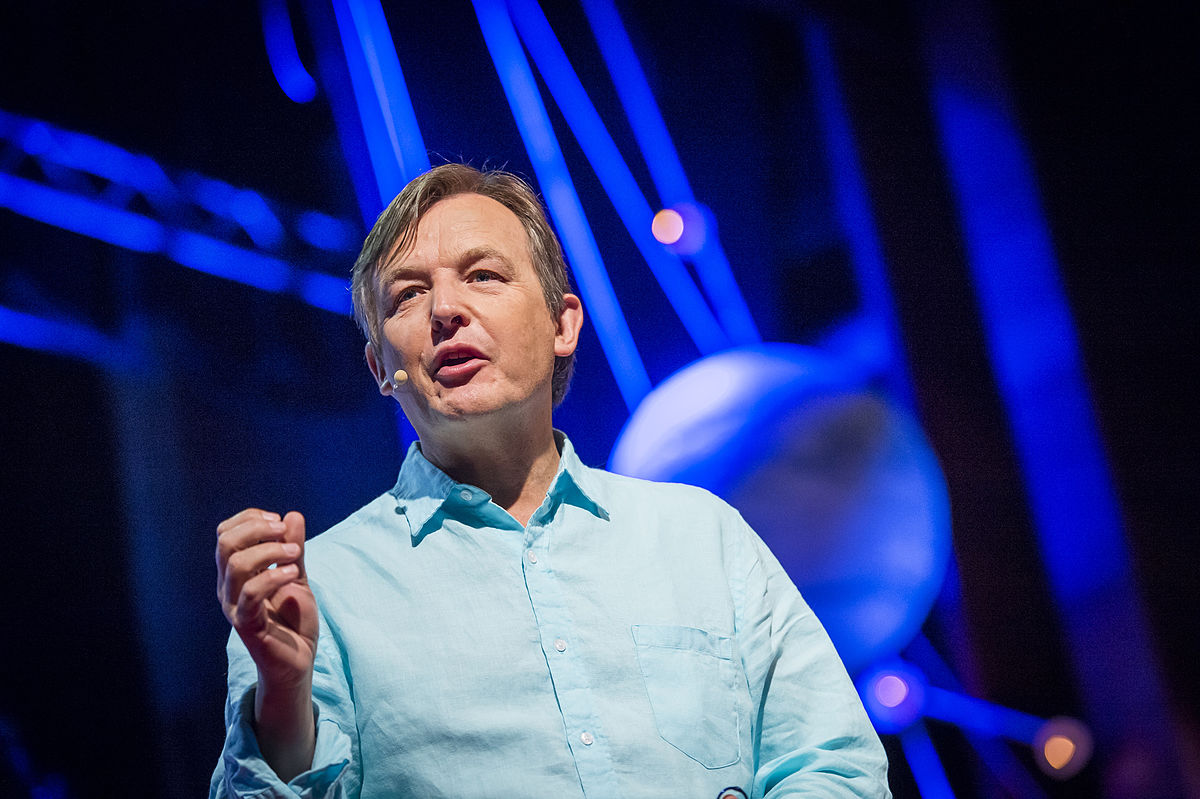
2006 marked a turning point for TED, transitioning from an invitation-only system to a membership system, offering members even more privileges, and began incorporating "free" into its model.
Anderson decided to make TED's video content available for free on its website (www.ted.com/talks), but this free offering did not reduce ticket prices; instead, the demand for attendance increased.
In 2006, the first year of online dissemination, tickets were priced at $4,400. In 2007, the business model shifted to an annual membership system, costing $6,000, and currently, the standard membership is $10,000.
So why haven't membership prices decreased? The answer lies in the different experiences offered.
Don't forget that there's a high chance you'll meet celebrities and experts at TED. You have the opportunity to interact with them, something you won't get from watching online. Additionally, you can be among the first to experience new innovations at the event.
The experience you gain from attending is the incentive that justifies the high ticket or membership prices. In 2008, a ticket to the TED Conference was auctioned on eBay, closing at a staggering $33,850. The proceeds were donated to charity, and the winner received the privilege of having coffee with Pierre Omidyar, the founder of eBay, and lunch with actress Meg Ryan.
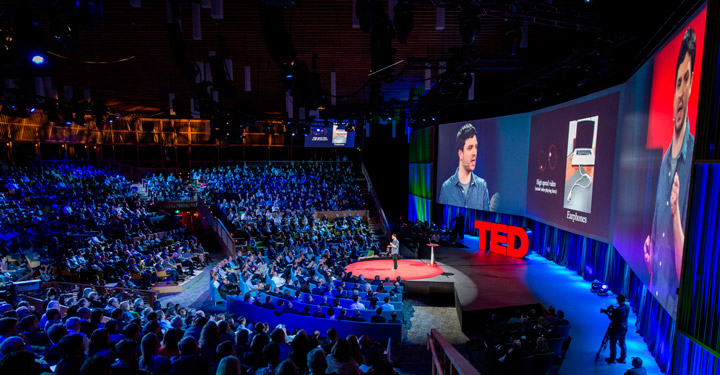
We could say that offering free online content is a strategy known as max strategies, as Eric Schmidt, former CEO of Google, once mentioned.
“No matter what business you are in, spread your product or service as widely as possible. In other words, since you have no cost in distributing your product or service, you should distribute it everywhere,” Eric Schmidt said.
Speaking to share ideas along with using online channels has allowed those ideas to spread more widely. The reputation of the speakers and TED has increased, leading to a growing interest in attending, prompting TED to expand by offering more speaking opportunities, such as TEDx events that have emerged in various locations, including Thailand.
===============
The new form of free has allowed TED to thrive, as Anderson once stated that TED is not a sales platform, and many speakers do not prioritize money; they want to share their ideas. It is a non-monetary market.
The new form of free opens up opportunities. You might do something that seems unproductive, and those passing by might say, "Why waste your time?" But don't be swayed; remember Chris Anderson's words (the author of Free):
“In reality, free does not mean no profit; it simply means the path to profitability is not a straight line.”
===============
References:
The book Free: The Future of a Radical Price
https://www.ted.com/about/our-organization/history-of-ted
https://www.ted.com/about/our-organization
SOURCE: www.techsauce.co