
What is Wheel Alignment? When Should You Get It Done?
What is wheel alignment? When should you get it done? This is a question that many of you might wonder about, especially when changing to new tires. Today, TiresBid will provide some guidance on wheel alignment.
Every vehicle typically has a specific wheel angle set by the manufacturer to ensure the car drives straight under weight. However, achieving the correct wheel angles is not just about alignment; there are also factors related to the suspension. Over time, as you use your vehicle, some bolts may loosen slightly, or if you hit a pothole or bump, various parts may get damaged, causing the wheels to be out of alignment in the long run, even after an alignment is done. Poor alignment can lead to uneven tire wear, particularly on the edges of the tires, and can cause the vehicle to pull to one side. Therefore, if your vehicle has alignment issues, you should check the suspension first before getting an alignment to ensure long-term effectiveness. It's a common misconception that you should always get an alignment after changing tires.
Let's go into a bit more detail about the main angles that are adjusted during an alignment.
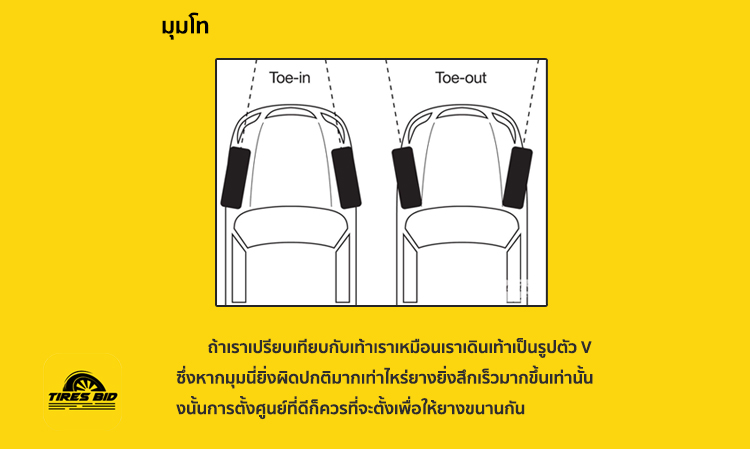
The first angle is the Toe angle. If we compare it to our feet, it's like walking with your feet in a V shape. In this case, you can imagine that the inner edges of the tires will wear out more quickly. The more abnormal this angle is, the faster the tires will wear out. Conversely, if the angle is incorrect in the opposite direction, the same principle applies. Therefore, proper alignment should ensure that the tires are parallel.
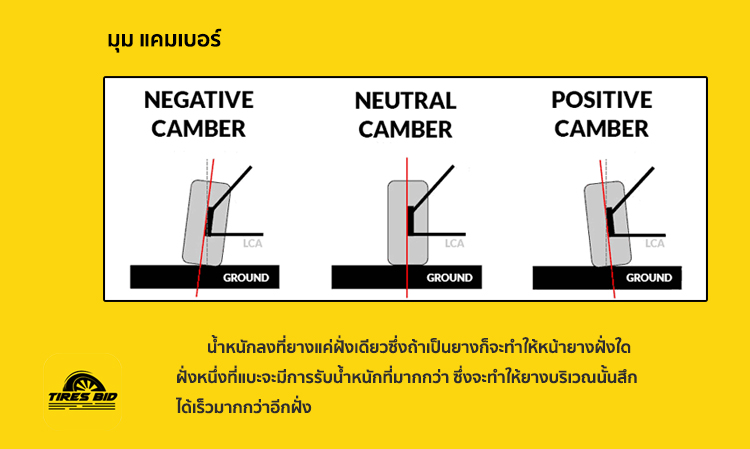
The second important angle is the Camber angle. This can be simply compared to a person walking with their feet splayed out. This causes weight to be distributed unevenly across the tires, leading to faster wear on one side of the tire.
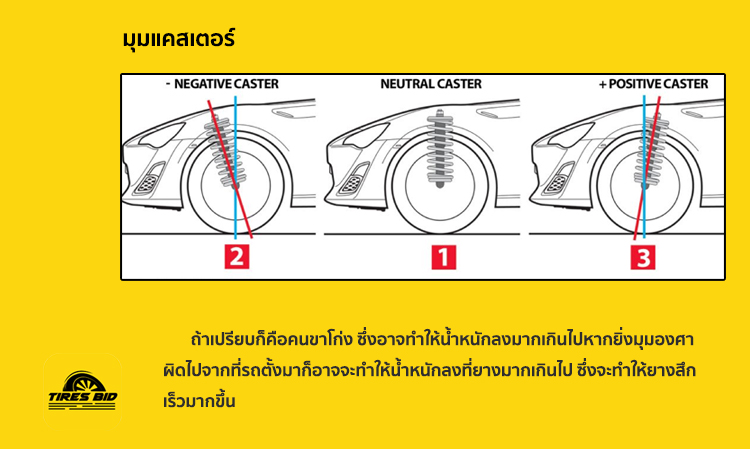
The third main angle is the Caster angle. This refers to the tilt of the steering axis. If we compare it to a person with bow legs, this can lead to excessive weight on the tires if the angle deviates too much from the manufacturer's specifications, resulting in faster tire wear.
In summary, what TiresBid wants you to understand about wheel alignment is that changing to new tires does not necessarily affect the original alignment. You do not need to get an alignment every time if your existing alignment is not problematic. If there are issues, check the suspension before getting an alignment to ensure that the alignment remains accurate in the long run. If you have any questions about tire care, feel free to reach out to TiresBid via Line@ : @tiresbid, as we are ready to provide more knowledge and understanding about tires.
Thank you for the information from: https://tiresbid.com/blog