STP Marketing: An Old Strategy That Still Works
In today's world, there are countless marketing strategies, with new theories emerging almost daily. It's impossible to cover them all, but one fundamental strategy that every marketer or business owner should be familiar with is STP Marketing. Unfortunately, many tend to overlook this strategy and fail to implement it. Today, Terrabkk would like to revisit the STP Marketing strategy, hoping that readers can leverage it to enhance their business operations.
What is STP Marketing?
STP Marketing is a strategy for selecting target market segments, which can be divided into three components:
- Segmentation: Market Segmentation
- Targeting: Target Market
- Positioning: Brand Positioning
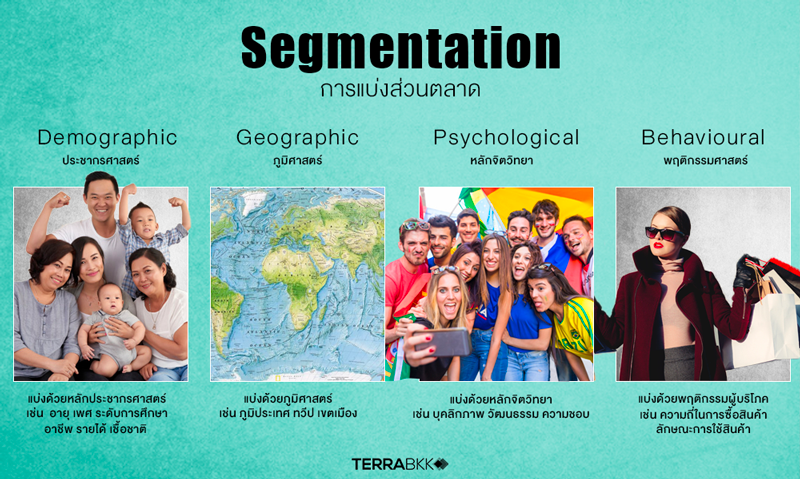
Segmentation refers to the process of categorizing target markets or customer groups into segments. This helps business owners identify who their target customers are, what they look like, and how many groups they have. Basic segmentation can be categorized as follows:
- Demographic: Segmentation based on demographic factors such as age, gender, education level, occupation, income, and ethnicity.
- Geographic: Segmentation based on geographical factors such as terrain, continent, and urban areas.
- Psychological: Segmentation based on psychological factors such as personality, culture, and preferences.
- Behavioral: Segmentation based on consumer behavior, such as purchase frequency, quantity of use, and usage patterns.
Segmentation can be approached in various ways. For example, consider the market segmentation for a body wash product like Vaseline:
- Demographic segmentation could target women aged 15 and older from middle-income backgrounds.
- Behavioral segmentation might focus on the product's ability to clean and refresh the skin, highlighting its five essential skin-nourishing ingredients.
- Purchase behavior could indicate that consumers buy it when they need to clean or may purchase in bulk as needed.
- Consumer attitudes towards the product suggest that users have a positive perception of Vaseline Healthy Body Wash, often recommending it to friends and remaining loyal to the brand.
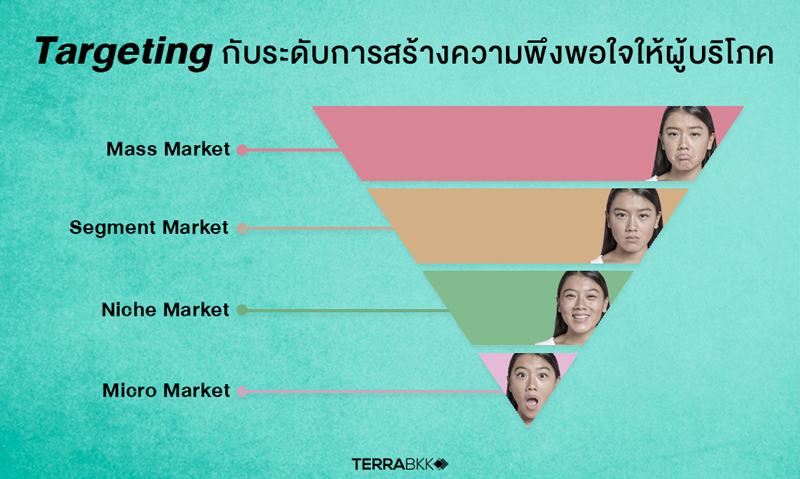
Targeting involves selecting the target market for your products. After segmenting the customer base through segmentation, targeting helps identify which customer groups to focus on. Since it's impossible to meet all customer needs with a single product or service, clear target market selection is essential. Targeting can be categorized as follows:
Mass Market: This approach targets all segments, aiming to reach every customer group with confidence that the product or service can satisfy everyone. This strategy is typically suitable for consumer goods that are easily accessible and usable by all. However, businesses targeting the mass market often require significant investment and may face price wars due to product substitutability.
Example: Mass market segmentation could include broad categories like men, women, children, and adults without much specificity.
Segment Market: This involves breaking down the target market into smaller categories based on segmentation. This approach is suitable for products or services that cannot meet the needs of all customer groups with a single offering. Segmenting allows for more tailored products or services to meet specific customer demands. Segment market strategies are similar to mass market strategies but differ in that they use different products to cater to distinct consumer groups.
Example: Segment market examples could include men who enjoy exercising or women who love reading.
Niche Market: This strategy focuses on a specific group of customers, offering more detailed segmentation than segment markets. This approach is suitable for products or services that do not require high investment and aim to create added value. Typically, niche market customers are fewer in number due to their specific preferences.
Example: Niche market examples could include men who exercise through sports or women who enjoy reading novels.
Micro Market: This involves breaking down customer groups into the smallest units, tailoring the market to individual tastes. This strategy is suitable for products that do not require significant investment and aim to create added value, often involving handmade or one-of-a-kind products, resulting in the smallest customer base but the highest customer satisfaction.
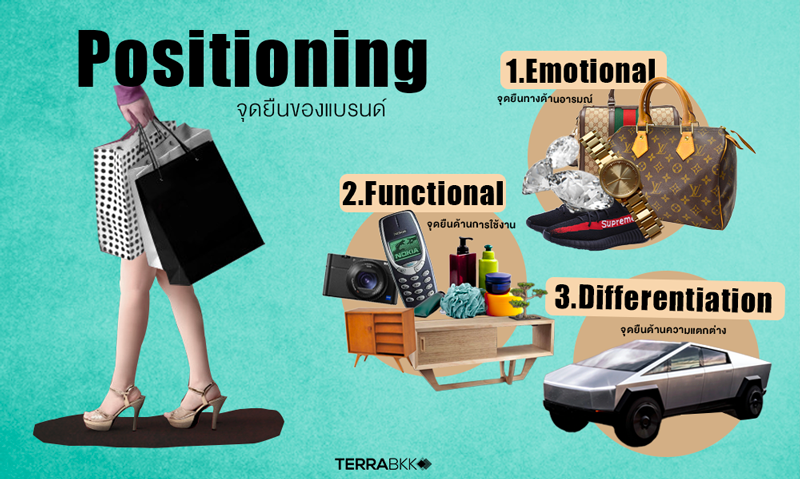
Positioning refers to defining the brand's unique selling proposition. Once the target market is identified, the next step is to determine the brand's strengths, areas where it can outperform competitors, and how it can win over customers. Positioning can be approached in various ways, such as emphasizing product features or key benefits. Generally, positioning can be categorized into three main areas:
1. Emotional: This positioning focuses on emotions and feelings. Products suitable for this type of positioning are those that express status, luxury, and indulgence.
2. Functional: This positioning emphasizes product usage, quality, and the true benefits of the product or service. Products suitable for this type of positioning are general goods that focus on functionality and highlight their benefits.
3. Differentiation: This positioning focuses on creating a distinct identity from similar products in the market. Products suitable for this type of positioning are new to the market and cannot be easily substituted.