
What to Invest in to Win the Hearts of Freelancers
The growth rates of freelancers in Thailand and abroad differ, leading to varying investment opportunities in this group.
- Statistics from the United States show that the number of freelancers has significantly increased, reaching 57.3 million in 2018, with predictions indicating they will become a major labor force by 2027.
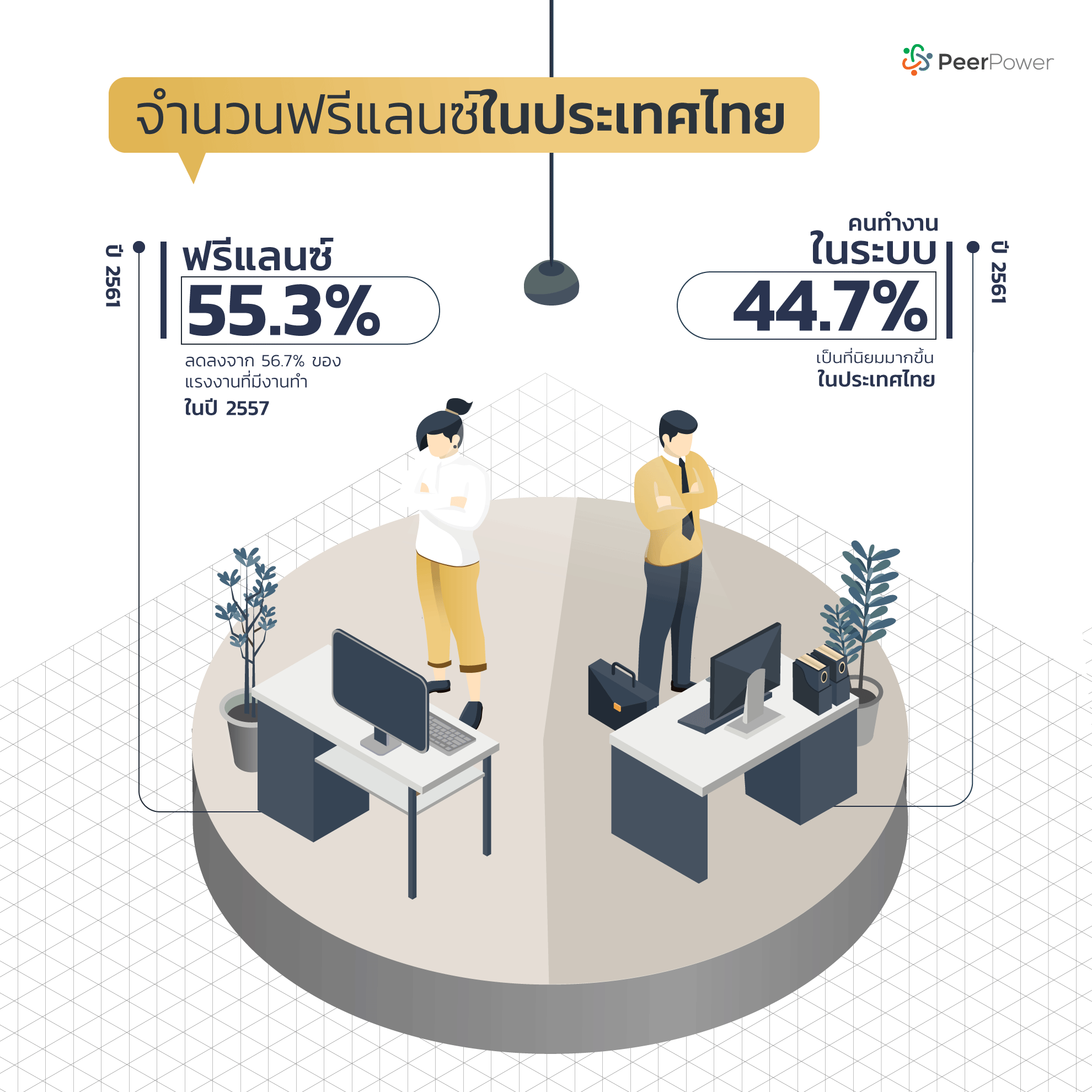
- In the last five years, the percentage of informal workers or freelancers in Thailand has decreased from 56.7% of the employed workforce in 2014 to 55.3% in 2018, indicating a growing preference for formal employment.
- Despite the declining number of freelancers, they still represent a substantial population, making it feasible to create products or services that cater to them, as freelancers often face challenges related to working hours, job access, benefits, and financial credit.
- Startups are addressing the pain points of freelancers, such as Fastwork.co, which serves as a marketplace for freelancers to find jobs, and specialized life insurance for freelancers.
It is commonly believed that freelancing offers independence and flexibility. In countries like the United States, freelancing is a highly popular profession, with reports indicating that in 2018, the freelancer population reached 57.3 million, and it is expected to become a primary labor force by 2027. The U.S. freelance market is thus considered large and promising. However, looking at the statistics for freelancers in Thailand from the National Statistical Office, we find that over the past five years, the number of Thai freelancers has been steadily declining. The latest data from 2018 shows that the freelancer population dropped to 55.3% from 56.7% five years prior, indicating that the working-age population contributing to the country's GDP is increasingly favoring formal employment. What could be the reason for this?
Thai Freelancers and Their Non-Free Conditions
It was once believed that freelancing provided greater freedom and flexibility, but this is not always the case. Here are some challenges that freelancers currently face:
Competition Among Freelancers
Freelancing skills can be learned, allowing anyone with specific expertise to become a freelancer. This has led to a large number of people entering the market, resulting in increased competition. At the same time, freelancers often cannot demand higher wages, forcing them to work harder than those in formal employment to maintain their client base.
Access to Job Opportunities
Most freelancers find work through connections, making it crucial to maintain relationships with clients. Additionally, they must market themselves to build credibility, which requires effort to seek out potential employers to increase job opportunities.
Heavy Workload in Limited Time
Forget about having time; this profession lacks income stability, leading many freelancers to accept every job that comes their way, as they cannot predict when they will receive work again. This means that certain periods can be extremely busy, and they may struggle to manage their time effectively.
Self-Funded Health Expenses
Without government or employer support for expenses, freelancers must consider their own welfare and healthcare costs.
No Financial Credit
Financial institutions assess creditworthiness based on income documentation, which freelancers often lack. Therefore, obtaining initial loans can be challenging, and even applying for a credit card or a loan for a large purchase may result in denial.

Thai Freelancers and Investment Opportunities
While the statistics indicate a declining trend in freelancing, it is important to note that this group still constitutes over half of the employed population. This means that investment in a market with freelancer clients is viable, particularly in providing services that freelancers need.
Job Finding Assistance
Currently, there are startups that help freelancers in this area, such as Fastwork.co, which acts as a marketplace connecting freelancers with employers, making it easy to negotiate job agreements through their website and app.
Health Support
Many life and health insurance companies have developed packages specifically for freelancers, with premiums comparable to those of formal employees, addressing some of the challenges freelancers face.
Financial Credit Assistance
A critical issue for freelancers is the lack of income verification documents. In other countries, there are services like SHINE that manage documentation and transactions, allowing freelancers to establish credit within the system. In Thailand, freelancers can build credit through business registration or fixed deposits, but no organization or company currently offers services similar to SHINE, presenting a significant opportunity for fintech companies looking to address this issue for freelancers.
Workplace Community Support
Co-working spaces can help in this regard. Their purpose is to bring together people working in similar fields to share resources and support each other. However, in Thailand, co-working spaces are often just alternative workplaces. If a startup could create a collaborative work community, it would also be an interesting investment opportunity to support this aspect.
There are numerous business or investment strategies focused on the freelancer customer base. If the challenges can be effectively addressed, this market remains quite intriguing.
SOURCE: www.peerpower.co.th