Social Detox: Healing from Social Media Addiction
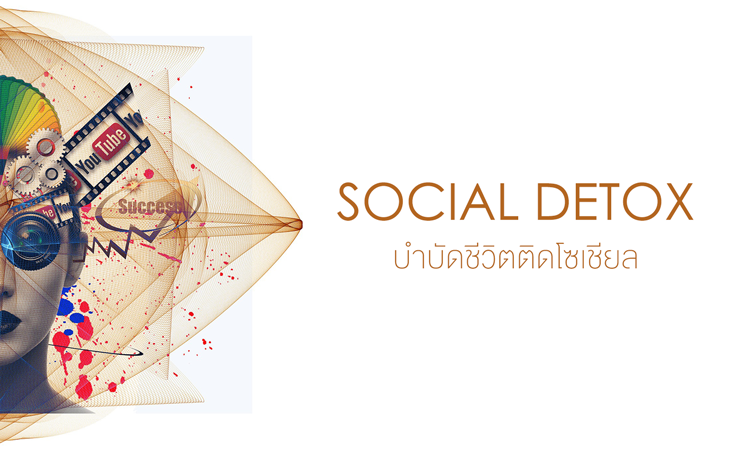
We must admit that we are living in a "head-down society," where everyone is looking down at their smartphones, existing in another virtual world.
Sometimes, being overly absorbed in social media or playing on our smartphones can lead to both physical and mental health issues without us even realizing it. If you recognize that you are severely addicted to social media or your phone, it's time for a Social Detox.
You may have heard of the term Detox, which refers to removing toxins from the body for better health. Similarly, Social Detox or Digital Detox is about treating the addiction to social media that negatively impacts our mental state, causing distress and stress that can extend to our physical health and daily life. Therefore, we need to address these issues to restore our mental well-being to its original brightness and freshness.
Is Social Media Destroying Our Happiness?
Have you ever wondered why sometimes we feel unhappy even though we aren't facing any sad events in our lives? Where does this feeling of "unhappiness" come from?
An article from Quartz mentions that our sense of happiness or satisfaction comes from spending time on things we enjoy, such as socializing with friends or engaging in hobbies. However, this happiness can diminish when social media is involved.
Instead of focusing on what is happening right in front of us, we might be preoccupied with capturing photos, recording videos, or documenting our experiences to share on social media. If we don't have images or clips to prove that we were really there doing those things, it can cause anxiety for some.
The article also states that many aspects of our lives are currently driven by social media, which influences our lifestyle and mental state. The more we become addicted to our online presence, the more our real-life identity may be consumed.
- Pain in the palms, neck, and shoulders
Our hands are heavily used when we spend long periods on our smartphones, and our necks may become strained from looking down at the screen. If you experience pain in your hands, neck, or shoulders, it's a sign that you should put your phone down and take a walk to stretch.
- Eye strain and discomfort
The light emitted from smartphone screens is blue light, which can damage the retina and cause dryness from prolonged staring. Try not to look at the screen continuously for long periods, and give your eyes a break by looking at your surroundings.
- Anxiety when unable to use social media
If you find yourself feeling anxious or irritated when you can't access social media due to network issues, a broken phone, a dead battery, or urgent work that prevents you from using your phone, it indicates a serious addiction.
- Constantly thinking about social media
Even while studying or working, you might still be preoccupied with thoughts about what to post on social media, what kind of photos to upload, or what songs to share to gain attention. This is definitely not healthy.
- Comparing lives
Social media is filled with posts and lifestyle updates, showcasing how others seem to live luxurious lives, especially our friends who appear to be enjoying life. This can lead to feelings of inadequacy as we compare ourselves to the images we see online, making us feel inferior. Conversely, receiving a lot of likes can inflate our egos, while a decrease in likes can diminish our self-esteem.
- Changing our perspective on social media
In reality, social media can be very beneficial if used correctly. Many people connect with those far away or reunite with long-lost friends through social media, bridging distances. However, social media is not our entire world. Just because people on social media agree with us doesn't mean it's the majority opinion, and the views expressed online are just one perspective that we shouldn't let weigh heavily on us.
- Deleting apps / Setting usage limits
If social media is starting to affect your mental health too much or you feel you are severely addicted, consider making a change by deleting social media apps. You might start by deleting just one app that you use most frequently and set a goal not to use it for a certain number of weeks or months. Once that period is over, you can delete another app.
Alternatively, if deleting apps feels too drastic, try reducing the time you spend on social media or setting specific times for usage, like allowing yourself one hour on Facebook on Mondays or not using Twitter after 9 PM on Saturdays. Setting these limits will help you realize how much time you wasted on social media before the Social Detox.
- Setting goals for other activities
Many people spend time on social media because they feel they have nothing else to do. Even when they run out of things to watch, they still can't put their phones down. Therefore, we need to set goals for other activities besides scrolling through our smartphones. Reclaim the time lost to social media by reading books that have been piling up, exercising, learning to cook, or taking classes to enhance skills. This will help us use our time more productively.
- Spending more time with family
While social media allows distant people to communicate as if they are close, it can also make us forget those who are near us as we focus on the online world. So, during your Social Detox, take this time to meet with family, friends, loved ones, or pets in person, engaging in real-world interactions rather than just online. This will allow for conversations, exchanges of ideas, and better understanding of one another.
In addition to smartphone addiction affecting health, modern lifestyles—such as consuming junk food, walking amidst pollution, and not exercising—also pose risks for health problems and increased chances of illness.
Using social media has both benefits and drawbacks. If we learn to use it appropriately and not let what we see on social media dictate our normal lives, we must remember that it is just a communication tool. We should not let it control us. By letting go of certain things from the social media world, we can find greater happiness.