Bangkok Residents Are Using Buses Less
Despite ongoing complaints about the high fares of the Skytrain, which are deemed too expensive and contribute to a higher cost of living that does not align with the average income of Bangkok residents, there are concerns that the Skytrain serves primarily the middle class. For those in the lower-income bracket, the fares are simply unaffordable.
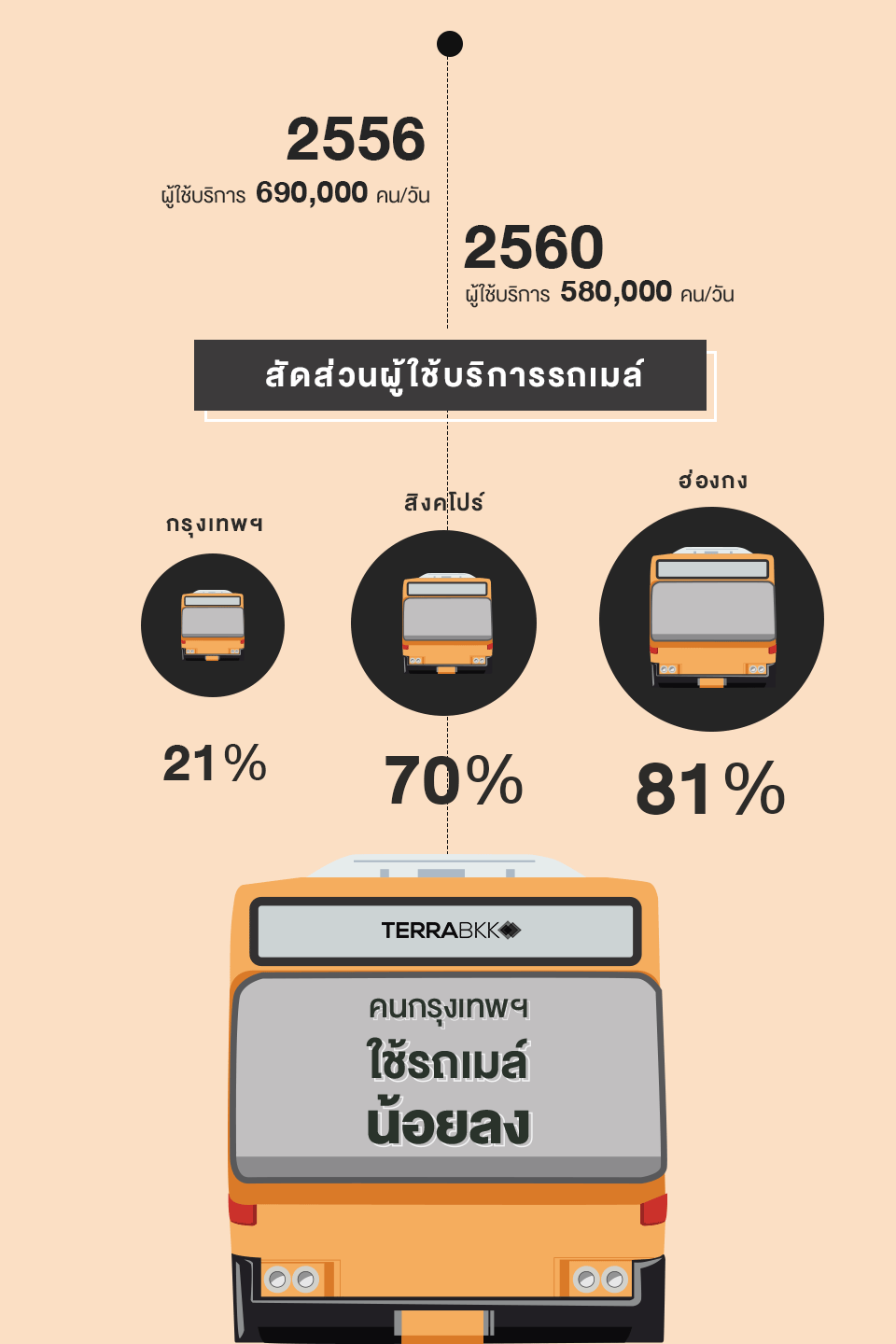
Conversely, when looking at public transportation options like the bus, which appears to have fares more aligned with the population's income, it is noted that the number of users has been steadily declining. In 2013, approximately 690,000 people used the bus daily, but by 2017, this number had dropped to only 580,000. This indicates an average annual decrease of 27,500 users per day. With high Skytrain fares and low living costs, where have those 27,500 people gone?
The overall factors contributing to the decline in bus ridership likely stem from service-related issues. If we look for reasons, we must consider the fare pricing that fails to generate profit, forcing the responsible companies to cut costs, ultimately impacting the users negatively.
If the Skytrain is the main artery of Bangkok, then the bus is akin to capillaries, serving as both Main-transit and Feeder services that are equally essential. The Skytrain does not reach every alley, making buses a crucial component for transporting people from their locations to their destinations. In a quality city, urban residents should have the option to use both trains and buses. In Singapore, bus ridership is at 70%, in Hong Kong it is 81%, and in London, it is 70%. However, in Bangkok, only 21% of residents use buses, with motorcycle taxis being the most utilized form of public transport.