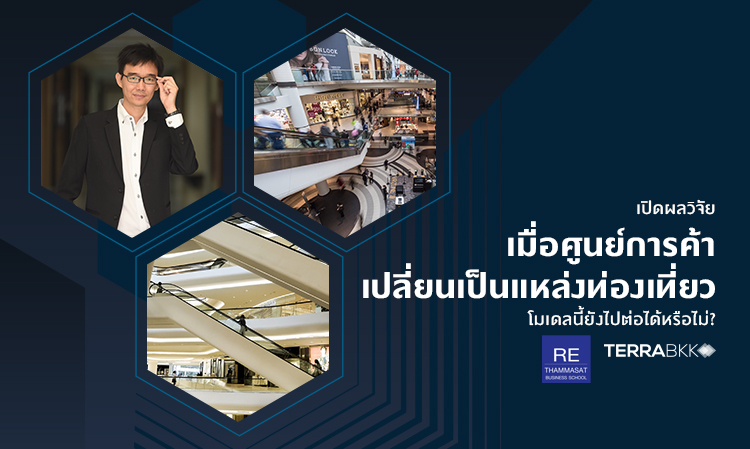
Research Findings: Can Shopping Malls Transform into Tourist Attractions? Is This Model Sustainable?
In an era where tourist attractions and shopping malls are sprouting up like mushrooms, many places are forced to come up with unique selling points to attract customers. A familiar gimmick is the creation of "replica tourist attractions" inspired by famous sites around the world, transforming shopping malls into more than just places to buy goods. Shoppers can enjoy shopping while taking photos and checking in. The key hope for project owners is that creating these replicas will encourage customers to return.
Do you think this theory is correct for entrepreneurs?
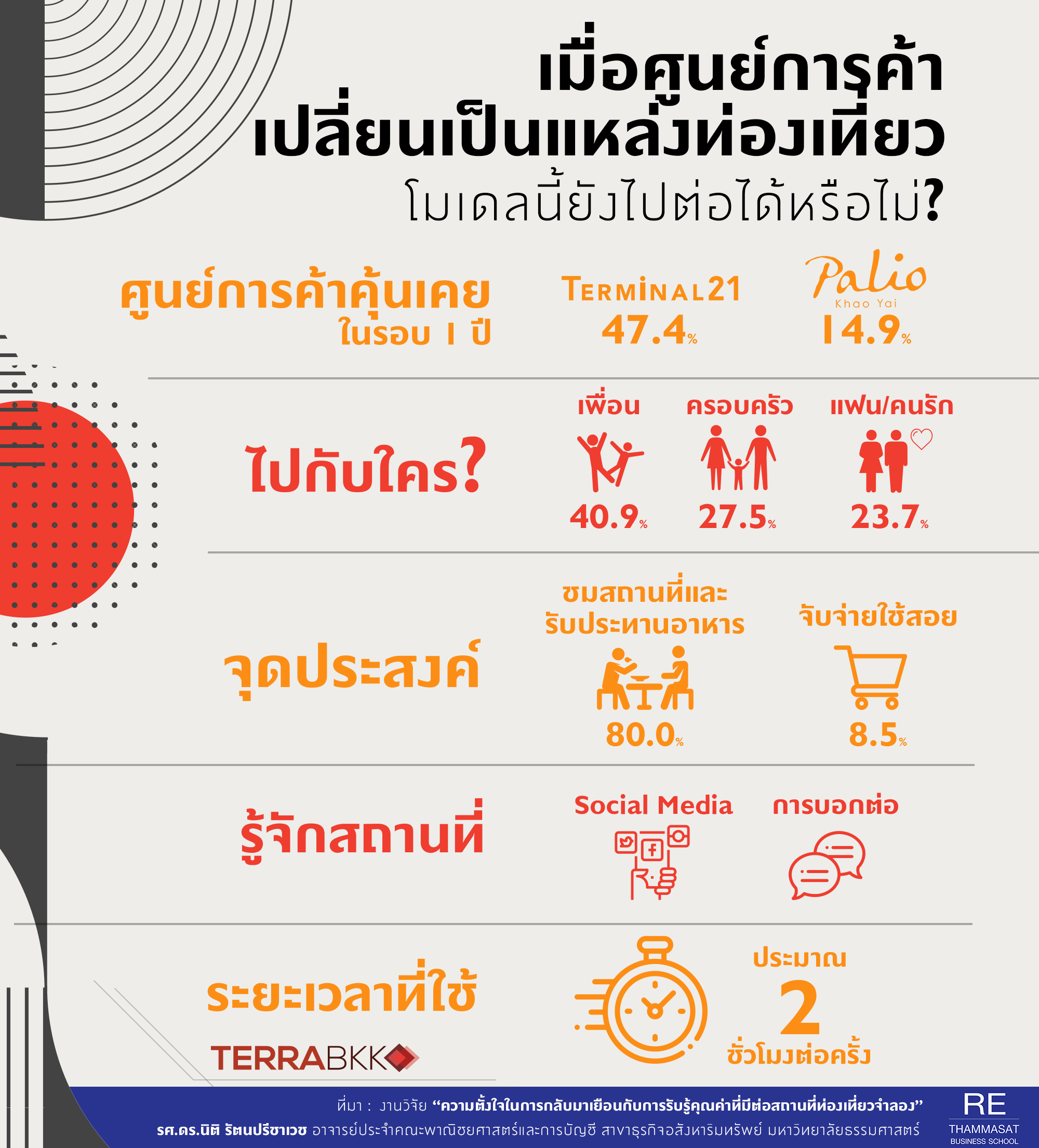
Associate Professor Dr. Niti Rattanapreechawech from the Faculty of Commerce and Accountancy, Thammasat University, specializing in real estate business, has published research titled “The Intention to Revisit and Perceived Value of Replica Tourist Attractions (An Interaction of Physical Design and Perceived Value toward Intention to Revisit in Artificial Built Attractions)”. This study explores the concept of perceived value and its influence on the intention to revisit replica tourist attractions. The sample consisted of 342 people, and it was found that “Terminal 21” was the most familiar replica tourist attraction among the respondents in the past year, accounting for 47.4%. The second was “Palio Khao Yai”, with 14.9%, while other locations were more scattered. When asked who they visited these attractions with, the majority, 40.9%, went with friends, followed by 27.5% with family, and 23.7% with a partner.
Additionally, the research highlighted the primary purpose of visiting replica tourist attractions. It was found that most visitors, 80%, came to explore the site and dine. Interestingly, only 8.5% intended to shop at these attractions, indicating a significant difference compared to typical shopping mall visits.
Regarding how respondents learned about these attractions, the most influential medium was social media, which was the primary source of awareness. This was followed by word of mouth, reflecting that the business of replica tourist attractions may not focus on mainstream media for recognition like some consumer goods. Another interesting statistic is that the average time respondents spent at these attractions was approximately 2 hours per visit, posing a challenge for operators to consider whether this duration is sufficient for service utilization. If not, what attractions can be created to encourage longer stays?
Now, let's address the crucial issue for replica tourist attractions: repeat visits. What encourages people to return? It is designing spaces for maximum utility and organizing events that change with different seasons. These elements will help attract repeat visitors, unlike first-time visitors, who are more influenced by social trends.
Based on all the findings from this research, the team at TerraBKK believes that shopping venues incorporating gimmicks or themes can attract crowds only in the initial stages, particularly due to online trends that encourage others to visit. However, if the shops are not appealing enough or lack new events, most people are unlikely to return for a second visit. Thus, it is not surprising that some places see a decline in visitors over time, presenting the toughest challenge for operators.
The research “The Intention to Revisit and Perceived Value of Replica Tourist Attractions (An Interaction of Physical Design and Perceived Value toward Intention to Revisit in Artificial Built Attractions)” was funded by the Faculty of Commerce and Accountancy, Thammasat University.