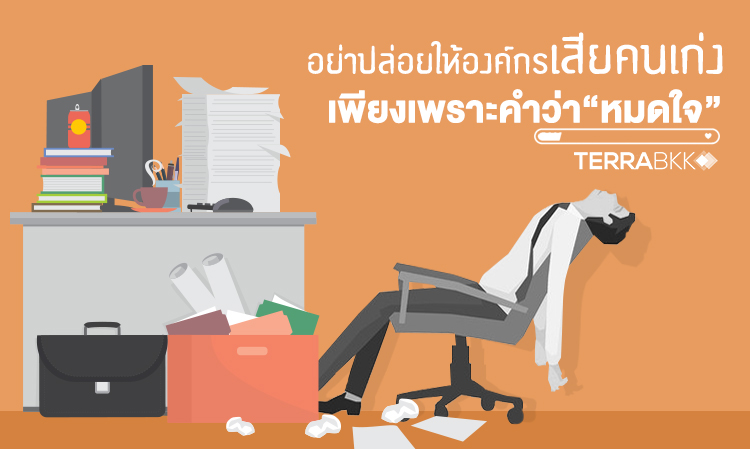
Don't Let Your Organization Lose Great Talent Just Because of 'Burnout'
Many times, organizations struggle with employees who are burned out and don't know how to address the issue. Forcing them to stay only makes it harder for the organization to move forward. Little do they know that something more concerning than burnout is when employees are merely going through the motions without any passion (Brownout). This group often appears to be functioning normally, fulfilling their responsibilities well enough that supervisors overlook the signs, only to realize too late when the employee decides to leave without any hesitation.
If organizations allow too many employees to reach this state of emotional detachment, they will inevitably weaken and ultimately lose valuable talent. Therefore, to prevent great employees from leaving, organizations must ask themselves: Are you the fuel that ignites their desire to wave goodbye? If so, how can you reconnect with these employees?
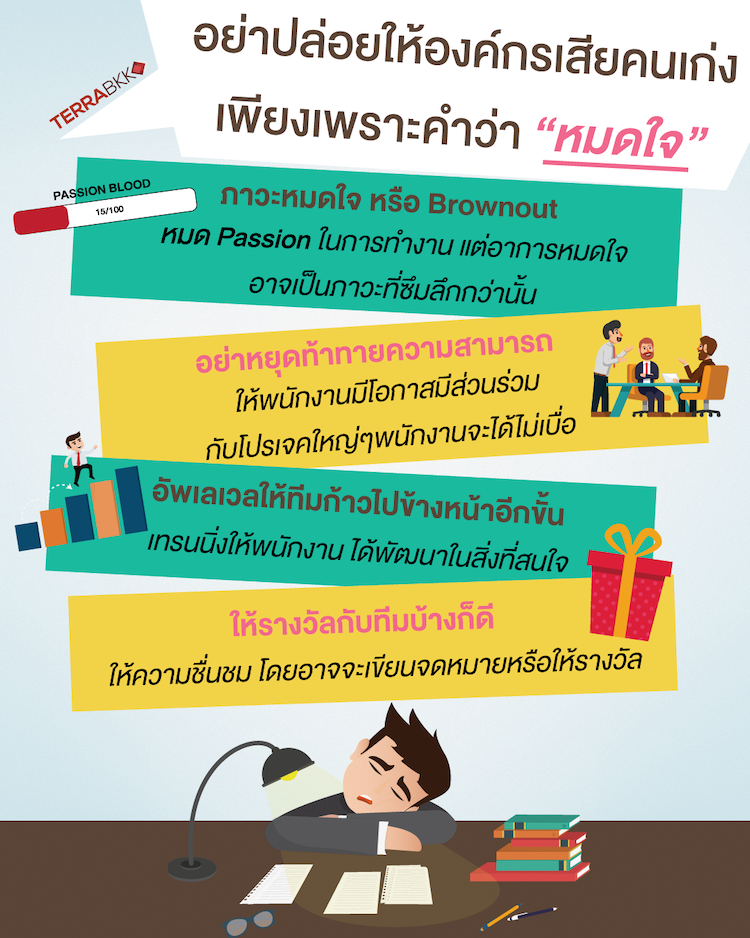
First, let's understand what Brownout is.
"Brownout" is a term used in the electrical industry to describe a state of power that is about to flicker out. It has since been used to compare employees whose passion for work is gradually fading.
The difference between emotional detachment and burnout is that while burnout may be a temporary state caused by fatigue, which can be resolved with a break, emotional detachment is a deeper condition that results from long-term pent-up feelings. Sometimes employers may not notice this because the employee maintains a good standard of work quality; they just lack the heart to invest in the organization, merely doing their job. When they find something better, they are ready to leave.
Emotional detachment can occur at all levels of employees, not just at the operational level but also among supervisors. Therefore, if you want to prevent brain drain or talented individuals from leaving, here are three secret weapons organizations should use to keep great employees engaged for the long term.
Never Stop Challenging Your Team's Abilities
Research shows that 70% of employees who experience emotional detachment feel bored in organizations that do not challenge their abilities enough or provide opportunities for them to showcase their potential. This leads them to choose to leave for new adventures.
Instead of challenging employees by piling on more work or pressuring them to multitask, organizational leaders should change their mindset to allow employees to participate in significant projects, take responsibility for important tasks, or work on projects they haven't had the chance to tackle before.
Level Up Your Team for the Next Step
While the world of learning is now more accessible, organizations that provide knowledge and skills development for employees can also strengthen their bond with the organization. Organizations might set up training systems or specific programs for employees to develop their interests, at least to show that the company is investing in their potential.
Reward Your Team
The term “reward” here can be interpreted as either material rewards or incentives that motivate employees to continue working. One reason that demotivates skilled individuals is when they feel that despite their hard work, they receive no recognition, being treated the same as those who merely meet the standard. Thus, they see no reason to go above and beyond.
Simple ideas to boost employee morale do not always have to involve expensive rewards. You can express appreciation through direct compliments or formalize it by giving commendations or writing letters of appreciation to high-performing employees, serving as a refreshing encouragement for them.
Nevertheless, while employee resignations cannot be entirely prevented, organizations can at least ensure they do not lose great talent for the unfortunate reason of “they lost their passion.”