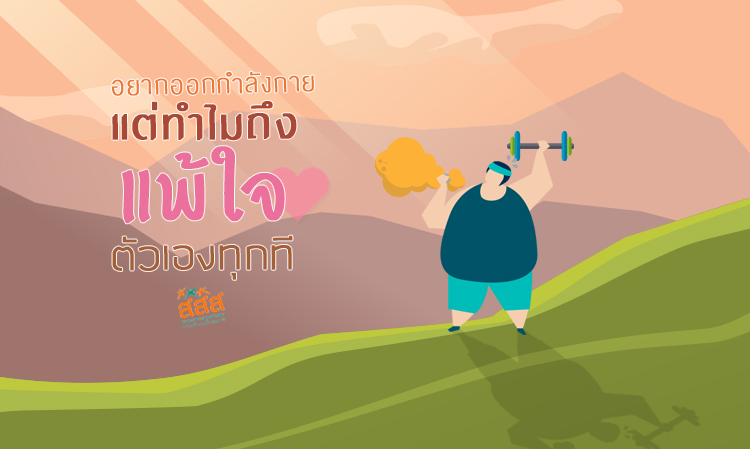
Want to Exercise, But Why Do I Always Give In?
I want to lose weight, quit fast food, exercise, and take better care of my health, etc. These are good life resolutions that we often set but fail to achieve. The yoga class doesn't align with my free days, I binge-watch series and feel the need to snack, my friends are unavailable for soccer this month, and fast food is just so convenient...
But then again, after a while, I find myself setting the same resolutions again, only to fail once more.
Of course, we are not alone in being filled with excuses for our failures while still ready to start anew. If we were to dissect this procrastination behavior with a scientific explanation, we would say that every human has an 'Affective Forecasting' program installed in their brain. This program allows us to predict our feelings about future events, but it does so based solely on our biases (and usually favors ourselves). The thought of losing weight, getting fit, and living a good life feels wonderful, creating a moment filled with positive emotions. However, when it comes time to take action, the effort to change habits and routines is fraught with difficulty and lacks the joy we envisioned. Thus, we accept failure but never stop dreaming for the reasons mentioned above.
But don’t lose hope! We can overcome our habits if we understand how our brain works. Simply put, habits are things we do without thinking or weighing options; neural connections operate automatically without analytical thought. But when we decide to lose weight, we have to analyze that eating French fries is bad, reducing carbs is better, and avoiding sugar is essential, etc. Everything engages the rational part of the brain, not the part that governs habits. Therefore, the healthy behaviors we aspire to never seep into those neural pathways, and if one day our emotions take over reason, everything collapses!
The straightforward advice is: Don’t Think, Just Do. This means you don’t need to think, feel, or find reasons—just do it, and your brain will eventually reset itself. However, this is so abstract that it invites failure again. So, I’d like to add methods from B.J. Fogg, a professor specializing in human behavior theory, and Charles Duhigg, a Pulitzer Prize-winning author who shares ways to change habits in his books. I believe these methods could serve as a compromise between the brain and the heart.
3 Steps to Start a New Habit
Step 1: Small, Easy, Achievable
Goals like wanting to lose weight, exercise, or eat healthy are too abstract because they are broad and require constant thought about what to do. But if you specify, for example, that you absolutely will not eat French fries, will not use the escalator, must eat breakfast, and will run around the park twice, then achieving these becomes much easier.
Step 2: Add a Little More
Once your small goals are in place, add some stimulation with new challenges that build on your existing behaviors. For instance, if you can run around the park twice, challenge yourself to run for another 10 minutes. If you’ve run two laps, try walking to the nearby supermarket to buy ingredients for a healthy breakfast. Your brain will get addicted to this stimulation and will prompt you to continue.
Step 3: Make It Happen in 3 Days, 7 Days
Quickly make these behaviors 'easy' within the first week of starting so that your brain can respond to the conditions set and smoothly incorporate them as new habits without falling back into previous failures.
Thank you for the information from www.thaihealth.or.th