7 Ways to Reduce Waste for a Better World
In an era where our population has surged to 7.3 billion, one of the significant issues we face, aside from overcrowding and income inequality in various regions worldwide, is the increasing amount of waste generated from daily consumption. This has become a major problem impacting the environment on a large scale, making the term 'waste crisis' seem far from exaggerated.
Since waste is a problem we all share, the solution is also in our hands. Greenery would like to share some great ideas on waste management, or the 7Rs, that can help everyone easily reduce the amount of waste in their daily lives and contribute to making our world a better place by taking serious action until it becomes a habit without delay.
1. Refuse (Say No to Plastic and Foam Bags)
According to a report from the Greenhouse Gas Management Organization (GGMO), Thailand generates up to 2.7 million tons of plastic and foam waste, averaging 7,000 tons per day. Much of this waste cannot be disposed of through landfill methods, as plastic takes up to 450 years to decompose! At the same time, this type of waste cannot be incinerated either, as plastic contains petroleum components that, when vaporized into the atmosphere, create soil and water pollutants. Therefore, the best option is to refuse and switch to using cloth bags, natural material lunch boxes, and reusable containers like straws, water bottles, cutlery, and chopsticks. Not only does this reduce waste and plastic, but it also helps decrease air pollution!
2. Recycle (Make Waste Separation a Habit)
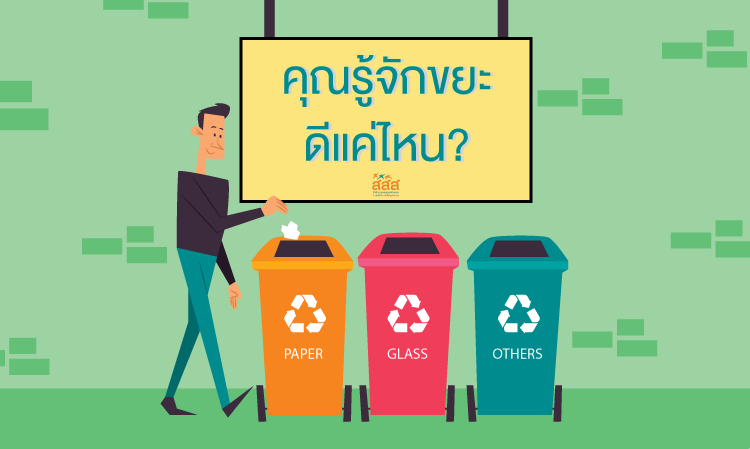
Everyone has seen various colored trash bins since childhood, but did you know that making waste separation a habit not only helps dispose of waste more efficiently but also reduces costs associated with waste management? Each day, officials must collect over 9,000 tons of waste, costing more than 2 billion baht annually, or over 100 baht per ton for landfill disposal. Separating waste and disposing of it in the correct colored bins—green for food scraps and vegetable peels, yellow for glass, aluminum, or recyclable materials, and blue for general waste that can be used as fuel or for crafting, like milk cartons, fabric scraps, rubber, and wood—allows everyone to help the planet while also saving the country's budget!
3. Reuse (Use Items Wisely)
The most effective way to reduce waste is to try to use the items around you wisely. Start by using a pen until it runs out, writing with a pencil until it's gone, or making it a habit to use both sides of a piece of paper. If that's not enough and you want to take it a step further, consider repurposing unused items into useful things or DIY projects. You could start with simple ideas, like making plant pots from plastic bottles or turning old t-shirts into trendy shopping bags. Not only does this help reduce waste, but it also fosters creativity and makes good use of your free time. Additionally, try crafting small, cute items to give to your loved ones, and you'll discover that DIY can offer more than you think!
4. Refill (Choose Refillable Products to Reduce Packaging Waste)
This requires channeling your inner homemaker, as simply changing your purchasing habits for household items like laundry detergent, fabric softener, etc., to refillable options can reduce household expenses by over 30 percent! Moreover, this practice helps reduce pollution caused by packaging production in factories. It’s a win-win for both your wallet and the planet!
5. Repair (Handle with Care and Fix What You Can)
Have you ever noticed items around you that you might be using incorrectly or causing to break prematurely? This is especially true for electrical appliances, such as setting the air conditioning to a temperature higher than the room or using a microwave at high power for long periods, or using a computer for more than eight hours a day. These practices not only increase your electricity bill but also cause devices to wear out faster. If unavoidable, try to learn to fix items yourself, such as replacing parts or repairing things instead of buying new ones. This alone can significantly reduce waste!
6. Reduce (Minimize Usage)
This point is well-known, as consuming or using only what is necessary not only helps reduce waste but also promotes a balanced lifestyle. Consider purchasing larger, long-lasting products instead of buying smaller items or multiple smaller quantities. If you already have something, try to resist buying the same type or style again. This will not only significantly reduce waste but also help cut unnecessary expenses!
7. Return (Circulate for Reuse)
Many may not know that returning soda bottles or various packaging back to the manufacturer not only involves cleaning and sterilizing them for reuse but also helps reduce marine environmental issues. Glass bottles and packaging require sand as a primary raw material, which is extracted from coastal areas. The excessive use of sand leads to the destruction of coastal landforms and increased erosion, resulting in marine landscape problems. Therefore, we should separate glass bottles from other waste and return them for recycling while preserving our beautiful beaches!
While you don’t have to follow all these methods, simply choosing the ones that suit you and applying them consistently can make you a vital force in making our world a better place!
Thank you for the information from www.thaihealth.or.th