
In-Depth Look at China: Reasons Why China Must Create a 'New Paradigm of Globalization'
In-Depth Look at China: Reasons Why China Must Create a 'New Paradigm of Globalization'
Amidst a global economy where anything seems possible, China has emerged as a frontrunner, even instilling fear in the United States. TerraBKK highlights key points regarding China's economic adaptation. Let's explore interesting information about the creation of China's 'New Paradigm of Globalization'.
Is China on the verge of a 'New Economic Cycle'?
Since entering a recession in 2008 (during the financial crisis), China's GDP growth rate has dropped to single digits, clearly reflecting a decline in economic growth capacity due to reduced FDI in the country, averaging around 5% from 2009 to 2016.
Subsequently, it began to improve in 2016, achieving a GDP growth rate of 6.7%, exceeding expectations (approximately 6.5%). The Chinese authorities believe this change indicates that the lowest point of China's economy has passed, and it is entering a rebound phase, which may attract foreign companies' interest, although they remain cautious about investing in China.
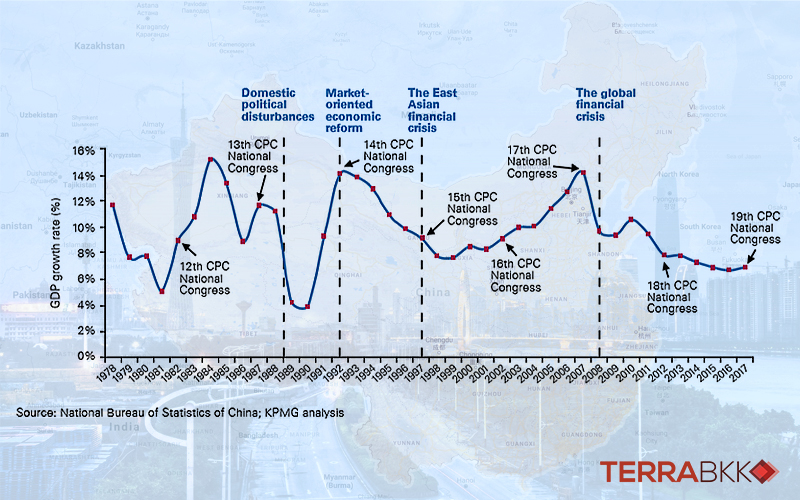
Despite concerns about a global financial crisis, Chinese authorities still believe that the Chinese economy remains stable, even though growth appears fragile in the long term. Meanwhile, during a time of global economic uncertainty, when most investors tend to observe rather than decide to invest, it may present significant investment opportunities for those who see potential at the beginning of a 'New Economic Cycle', allowing for market expansion amid low competition, as foreign companies continue to monitor the clarity of China's economy.
'Supply-side Structural Reform' - A Strategy Chosen by China to Establish a 'New Economic Cycle'
Back in 2016, China announced a reduction in excess production capacity to improve industrial productivity, such as reducing coal usage by 500 million tons within 3-5 years and cutting steel production by 100-150 million tons within 5 years. By the end of 2017, it managed to reduce coal output by 90% and steel output by 76% of the targets set for the next five years (2016-2020).
The debt ratio of the Chinese economy has slowed down due to deleveraging efforts by the Chinese authorities. Since 2016, China has promoted mergers and restructuring, as well as financing and debt management. Consequently, the debt-to-asset ratio among industrial companies has decreased, while local government debt has also managed to reduce interest payments. Overall, the burden of debt has decreased in the Chinese economy, improving systemic risk and creating a positive investment environment to support economic recovery, marking the beginning of a 'New Economic Cycle'.
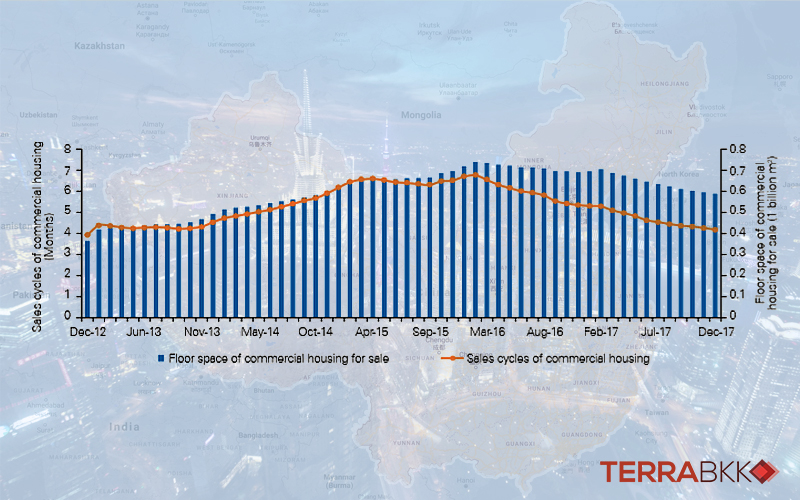
In the real estate sector, the Chinese government is trying to reduce "excess inventory" in the housing market by encouraging the population to buy homes, such as improving the rental and purchase housing system, increasing land supply for residential purposes, and controlling and developing real estate construction. The results during 2016-2017 showed that inventory shrank and sales cycles shortened, helping to mitigate the risk of excess housing and laying the necessary conditions for the Chinese economy to enter a new cycle.
Reducing business costs is a significant focus for the Chinese government, such as changing VAT tax policies. China expects this to genuinely stimulate economic growth and lay a long-term foundation for the 'New Economic Cycle'.
Additionally, strengthening vulnerable sectors, such as poverty reduction, environmental protection, and promoting innovation, is also a priority. In the future, the Chinese government is committed to addressing these 'weaknesses' to assist and elevate related areas or sectors towards development, supporting and benefiting China in entering the 'New Economic Cycle'.
Key Engines of the 'New Economic Cycle'
China views the service sector and technology sector as the main engines driving growth under its new economic cycle. Since 2012, the internal demand sector, particularly consumer demand, has been seen as the largest factor in the Chinese economy, believing that "economic growth" and "total income figures of the population" will unlock the potential of domestic demand.
Furthermore, developing areas in central and western China, as well as rural areas, will also support China's economic growth. China is implementing a strategy for more balanced regional development, coupled with increasingly clear cost advantages. Recently, the central and western regions are becoming the most dynamic economic areas. Additionally, China continues to support agricultural industrial policies and is accelerating rural economic system reforms to reduce the income gap between urban and rural populations, believing that the potential market created in these rural areas will begin to be recognized and continuously support China's economic growth.
Not Just China, But Looking Towards 'Global Economic Growth'
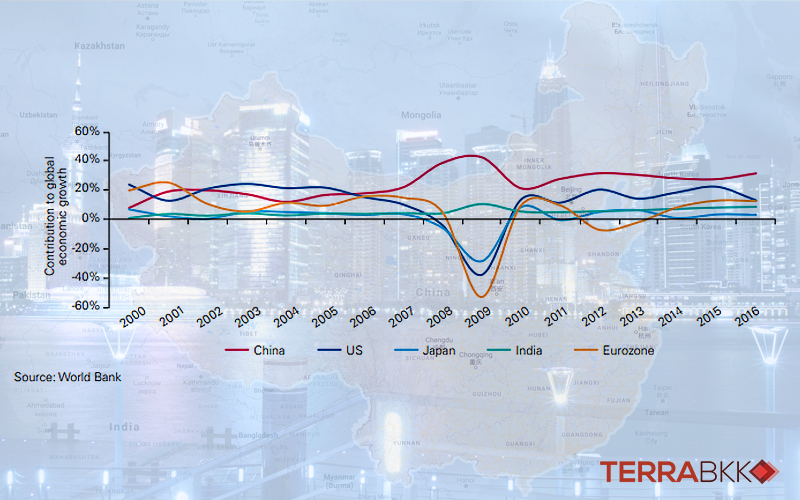
As China's economy expands and household incomes rise, the flow of cross-border trade and investment increasingly influences the global economy. Therefore, it is believed that the emergence of China's 'New Economic Cycle' will be a new dynamic for the global economy. In recent years, China's importance to the global economy has clearly increased, with China accounting for about 30% of global economic growth, surpassing the United States, Japan, India, and the Eurozone.
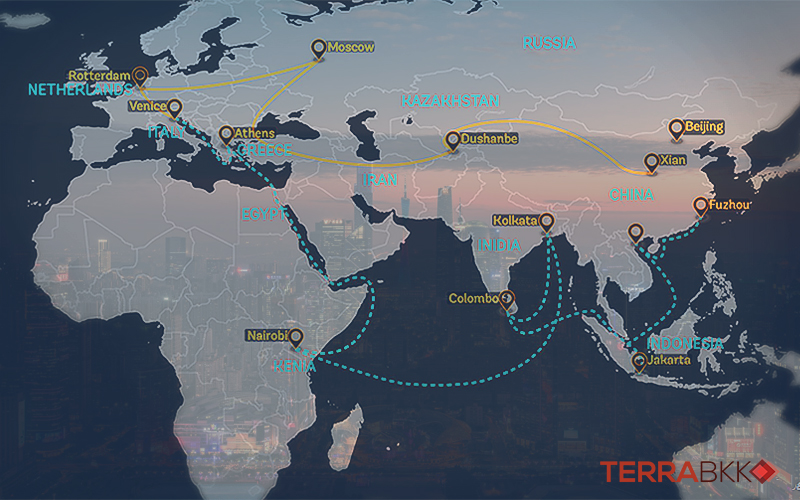
Belt and Road Initiatives (BRI) have become a key strategy that China presents to the world in this era of globalization, expanding China's influence on the global stage. It is believed that cross-border investment will help normalize the global economy and lead to more international investment opportunities while reducing trade threat risks by connecting transportation routes and the Chinese economy with 65 countries across three continents.
Of course, the 'New Economic Cycle' and 'New Paradigm of Globalization' are still in their early stages and lack certainty, which poses risks on all sides, whether it be issues of confidence among related countries, barriers or conflicting interests between nations, advancements in international construction innovation, sensitivities regarding investment funds, and risk management mechanisms for investments.
Ultimately, the heavy burden still falls on China, which aims to develop its economy far beyond the 'New Economic Cycle' and the 'New Paradigm of Globalization' presented to the world to rise as a superpower like the United States. China must continue to move in the right direction to avoid investment risks under a volatile global economy, choose the right industries for investment, select suitable regions for investment, choose compatible partners to reduce business risks, and effectively manage both strategic and operational risks. ---TerraBKK



Article by: TerraBKK Investment Tips
TerraBKK Find Good Homes, Value for Money, Affordable Prices