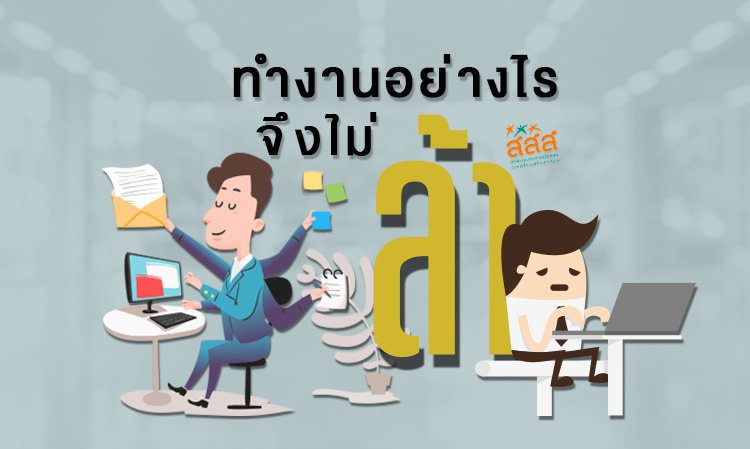
How to Work Without Getting Tired
Fatigue is a common condition that can occur during work. It can arise from physically demanding tasks such as lifting, pulling, and pushing, as well as from lighter tasks that require maintaining a position for extended periods or repetitive light work.
Fatigue in the body can be categorized into two types: muscle fatigue and general fatigue, such as eye strain and fatigue from stress.
Muscles can function in two ways, which relate to fatigue as follows:
1. Rhythmic Muscle Contraction involves alternating contraction and relaxation, such as when lifting an object onto a shelf. The lifter uses arm, leg, and torso muscles for a short period, followed by muscle relaxation during breaks. In this type of muscle activity, there are intervals for blood to flow into the muscles. If the work is not too strenuous (less than 15% of maximum capacity), continuous work for a long time is needed to induce fatigue.
2. Sustained Contraction involves constant contraction, such as sitting in a hunched position while typing on a computer for long periods. This type of contraction hinders blood flow to the muscles because the blood vessels supplying the muscles are compressed continuously without relaxation, unlike rhythmic muscle contractions. Sustained contraction is a primary cause of muscle fatigue due to the accumulation of lactic acid and waste products in the muscles, leading to tightness and inflammation. This type of contraction can cause rapid muscle fatigue even with only 8% of maximum muscle effort.
Sustained contractions are commonly found in postural muscles, such as the neck and back muscles while sitting or standing. These muscles must remain contracted continuously. Incorrect postures, such as excessive bending of the neck or back, can exacerbate fatigue. For example, try standing straight and bending forward to touch your knees; you will feel fatigue in your back muscles within less than a minute. Or, try bending your neck and holding it for about three minutes; you will feel fatigue in the muscles at the back of your neck.
In addition to incorrect posture causing muscle fatigue, the tendons and surrounding areas may be overstretched, leading to inflammation of various tendons.
Thank you for the information from www.thaihealth.or.th