When to Invest in Real Estate: Opportunities and Risks
When to Invest in Real Estate: Opportunities and Risks
Although the trend of real estate investment this year has started to cool down and is not as vibrant as in 2017, it is not entirely lacking in activity. New projects continue to receive excellent responses from the market.
As we approach 2019, which marks the beginning of a new season for real estate, for those looking to invest or new investors unsure of which type of real estate to invest in and when to do so, TerraBKK has the answers in this article.
Selecting the Right Investment Type
In real estate investment, there are various types to choose from, including warehouses/factories, shopping centers/departments stores, office buildings for rent, serviced apartments, hotels, and condominiums. Each type offers different returns and risks. The Thailand Property Valuation Foundation has summarized the return rates for real estate investments in 2017, reflecting the approximate returns for operators or investors in the real estate market as follows:
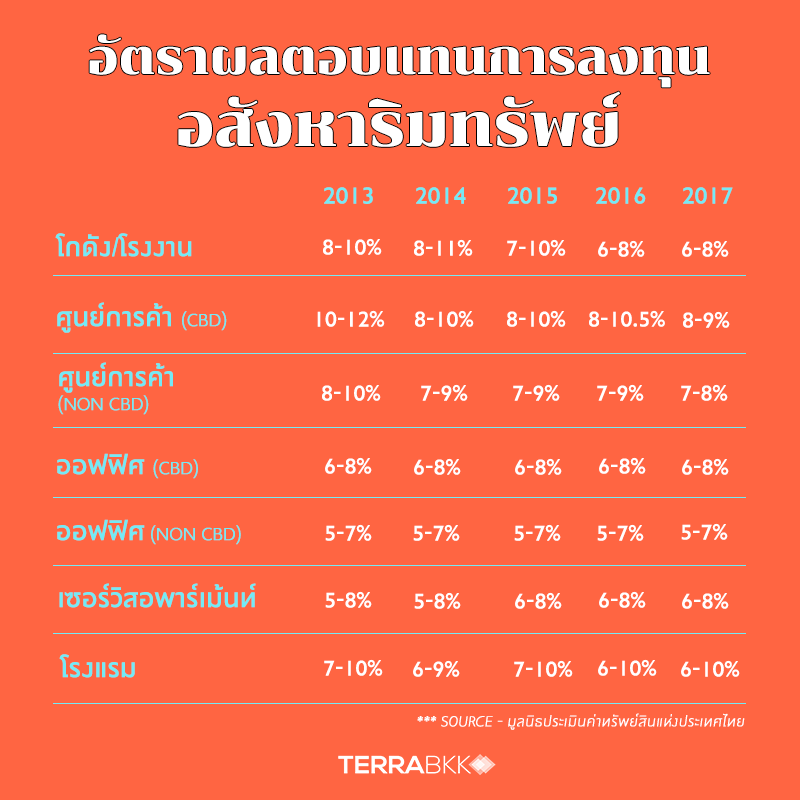
Warehouses/Factories - Investment in warehouses/factories is still adjusting from the major flooding in 2011 and the stagnant growth of the export sector, along with high land costs and increased supply against decreasing demand, leading to reduced returns. If investing in this type of real estate, consider warehouses or factories with tenants who are foreigners or foreign companies that are less affected by the Thai economy.
Shopping Centers/Department Stores - For the retail sector, such as shopping centers and department stores, there has been a slight downturn due to the economic situation, with rising household debt and competition from e-Commerce or online stores, resulting in reduced investment returns. However, shopping centers/departments stores in CBD areas still benefit from tourist traffic.
Office Buildings - The real estate type of office buildings for rent with high occupancy rates remains concentrated in Grade A office buildings in CBD locations, which have occupancy rates above 90%. However, the returns have not increased significantly.
Serviced Apartments - For serviced apartments catering to foreigners, the returns remain stable and are expected to rise with the growth of tourism, especially in areas with a concentration of foreigners, such as Pathumwan and Sukhumvit.
Considering growth, return rates, and risks, real estate investments with lower risks, relatively stable returns, and potential for growth can be ranked as follows: Grade A-B office buildings for rent (specifically in CBD), hotels or serviced apartments (Sukhumvit area), and warehouses/factories (foreign tenants).
When to Invest: Opportunities and Risks
For real estate operators or condominium investors, concerns arise when the economic situation changes or there is a potential for a real estate bubble, leading to uncertainty about when is the right time to buy or sell. TerraBKK aims to clarify this in this article by observing changes in GDP, MLR, and Mortgage Rates in Thailand.
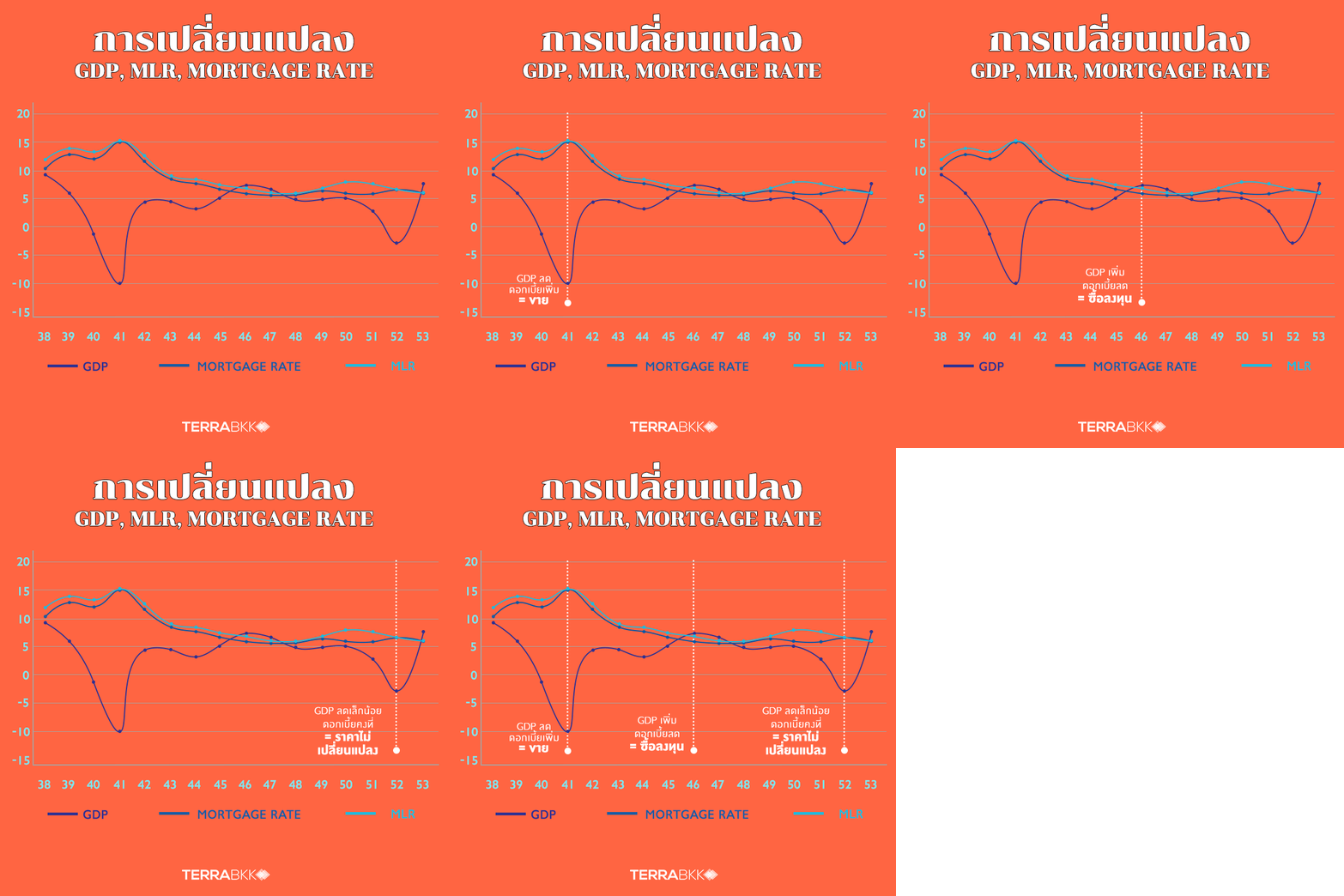
GDP decreases + Mortgage Rate increases = sell
The figures for GDP, MLR, and Mortgage Rate can provide clues to economic changes. For instance, during the bubble burst in 1997, the country's GDP showed a continuous decline while MLR and Mortgage Rates steadily increased. If a clear trend like this emerges, it is an appropriate time to sell.
GDP increases + Mortgage Rate decreases = buy to invest
Conversely, if GDP figures show a consistent and clear increase while Mortgage Rates decrease, it indicates that borrowing capacity and purchasing power are rising. This situation is ideal for purchasing real estate for investment.
GDP slightly decreases + Mortgage Rate remains stable = stable situation
Meanwhile, if there is a slight decrease in GDP while the Mortgage Rate remains stable, real estate prices are unlikely to change significantly, indicating a normal situation.