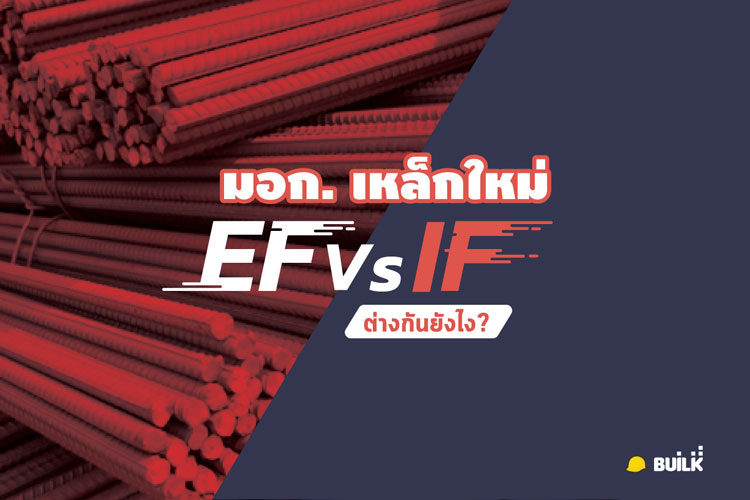
Clarifying the Differences Between 'EF' and 'IF' Steel
In today's rapidly developing world, construction steel has also evolved. This necessitates updates to the standards and regulations that have been in place for years to align with current conditions. For instance, the construction steel standards have been revised, with the new standards announced in 2016 (click here to read the announcement...) and enforced since June 18, 2018. Today, BUILK Construction United will shed light on the differences between the new Thai Industrial Standards for steel, specifically focusing on the distinctions between “EF” and “IF”.
The key points of the new standards emphasize raising the quality of steel for consumer safety, which can be summarized in three main points:
1. Increased scrutiny and control over chemical compositions in steel, expanding from 5 to 19 types of elements to be tested.
2. The name of the steel importer must be embossed on the steel itself.
3. Manufacturers are required to indicate the type of furnace used in the steel production process, embossed on every steel bar, providing consumers with information to select quality steel suitable for their projects.
Currently, there are four types of furnaces: OH, BO, EF, and IF. However, in Thailand, only two types are present: EF and IF. Therefore, this article will only compare the differences between EF and IF steel.
Electrical Arc Furnace process (EF)
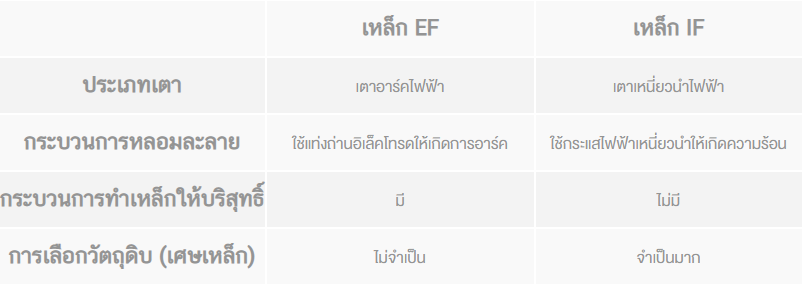
EF steel is produced by melting scrap steel in an electric arc furnace, where electrodes are placed close to the scrap steel, allowing electricity to flow through and generate heat until the steel melts, akin to melting caused by lightning.

After the steel is melted, impurities or harmful chemicals affecting the steel's strength are removed by converting them into slag, which rises to the surface of the molten steel, resulting in clean steel before adding necessary elements to ensure the steel is tough and strong for its intended use.
Induction Furnace process (IF)

IF steel is also produced from melting scrap steel, but it uses electrical induction to generate heat until the steel melts. Afterward, necessary elements are added to ensure the steel meets the required strength as per the standards. However, this type of furnace cannot remove contaminants from the scrap steel, making it crucial to select clean scrap steel free from impurities for production.
Summary of Differences Between 'EF' and 'IF' Steel
Electrical Arc Furnace process (EF)
- Better control over quality and chemical composition.
- Can effectively remove impurities and foreign substances from the steel, ensuring its purity.
- Consistent quality across all production batches.
Induction Furnace process (IF)
- More challenging to control quality and chemical composition.
- Struggles to remove contaminants and foreign substances from the steel.
- Relies heavily on the selection of scrap steel, which is difficult to control and verify, leading to a higher chance of contamination and inconsistent quality.
Table Summarizing the Differences Between 'EF' and 'IF' Steel
If you wish to purchase steel that meets the new standards, specify the EF specification of TATA TISCON, as it is clean, consistently high quality, and free from porosity, ensuring strength and durability.
Frequently Asked Questions
1. How can I tell what type of steel I have purchased?
Steel produced after June 18, 2018, in all factories must comply with TIS 24-2559, which requires a symbol indicating the production method and furnace type to be marked on every piece of steel following the quality grade.
2. Can existing stock steel still be used?
Although the enforcement of TIS 24-2559 has been announced, it only applies to steel produced after June 18, 2018, which must have the “EF” or “IF” symbol. Steel produced before this date can still be sold or used as normal until it is depleted from the market.
3. Which brands offer 'EF' steel?
All TATA TISCON steel bars are produced using electric arc furnaces, ensuring purity and consistent chemical composition, which enhances the strength and safety of construction and structural projects.
4. Where can I buy EF steel?
If you are unsure where to purchase TATA TISCON's “EF” steel, today BUILK points you to stores selling standard “EF” steel across Thailand. Click here.
Request EF steel pricing from TATA here...Click
Shop for other construction materials here...Click
Thanks for the information from www.builk.com