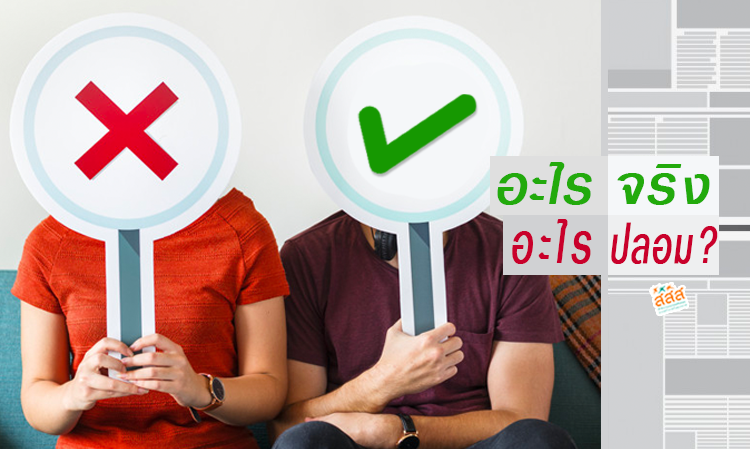
What is Real and What is Fake?
There are continuous warnings circulating on social media and in various newspapers regarding "flooding." Certainly, when the Meteorological Department announces that Thailand has entered the rainy season, it becomes the responsibility of dams, rivers, and canals across the country to manage and drain water. Amidst the panic caused by the ongoing rainfall and the water drainage from various dams, residents in at-risk areas and those following the news are highly concerned because they do not know whether the information they receive is real or fake!

Rumors spread faster than a rocket, especially in the world of social media where news can be shared with just a click. News about overflowing dams, and other related issues, spreads rapidly from keyboards without verifying whether the information is true or false, accurate or misleading, and how reliable it is.
Educating and understanding media is another important issue, especially for children and youth who need skills in analyzing and evaluating the media they receive. Recently, during the 6th meeting of the Health Promotion Foundation (ThaiHealth) Board, General Chatchai Sarikalya, Deputy Prime Minister and Chairman of the Health Promotion Foundation Board, approved the promotion of three key policies to develop a health media system to help Thai people use media wisely as a tool for a healthy lifestyle. These policies include: 1. Promoting media literacy skills 4.0 and developing digital citizens, in collaboration with relevant ministries and agencies to establish government organizations that promote the development of media literacy skills and digital communication, and to develop media literacy curricula in educational institutions. 2. Measures to develop health literacy and protect media consumers through a media oversight committee and promote media literacy according to the national reform plan, such as establishing a center to verify online media information as a mechanism for monitoring with the participation of civil society. 3. Policies to promote and protect children from online media, such as improving measures or laws related to protecting children from inappropriate media.
Partners working closely with ThaiHealth to create a conducive environment and learning opportunities for children and youth include the Child and Youth Media Institute (CYMI), which aims to create spaces and environments that facilitate learning and participation for children, youth, and families, continuously developing and disseminating knowledge and innovations in media.
Recently, in light of the flooding news, the ThaiHealth website team has compiled observations and recommendations for evaluating the media we receive. This information has been prepared by CYMI based on data from The International Federation of Library Associations (IFLA) to provide information and knowledge about media literacy, especially for children and youth.
What are fake news, false news, and misleading news?
1. Clickbait headlines: Using words or images in headlines that provoke curiosity, even though the content may be empty, to attract views.
2. Propaganda: Stories that are selected and created to mislead, creating both negative and positive biases, often with political motives.
3. Satire/Parody: Creating news that mocks or parodies celebrities for entertainment purposes.
4. Sloppy news presentation: Sometimes journalists may publish unreliable information or fail to verify all facts, leading to misunderstandings among viewers.
5. Misleading headlines: Using words or phrases in headlines that mislead or attract attention to encourage sharing; the content may not be entirely false, which can spread rapidly on online media.
6. Biased news: Social media directs users to certain news or information that supports their beliefs or biases based on their search behavior.
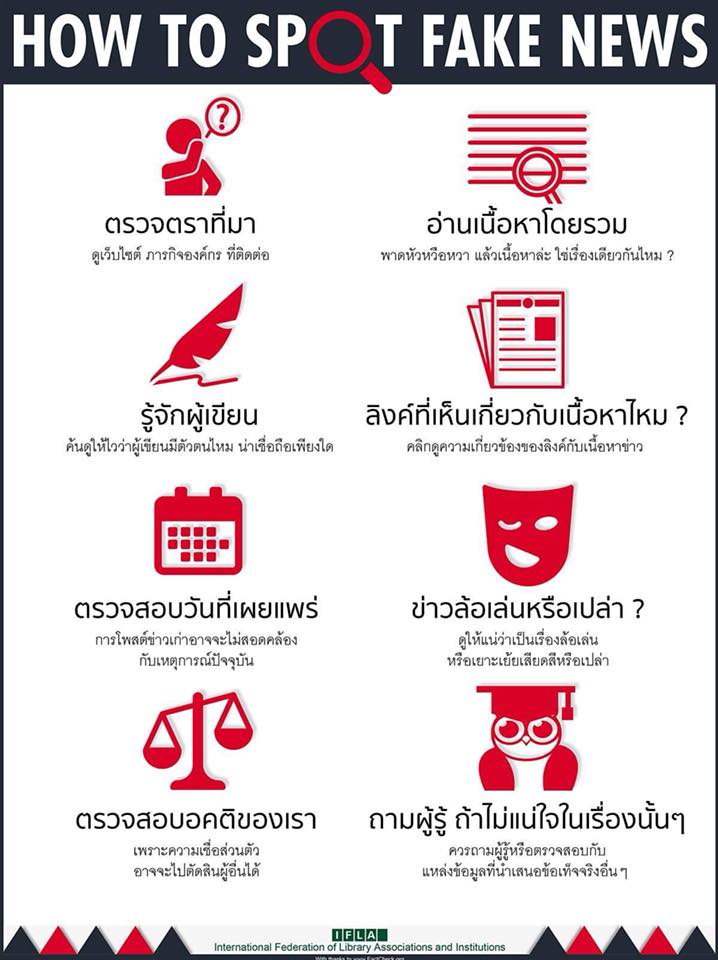
How can we tell what is real news and what is fake news?
1. Check the source: Look at the website, the organization's mission, and contact information.
2. Read the overall content: Check if the sensational headline matches the content of the article.
3. Know the author: Investigate whether the author is credible and has a real identity.
4. Check the relevance of links: Click to see if they relate to the news content.
5. Verify the publication date: Old news posts may not align with current events.
6. Is it a joke? Ensure it’s not a parody or satire.
7. Check your own biases: Personal beliefs may influence your judgment of others.
8. Ask an expert if unsure: Consult knowledgeable individuals or verify with other factual sources.
Before believing any media, we should carefully consider and analyze before choosing to trust and share that information, so we do not fall victim to the social media world.