"Bangna" (EAST BUSINESS DISTRICT) Transforming Land into ASEAN Stars
"Bangna" (EAST BUSINESS DISTRICT)<\/span><\/strong> If we were to metaphorically compare the strategic urban planning of the past, "Bangna" could be likened to an inner city that plays a crucial role as a frontier town. The role of Bangna today still mirrors that of Bangkok; as Bangkok develops, Bangna inevitably progresses alongside it. This is a sufficient reason for developers to prioritize this area. Certainly, the potential of the Bangna location is supported by the government through comprehensive mega-projects, especially those considered national agendas that propel Thailand onto the global stage, such as the Eastern Economic Corridor: EEC<\/span><\/strong>, which attracts massive investments from both domestic and international private sectors. TerraBKK will update and emphasize the significance of projects related to the Bangna area as follows: EEC World Class Economic Zone<\/span><\/strong><\/p>
The Eastern Economic Corridor (EEC)<\/span><\/strong> project is currently the largest investment project in the country, representing the government's hope to fully integrate Thailand into the global arena. The emergence of the Eastern Economic Corridor (EEC)<\/strong><\/span> will not only stimulate the national economy to grow by an average of about 5% per year but also bring forth a wave of development that significantly increases the growth opportunities for the Bangna area. The goal of the EEC is to enhance the development of the industrial city in three eastern provinces: Chachoengsao, Chonburi, and Rayong, which are already strategic provinces in the Eastern Seaboard Economic Development Plan<\/strong><\/span>, aligning with global economic trends as part of the Thailand 4.0 policy. EEC Pilot Projects<\/span><\/strong><\/p>
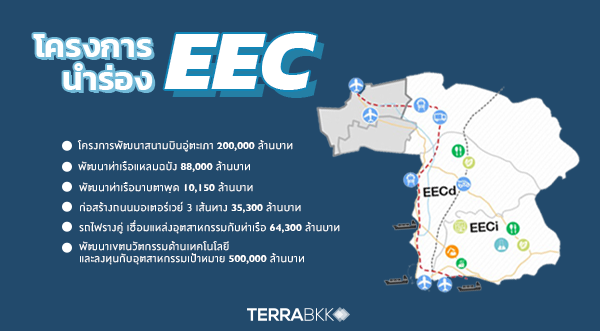
With the aim of transforming the EEC provinces into a new economic hub for the country, development must encompass urban development, tourism, business, facilities, and infrastructure to enhance the quality of life for local residents and attract new investments. The pilot projects of the EEC focus on infrastructure development to support transportation, logistics, and urban readiness, with a budget of approximately 1.5 trillion baht<\/strong><\/span>, including: • Development of U-Tapao Airport (Thailand's 3rd international airport) 200 billion baht These pilot projects will undoubtedly enhance the eastern region of Thailand's attractiveness for both investment and tourism. But what else can the EEC offer Thailand? Promoting 5 Existing Industries and Pushing 5 New Industries to Global Standards<\/span><\/strong><\/p>
The EEC project promotes five existing industrial sectors, including automotive, smart electronics, high-tech agriculture and life sciences, food processing, and high-income tourism and health tourism<\/span>. The new industries being promoted in the EEC align with global economic trends and include robotics for industry and daily life, aviation and logistics, comprehensive medical industries, biofuels and biochemicals, and digital industries<\/strong><\/span>. TerraBKK Research<\/span><\/strong> sees that the five new promoted industries require highly skilled labor<\/span><\/strong>. This will naturally lead to an influx of foreign professionals with high purchasing power. This is an anticipated benefit from the EEC project that will positively impact other locations along the Bangkok-EEC corridor. In addition to the opportunities arising from the increase in skilled foreign personnel, the EEC also has the potential to position itself as a center of ASEAN<\/strong><\/span>. Importantly, statistics from the World Economic Forum 2017<\/strong><\/span> indicate that Thailand ranks in the TOP 10 globally for improving business convenience in the past year<\/span><\/strong>. This remarkable development has instilled confidence in foreign investments, particularly in flagship projects like the EEC. What does the future hold for the EEC, and what is happening now?<\/span><\/strong><\/p>
Beyond the development in the three EEC provinces of Chachoengsao, Chonburi, and Rayong, there are other developments in Bangkok and Samut Prakan, as they are key economic corridors. Each project currently underway in the Bangna area is a mega-project, and importantly, there is no other location in Bangkok with such a dense concentration of mega-projects as Bangna<\/strong><\/span>. Let's take a look at what projects are underway: Coming Soon: 'Suvarnabhumi Phase 2'<\/span><\/strong><\/p>
In August, the Airports of Thailand Public Company Limited (AOT)<\/strong> announced the winner of the design for the construction of the Passenger Terminal 2 (Terminal 2)<\/span><\/strong> at Suvarnabhumi Airport with a design fee of 329 million baht. The contractor will have 10 months for design before proceeding to the construction bidding phase, expected to start construction by the end of 2019 and complete by the end of 2021. The new terminal will increase the capacity to accommodate an additional 30 million passengers per year at Suvarnabhumi International Airport<\/strong><\/span>. <\/p>
New Mega-Projects in Bangna Outshine CBD<\/span><\/strong><\/p>
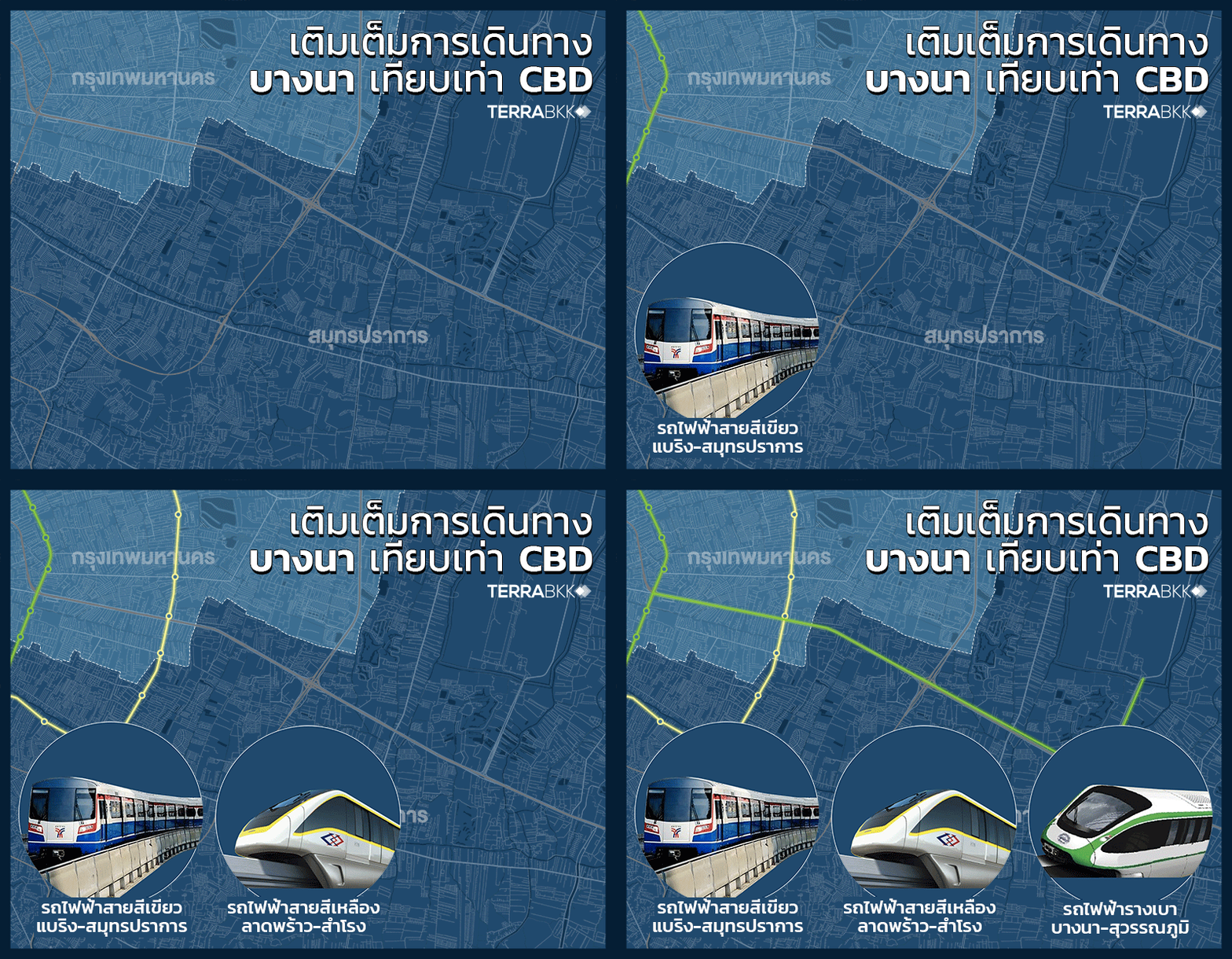
In the Bangna area, new projects are continuously emerging, especially in 2017-2018, with numerous mega-projects launched, enhancing existing potential with shopping centers, convention centers, and various entertainment venues such as Bitec Bangna, Central Plaza Bangna, and Mega Bangna. However, from 2017 to 2025, the Bangna area will see more mega-projects that will boost job opportunities and housing, particularly mixed-use projects. TerraBKK<\/span><\/strong> sees the attractiveness of the Bangna area with mixed-use project investments totaling over 317 billion baht, surpassing the total project value in the CBD area, which is approximately 216.2 billion baht. This is a result of government projects that have instilled confidence in the potential of the Bangna area, including the Green Line extension from Bearing to Samut Prakan, the Suvarnabhumi Airport Phase 2 development, and the EEC project. The private sector mega-projects launched in the Bangna area include: • Central Village<\/span><\/strong>, Thailand's first luxury outlet, with a project area of 40,000 sq.m., catering to both Thai and international tourists, located near Suvarnabhumi International Airport, expected to open in 2019. Additionally, the Bangna area has seen continuous growth in the rental office market, filling the previous gap in job opportunities, making it now fully equipped and transformed into a 'City within the City'<\/span><\/strong>, with transportation systems, job opportunities, facilities, and housing comparable to the inner CBD of Bangkok. In terms of transportation in the Bangna area<\/strong>, there has been significant progress in public transport development. In addition to the Green Line extension from Bearing to Samut Prakan<\/strong>, which is expected to open by the end of 2018, there is also the Yellow Line from Ladprao to Samrong<\/strong>, enhancing travel capacity along Srinakarin Road, effectively filling the transportation gap in eastern Bangkok, expected to open by 2024. Future public transport development plans for the Bangna area include the Bangna-Suvarnabhumi Light Rail (LRT)<\/strong>, connecting from the Green Line at Bangna station, running along Bangna-Trad Road to Suvarnabhumi International Airport, which is currently under review and study. Real Estate Situation for Housing in Bangna<\/span><\/strong><\/p>
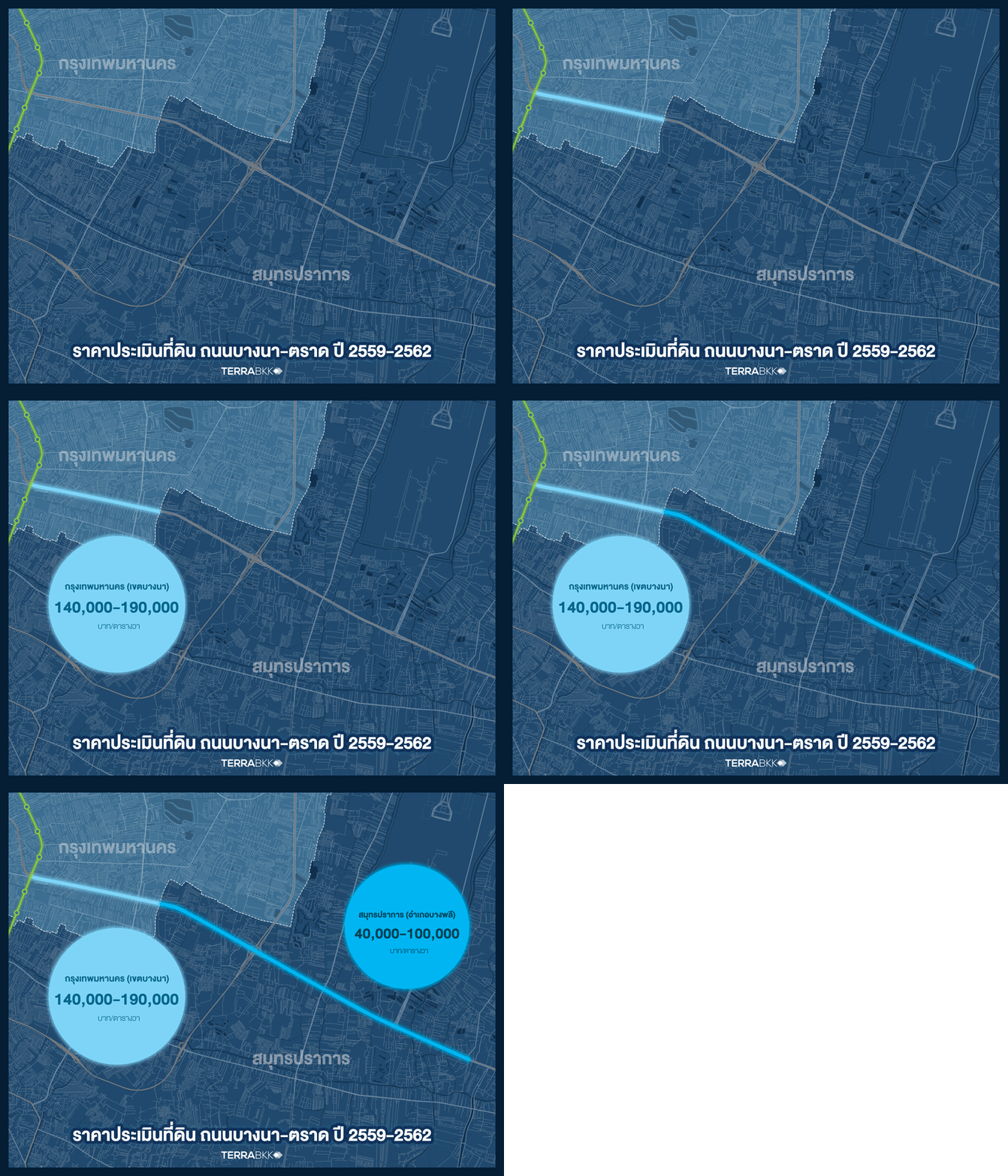
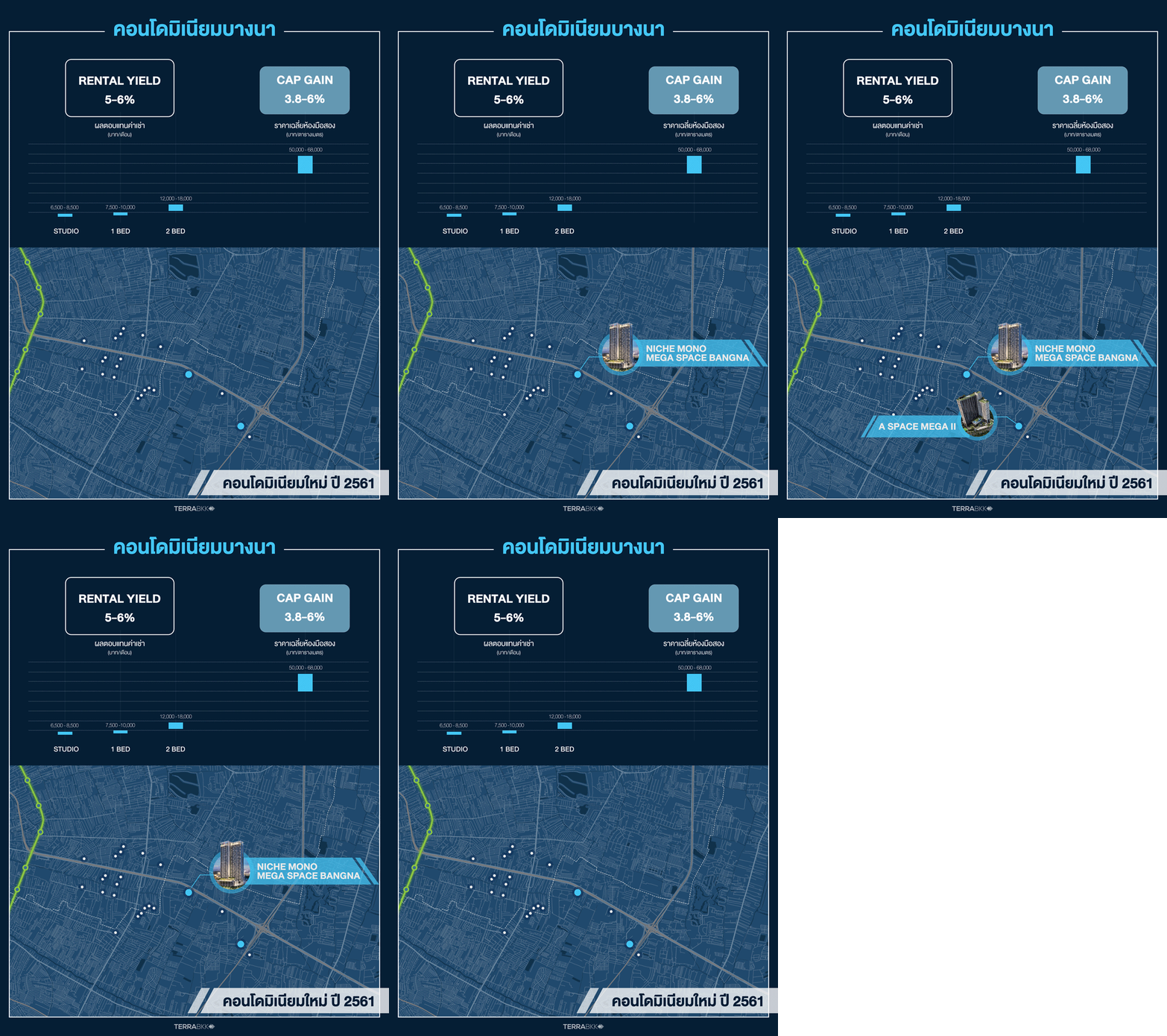
The growth of the Bangna area, driven by significant national investment projects from the government, such as the Suvarnabhumi International Airport project, the Yellow Line project, and its connection to the Eastern Economic Corridor (EEC) under the Thailand 4.0 strategic plan, has led to notable changes in real estate. Let's examine how land prices in the Bangna area have evolved over the past decade, along with information on the condominium market in Bangna: "Bangna-Trad Road"<\/span><\/strong> connects the two provinces of Bangkok (Bangna District) and Samut Prakan (Bang Phli District). Over the past decade, the Bangna-Trad Road in Bangkok (Bangna District)<\/strong> has seen an average land appraisal price of 130,000 baht per square wah (from 2008-2011), which then increased to 140,000-170,000 baht per square wah (from 2012-2015), and most recently, from 2016-2020, the average land appraisal price is 140,000-190,000 baht per square wah. Meanwhile, Bangna-Trad Road in Samut Prakan (Bang Phli District)<\/strong> had an average land appraisal price of 40,000-100,000 baht per square wah from 2016-2020, up from 37,000-100,000 baht (from 2012-2015). Overall, the average land appraisal price along Bangna-Trad Road has grown by about 5-15% per appraisal cycle over the past decade. In the past, it must be noted that the development of condominiums in the Bangna area<\/span><\/strong> has not been particularly vibrant compared to other locations in Bangkok. However, this does not mean that condominium projects in Bangna have been stagnant, as "Bangna" hosts no less than 20 condominium projects over the past decade. The launch prices of condominiums have more than doubled over the past decade<\/strong><\/span>, from an average launch price of around 20,000-30,000 baht per square meter, with an average of a thousand units sold per project, such as The Parkland Srinakarin and Supalai Park Srinakarin. Currently, prices have risen to 50,000-60,000 baht per square meter, with the number of units sold per project decreasing to hundreds, such as Lumpini Place Bangna Km.3 and Aspen Condo Lasalle Phase B. For new condominium projects in 2018, besides A Space Mega 2 by Areeya, there is another project by Sena Development called Niche Mono Mega Space Bangna<\/strong>, located on the main Bangna-Trad road near Mega Bangna, notable for its parking space exceeding 70% and a common area spanning three floors, designed with the concept "Made from Her" catering to women. The launch price is still unknown as it is currently open for registration. The return on condominiums in the Bangna area shows an average Cap Gain of 3.8% - 6% per year<\/span><\/strong>, with average market prices around 50,000-68,000 baht per square meter. Meanwhile, rental prices vary by room type, with studio apartments averaging 6,500-8,500 baht per month, one-bedroom apartments averaging 7,500-10,000 baht per month, and two-bedroom apartments averaging 12,000-18,000 baht per month. Overall, the Rental Yield averages 5%-6% per year<\/span><\/strong>, which is quite favorable. The potential of the Bangna area<\/strong> is viewed by TerraBKK Research<\/span><\/strong> as a significant transformation of the Bangkok East Gateway<\/span><\/strong>. With the growth of various facilities filling the gaps in Bangna, we may soon see Bangna evolve into an EBD (East Business District)<\/span><\/strong>, a transformation that no other location has experienced so visibly.
Transforming Land into ASEAN Stars<\/span><\/strong><\/p>
 <\/p>
<\/p>
 <\/p>
<\/p>
• Double-track railway connecting industrial areas to ports 64.3 billion baht
• Development of Laem Chabang Port 88 billion baht
• Development of Map Ta Phut Port 10.15 billion baht
• Urban development in Chonburi, Rayong, and Chachoengsao 400 billion baht
• Construction of three motorway routes 35.3 billion baht
• Development of an innovation zone for technology and investment in targeted industries 500 billion baht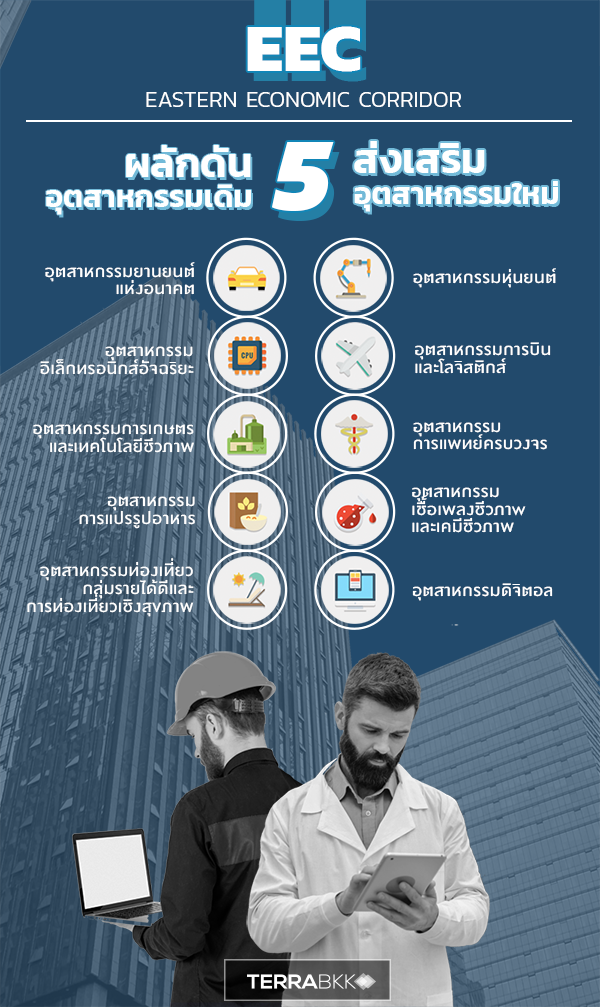 <\/p>
<\/p>
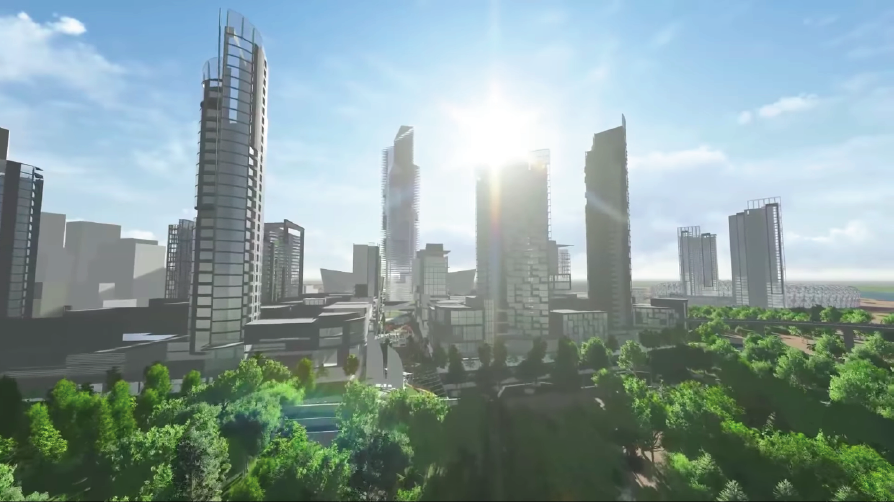
• The Forestias<\/span><\/strong>, a mixed-use project by Magnolia, covering over 300 rai with an investment of over 90 billion baht, comprising office buildings, hotels, shopping, retail, residential, and a nature learning center, expected to transform the Bangna-Trad area significantly, slated for completion in 2025.
• Mega City<\/span><\/strong>, an extension of the successful 'Mega Bangna' project by The Mall Group, is a mixed-use project covering over 400 rai.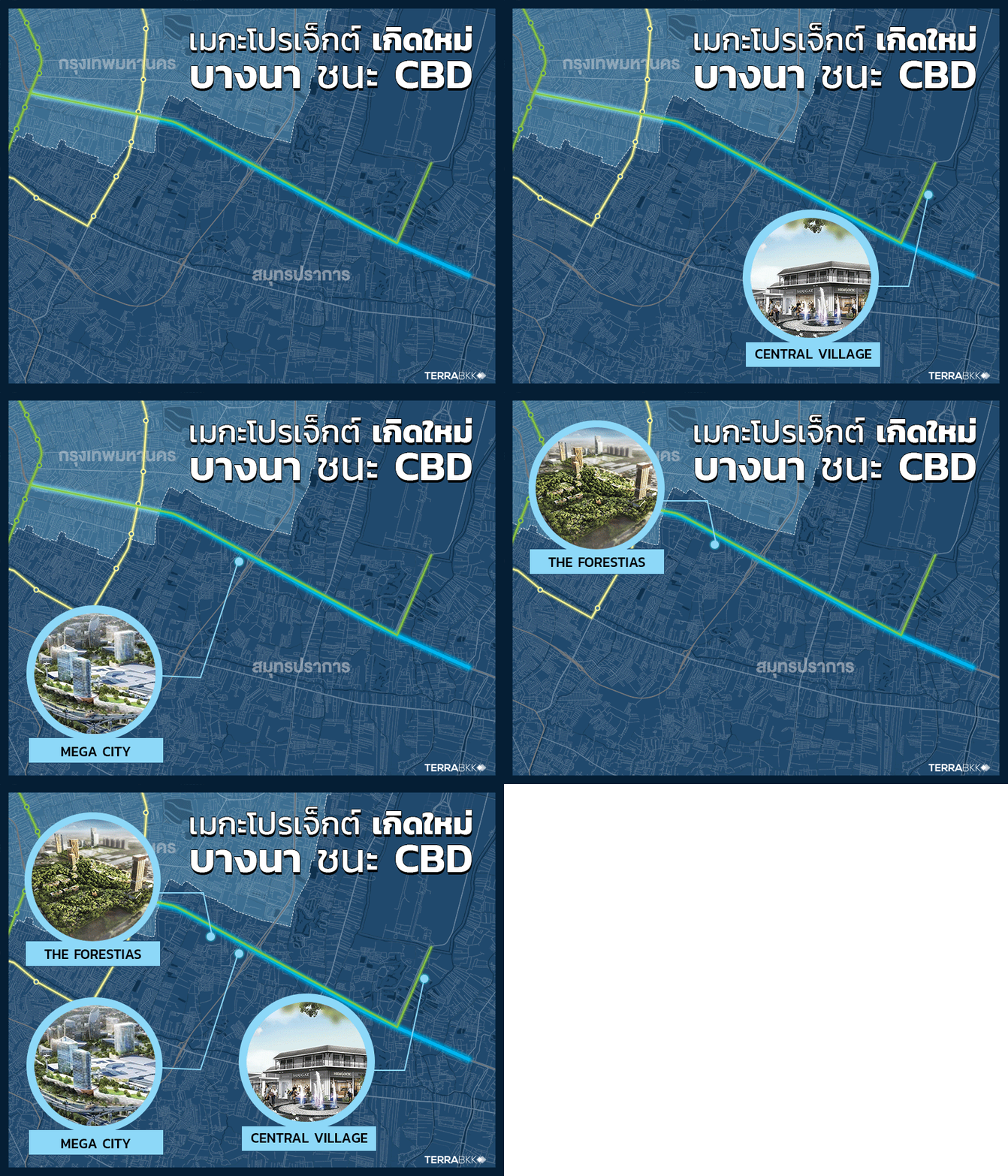 <\/p>
<\/p>
 <\/p>
<\/p>
 <\/p>
<\/p>
 <\/p>
<\/p>