Pledge Sales - Right of Redemption
The law on pledge sales is one of the oldest legal frameworks, often exploited by capitalists to gain control of land from uninformed villagers.
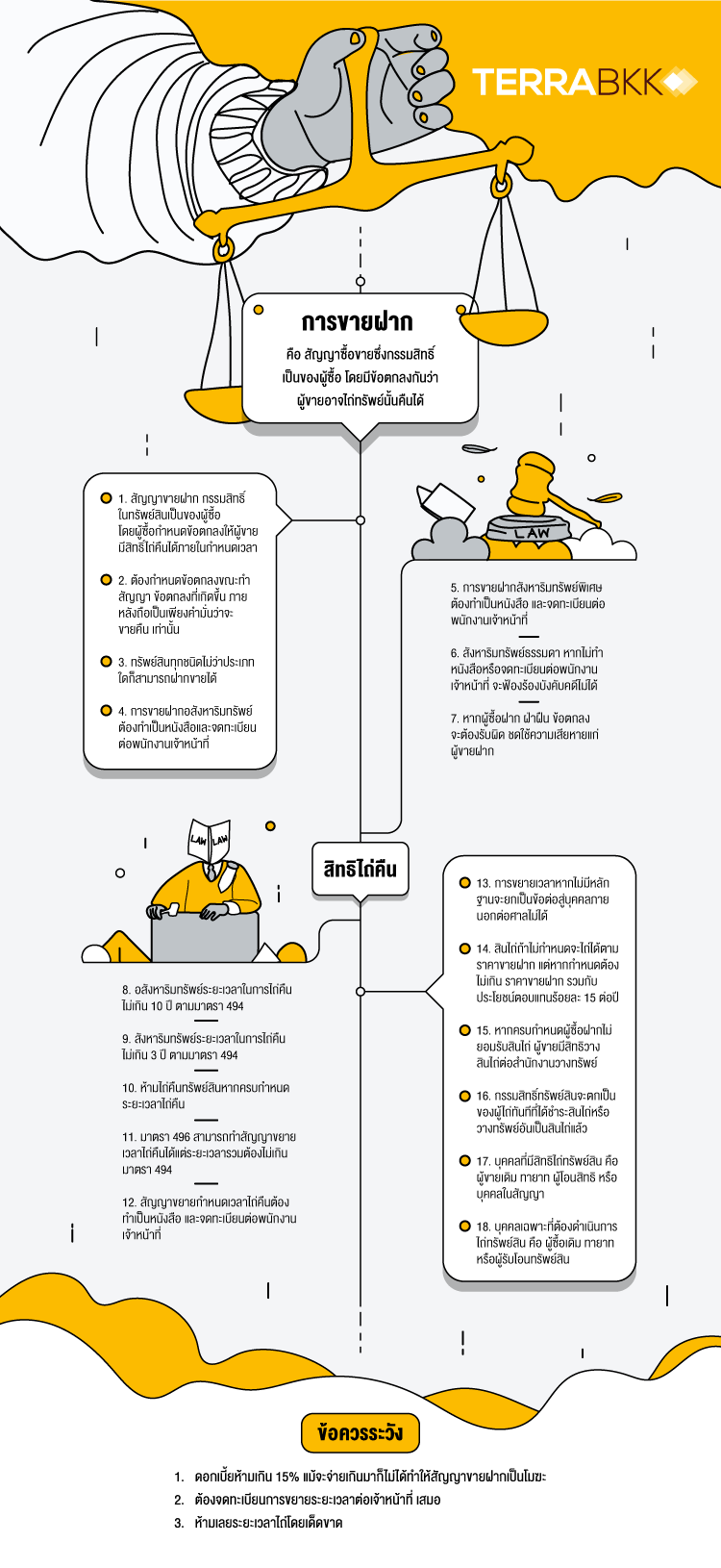
Summary of Precautions
1. Interest must not exceed 15%. Even if paid beyond this limit due to coercion, it does not render the entire pledge sale contract void.
2. Any extension of the redemption period must be registered with the authorities.
3. The redemption period must not be exceeded under any circumstances.
It is often heard that capitalists exploit legal loopholes, but most cases are not about legal loopholes; they reflect a gap in the general public's understanding of essential life skills in society.
*As I write this article, the current government intends to amend the pledge sale law, but no amendments have been announced yet.
Be cautious when reading any legal information online, especially regarding this law.Given the importance of this law, I recommend reading it slowly and thoroughly. There is no need to search for subtexts, as it is straightforward and easy to understand.
Pledge Sales
Civil Code Sections 491 to 502
A pledge sale is a sales contract in which ownership of the property transfers to the buyer, with an agreement that the seller may redeem the property.
1. A pledge sale contract is a sales agreement where ownership of the property transfers to the buyer, who agrees at the time of the contract that the seller has the right to redeem the property within a specified time, not exceeding the legal limit. For example, selling land with the agreement that if the seller wishes to buy it back, the buyer will agree to sell it back is considered a redeemable agreement.
The agreement states that "the seller may redeem the property."
*This means ownership transfers immediately; the seller has the right to redeem, which is very different from mortgaging land. If there is no money to redeem, the creditor must sue to enforce the mortgage in court, but this is not necessary for a pledge sale.
2. This agreement must be made at the time of the sales contract. If made after the sales contract, it is not a pledge sale but merely a promise to sell back.
3. All types of property, whether land, gardens, farms, houses, cars, boats, carts, televisions, etc., can always be pledged.
4. If it is a pledge sale of real estate, such as land or houses, it must be in writing and registered with the authorities. In the case of land, it must be registered with the land officer; if it is a house, it must be registered with the local district office. If this is not done, the pledge sale contract is considered void, as if no contract was made at all.
5. For special movable property, such as rafts, motorboats, or animals, it must also be in writing and registered with the authorities. Boats must be registered with the Marine Department, and animals must be registered at the district office. If this is not done, the pledge sale contract will be void and unenforceable.
6. For ordinary movable property, the law does not specify that it must be in writing and registered with the authorities, such as cars, refrigerators, rings, necklaces, watches, televisions, etc. This type of pledge sale must have evidence in writing signed by the responsible party or must involve a deposit or partial payment of the debt. If this is not done, the law prohibits any legal action to enforce the pledge sale.
7. In a pledge sale agreement, the parties may agree not to allow the buyer to sell the pledged property. However, if the buyer violates this agreement by selling the pledged property to others, the buyer must compensate the seller for any damages incurred.
8. Section 493 states that in a pledge sale, the parties may agree not to allow the buyer to sell the pledged property. If the buyer sells the property in violation of the contract, they will be liable to the seller for any damages resulting from that action.
If it is a pledge sale of real estate, the redemption period must be set at no more than 10 years from the date of the pledge sale. If no redemption period is specified or if it exceeds 10 years, the law reduces it to 10 years only.
9. For special and ordinary movable property, the redemption period must not exceed 3 years from the date of the sale. If no redemption period is specified or if it exceeds 3 years, it will be reduced to 3 years only.
10. Section 494 prohibits the exercise of the right to redeem the pledged property after the following periods:
(1) For real estate, the period is set at ten years from the sale date.
(2) For movable property, the period is set at three years from the sale date.
Section 495 states that if the contract specifies a redemption period longer than these limits, it will be reduced to ten years or three years according to the type of property.
The law states that the redemption period may be extended. Originally, the law did not allow for extensions.
11. Currently, according to Civil Code Section 496, "the redemption period may be extended, but the total redemption period must not exceed the limits set in Section 494." Extensions are now permitted.
12. There must be written evidence signed by the redeeming party. For properties that must be registered with the authorities, such as land and houses, the extension must be in writing and registered with the authorities. However, the extended period must not exceed the time allowed for redemption.
13. Section 496 allows for the extension of the redemption period, but the total redemption period must not exceed the limits set in Section 494.
To extend the redemption period, there must be written evidence signed by the redeeming party. If the property is subject to a sale, it must be in writing and registered with the authorities. Extensions cannot be used as a defense against third parties who have acquired rights in good faith and registered those rights, unless the extension documents are registered with the authorities.
14. Under the original law, the redemption price could be set at any amount agreed upon, which allowed the buyer to charge higher benefits than regular loans, as the law limits interest rates to no more than 15% per year. However, under current law (1999), if the redemption price is not specified, it will be based on the pledge sale price. If the redemption price is specified, the law limits it to not exceed the pledge sale price plus benefits of 15% per year.
15. If the redemption price is not specified, it will be based on the pledge sale price.
If it is found at the time of redemption that the redemption price or the specified pledge sale price exceeds the actual pledge sale price by more than 15% per year, the redemption will be based on the actual pledge sale price plus benefits of 15% per year.
In cases where the redemption period has expired and the buyer refuses to accept the redemption, the seller has the right to deposit the redemption price with the asset management office, resulting in the pledged property immediately becoming the property of the redeemer.
16. In cases where the property is redeemed within the time specified in the contract or within the time set by law, or the redeemer has deposited the redemption price with the asset management office within the redemption period, waiving the right to withdraw the deposited property, the pledged property will become the property of the redeemer from the moment the redeemer pays the redemption price or deposits the redemption price.
17. The right to redeem the property can only be exercised by the following individuals:
(1) The original seller or their heirs, or
(2) The assignee of that right, or
(3) Individuals specifically named in the contract as authorized to redeem.
To redeem the pledged property, the process must be conducted with the original buyer, including their heirs or the assignee of the pledged property. In cases where the pledged property is ordinary movable property, the assignee must be aware that the property is subject to the right of redemption.
18. The right to redeem the property can only be exercised against the following individuals:
(1) The original buyer or their heirs, or
(2) The assignee of the property or the rights over that property. However, in this case, if it is real estate, the right can only be exercised if the assignee was aware at the time of the transfer that the property was subject to the right of redemption.
In cases where the property is leased and registered with the authorities, the lease remains valid as long as it was not created to harm the seller. The remaining lease period must not exceed one year.
Pledge sales are not a legal trick; for example, if the redemption period is set at 3 years, and the villagers cannot pay by that time, the creditor immediately takes ownership of the land, provided that the extension period is registered. It is emphasized that verbal agreements are not valid.
Even if the creditor agrees, according to unregistered documents, the creditor holds 100% rights immediately.
Currently, there is an increase in businesses that buy pledged real estate, indicating that those with land in financial distress rush to pledge it first, as they receive more money than if they mortgaged it, and banks often offer poor prices and require salary documents.
This has led to a significant increase in informal debt.