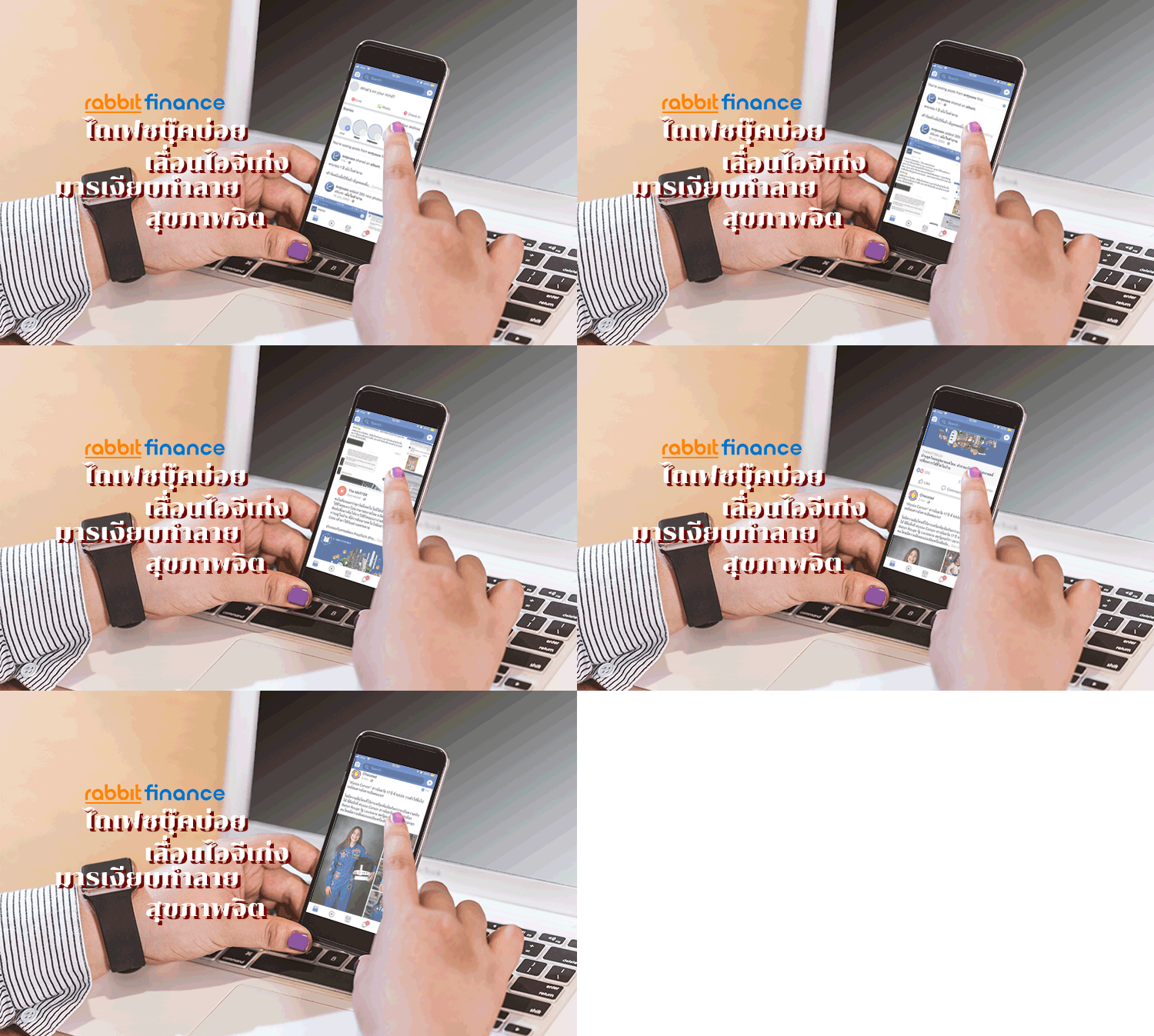
Frequent Facebook Scrolling, Expert Instagram Scrolling: The Silent Destroyer of Mental Health
Today, having a strong physical health is not enough; mental health must also be robust. We often see films depicting patients with depression and bipolar disorder.
According to Rabbit Finance, a significant factor contributing to the rising mental health issues among Thai people and globally is social media. While social media has made our world smaller and accelerated the flow of information, it also poses a silent threat that can lead to mental illness, as highlighted in various studies.

Research Indicates Social Media as a Silent Threat to Mental Health
Research by Dr. Elizabeth Miller from Pittsburgh University and her research team suggests that regular use of social media can increase feelings of loneliness and depression.
Researchers from Pittsburgh University estimate that individuals aged 19 to 32 who frequently use social media are at a significantly higher risk of developing depression.
Another study published in the American Journal of Preventive Medicine indicates that teenagers and young adults who spend more time on social media tend to feel more isolated. It is also suggested that regular social media use correlates with mental health issues in adolescents.
In Thailand, it has been found that 44% of teenagers aged 10 to 19 are at high risk of depression, which translates to over 3 million individuals out of approximately 8 million teenagers. The prevalence rate is 18%, indicating that around 1 million are already affected, which is a significant number.
Films Addressing Social Media Issues
- Unfriend
This horror film's plot revolves around bullying on social media, leading to a suicide. A year later, strange events unfold among the friends.
The film utilizes social media platforms for communication, including chats via Skype and Facebook, portraying social media as a potentially life-threatening space.
- Searching
This story follows a father trying to find his missing daughter by tracing clues left on social media, including Facebook, emails, and various websites.
The trailer reveals a stark contrast between the daughter's real personality and her online persona. This film is set to release on August 3, 2018. For those curious about the outcome and the role of social media in the story, it’s a must-watch.

Social Media and Its Influence on Users' Thoughts
As we know, both Thai society and the global community are immersed in social media. The advantages of social media include making our world smaller and faster, allowing us to instantly know what our friends are doing and where they are.
However, did you know that social media can also be a villain, contributing to mental illness? Those who are heavily addicted to social media—scrolling through Facebook and Instagram constantly—are at significant risk of developing depression.
The silent threat to heavy social media users includes symptoms and feelings that may lead to depression:
- Rapid Mood Changes
Our emotions can swing rapidly, similar to how viewers can change their feelings by switching TV channels. For instance, one might be watching a comedy and then switch to a tragic news story, shifting from laughter to sadness.
Our feelings can change quickly while on social media; with just a swipe of our fingers, we can encounter a variety of emotional news, leading to emotional instability in today's society.
- Feelings of Loneliness
Those who spend more than 2 hours a day on social media are twice as likely to feel lonely compared to the average person. Numerous scientists have surveyed behaviors and feelings, revealing that frequent social media users feel less connected to society and experience deteriorating interactions, leading to feelings of loneliness and even social withdrawal.

- Self-Blame and Self-Doubt
When seeing others post pictures, check in, or showcase their seemingly perfect lives while one is stuck working in an office, it can lead to feelings of jealousy, self-doubt, and worthlessness. In severe cases, this may increase the risk of depression.
Although many claim that social media is a personal space, once we post something, everyone can see what we are doing. At this point, can we still consider social media a personal space? This is something we need to reconsider.
Ultimately, we cannot force anyone to stop posting photos or checking in; it all depends on us. We can choose to dwell on these matters or step away from the virtual world and engage in real-life activities that bring us joy. I believe that if we maintain strong mental health, depression will not find its way to us.
Thank you for the information from rabbitfinance.com