The Development of Seoul and the Price to Pay? (Part 1)
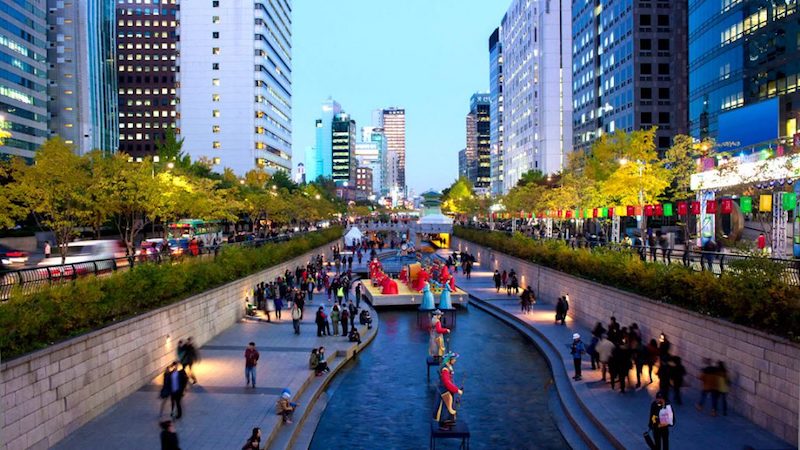
The conflict between benefits and sacrifices in South Korea's urban development resembles the hidden meaning of the yin-yang symbol, concealed beneath the blue-red circle on the national flag. This article discusses one of the urban development projects that transformed Seoul, the capital steeped in history and pride of South Korea, under the name CheongGyeCheon Restoration Project. This project addressed the traffic pollution issues that accompanied Seoul's economic development. While Thai visitors to the Land of the Morning Calm may admire modern Seoul's urban advancements, they cannot imagine when such images will manifest in Bangkok, the capital of Thailand. The price that Seoul had to pay for the success of the CheongGyeCheon project is a cost that many sectors in Bangkok may not yet be ready to bear.
The Unusual Prosperity of Seoul in the Industrial Era
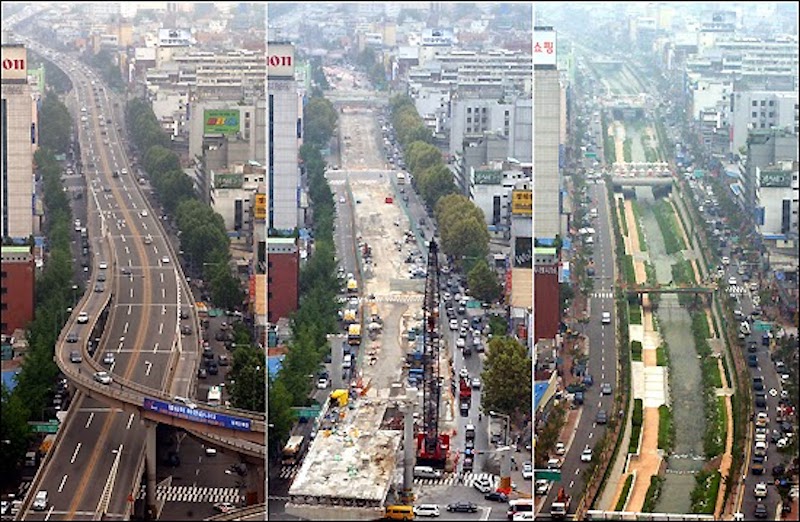
During the 1960s to 1980s, many countries worldwide began recovering from war and communism, accelerating national economic and industrial development. In Thailand, the essence of economic structure development in the National Economic and Social Development Plan since the third edition has intensified production and export development. Similarly, Seoul, after the Korean War, underwent intense economic and industrial recovery, striving to match the progress of leading countries, which led to severe overcrowding issues throughout the city. Consequently, from 1958 to 1977, the CheongGyeCheon, which had been excavated for over 600 years, had to transform from a waterway into a road.
The concrete covering of the CheongGyeCheon was intended to enhance traffic and goods transport, responding to the need to be seen as a fully industrialized city in the eyes of the world. This led to the demolition of over 2 million homes in 210 communities, replaced by highways, modern skyscrapers, and foreign investments, which became symbols of Modernization. By 2000, it was revealed that the filling of the CheongGyeCheon in exchange for the dream of becoming a leading industrial city came at the cost of a deteriorating quality of life for Seoul's residents, who had to endure noise and pollution from over 170,000 vehicles daily, along with an annual budget of over $3 billion needed to maintain this elevated road.
The Post-Industrial Era and New Paths for Urban Development in Seoul
In 1992, the Korea Society of Civil Engineers reported that the CheongGyeCheon elevated highway could no longer be used effectively. Most of the $3 billion annual budget was spent on repairing the pillars of the elevated road, leading to discussions among scholars and urban planners about restoring the former CheongGyeCheon.
The idea of restoring the CheongGyeCheon gained traction among South Koreans when two candidates for the Seoul mayoral election expressed differing opinions on the matter. Ultimately, candidate Myung-bak Lee won the election, making the CheongGyeCheon restoration project one of his main policies.
One of the major objections from candidate Min-suk Kim, Lee's opponent, was the relocation of over 60,000 shops and approximately 220,000 businesses located near the elevated highway, as well as traffic issues caused by closing the road that had previously accommodated over 170,000 vehicles daily. Although Myung-bak Lee could not answer this question at the time, he received overwhelming support and won the election. It raises the question of how Bangkok residents would react if faced with similar reasoning and whether a glamorous project like converting an elevated road back into a canal would be feasible.
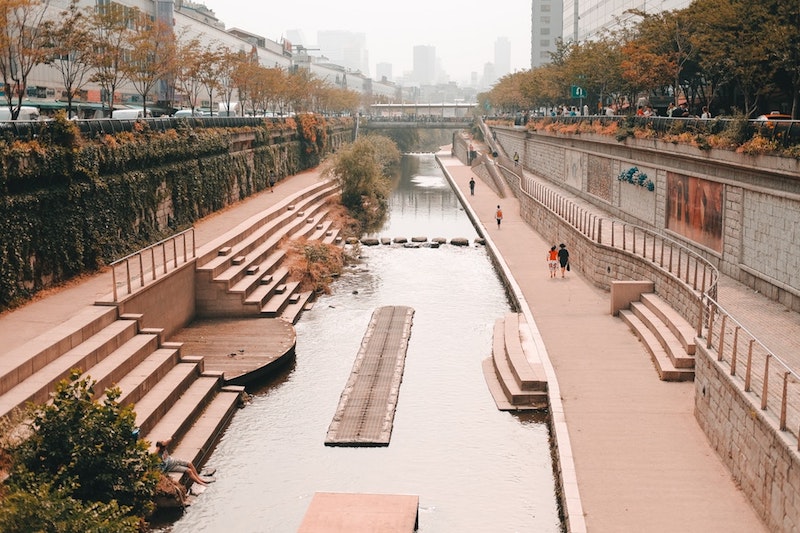
The CheongGyeCheon Restoration Project took only 2 years (2003-2005) to complete, with a budget of $12 billion. If a project of this scale were proposed in Bangkok, it might provoke various reactions (similar to the Bangkok Observation Tower and the riverside road). However, the CheongGyeCheon in the 2000s attracted around 90,000 users daily, generating over $750 million annually and once again becoming a vital waterway for Seoul.
In the next article, TerraBKK will discuss the management and development of this project, focusing on how Myung-bak Lee dealt with over 220,000 businesses located near the Seoul elevated highway, as well as addressing traffic issues during construction, which serves as an important lesson for cities like Bangkok that have yet to move beyond their industrial past before 2000. - เทอร์ร่า บีเคเค
Article by: TerraBKK Investment Tips
TerraBKK Find Good Homes, Value for Money, Affordable Prices