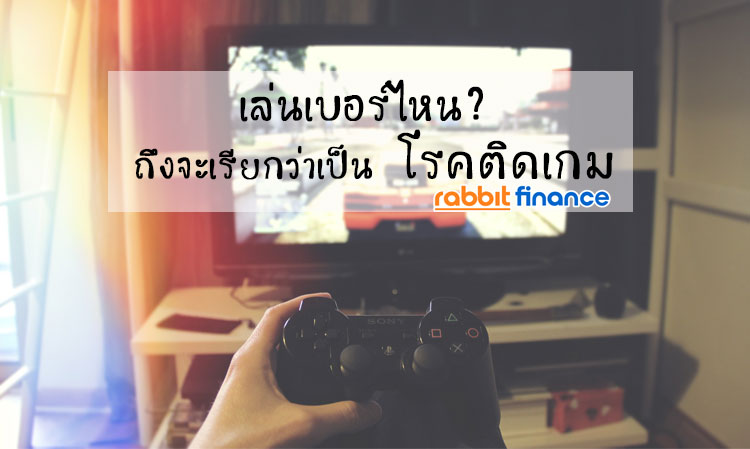
How Much Gaming is Considered a Gaming Disorder?
Just the title alone has many people ready to jump in. But hold on, comrades! Today, we're not here to criticize gamers in any way. Instead, we bring you the latest information from the World Health Organization (WHO), which has recently added gaming disorder to the list of serious mental health conditions.
Rabbit Finance will help you understand this condition better. Let's explore whether you might fall into this category!
How Serious is Gaming Disorder Beyond Just Being a Gamer?
Is Gaming Disorder Real or Just a Joke?
We've probably all heard the humorous phrase 'addicted to gaming' at some point. It's one thing to joke about it, but how true is it that it can actually be classified as a disorder?
Rest assured, this isn't just a tall tale. The World Health Organization (WHO) has officially recognized gaming disorder as a mental health condition that requires treatment.
This disorder was published in the updated 2018 International Classification of Diseases manual on June 18.
With such a significant announcement, it's clear that this condition is not trivial. It has been determined that the level of addiction can impact daily life, similar to the effects seen in individuals with substance abuse disorders and gambling addiction.
Individuals with gaming disorder prioritize gaming over other activities, neglecting relationships with family and friends, and are unable to control their gaming habits despite negative health consequences.
To be diagnosed with gaming disorder, these symptoms must persist for at least 12 months.
How Much is Too Much for Gamers?
Many may wonder what constitutes being addicted to gaming beyond just casual play. It's not merely about being a gamer who occasionally gets frustrated during a game.
First, it's important to understand that this disorder is not widespread. Not all gamers exhibit these symptoms.
Research published in The International Journal of Mental Health Addiction by Daria Joanna Kuss and Mark D. Griffiths outlines some preliminary signs of gaming addiction:
- Low self-esteem
- Low emotional intelligence
- Avoidant and schizoid personality disorders
- Decreased agreeableness
- Narcissism
- Exhibiting 'bad' behavior in real-life situations while feeling 'great' in virtual scenarios (e.g., being a keyboard warrior or displaying aggression online)
It may seem like we're generalizing all frustrated gamers as having this disorder, but based on health assessments, symptoms like anxiety or anti-social behavior can also be present.
Only 2-3% of a sample of 19,000 individuals showed clear signs of gaming disorder (meeting 5 out of 9 criteria).
Additionally, a survey of 500 gamers by ESET (an IT security company) found that only 10% spent 10-24 hours a day in front of a screen, and no clear mental health issues were identified (though physical issues like prolonged sitting can arise).
From this, we can conclude that gaming addiction does not occur easily in everyone, contrary to the panic some media outlets and adults express, leading to calls for banning games altogether.
What About Professional Gamers and Streamers?
In an era where streamers and professional gamers are thriving, many may wonder if their favorite streamers could develop a gaming disorder. Rest assured, as mentioned earlier, developing a gaming disorder is not common.
While gaming addiction can be a long-term issue, not every avid gamer will experience it.
It's crucial to distinguish between 'frequent gamers' and 'those with gaming addiction'. For example, just because someone enjoys drinking alcohol doesn't mean they are an alcoholic. Similarly, frequent gamers may be at risk, but not everyone will be affected to that extent.
Thus, gamers who are fans of streamers can relax knowing that gaming disorder isn't easily contracted like a cold or flu.
What matters is whether gaming negatively impacts daily life. Some may not be addicted to gaming but might spend excessively on in-game purchases, even resorting to stealing from their parents. Regardless of whether it's classified as a disorder, such behavior is not commendable!
Another concern for gamers is anger issues in online games, which can have more significant repercussions than one might think. Therefore, gaming should be enjoyed in moderation, as a way to relieve stress, rather than becoming an obsession.
Thank you for the information from rabbitfinance.com.