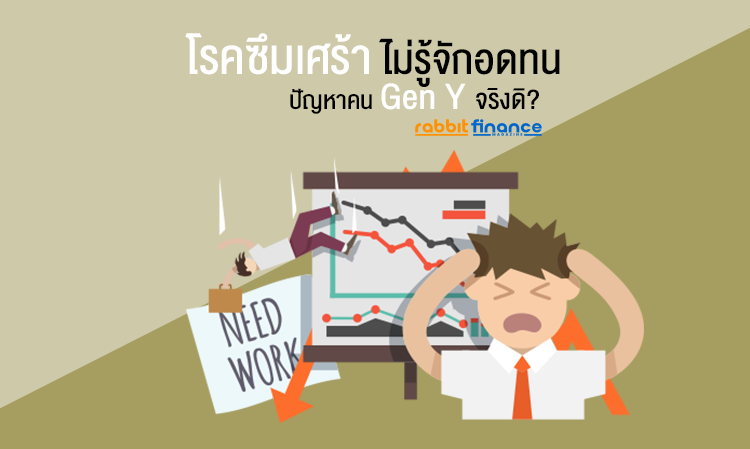
Depression – Is it true that Gen Y lacks patience and frequently changes jobs?
“Why does Gen Y seem to lack patience and change jobs often?”
“And why are they also experiencing high rates of depression?”
This question arises from older generations, whether it be the Baby Boomers, Gen X, or even among Gen Y themselves. Some still wonder why Gen Y is found to have these issues more than the two preceding generations. Rabbit Finance aims to help you understand them better.

What is Gen Y like?
Gen Y, also known as Millennials, refers to those born between 1980 and 1996, currently aged around 21 to 38 years, which is the stage of early career development.
Gen Y is the generation that grew up during the transition from analog to digital, allowing them to experience technological changes and the differences in societal thinking.
Gen Y values work-life balance and strives to allocate time between work and personal life effectively. They enjoy socializing, traveling, and seeking new experiences, which contrasts with the Baby Boomers, who tend to be more strict, committed, and serious about work.

Why is Gen Y perceived as frequently changing jobs and lacking patience?
According to a study by the INSEAD Emerging Markets Institute, Head Foundation, and Universum, which surveyed over 16,000 people worldwide to understand Gen Y better,
found that 82% of Gen Y values work-life balance more than their job title, and 73% prioritize work-life balance over a higher salary. Additionally, 42% of Gen Y would prefer to be unemployed than work in a job they dislike.This indicates that Gen Y values self-development and achieving a good work-life balance more than social status and wealth.
However, Gen Y is ambitious and confident in their potential for success. Therefore, they are less tolerant of things they dislike and are willing to step out to find a better path for themselves.

Gen Y's perspective on work
For most Gen Y individuals, family and friends are not the primary influencers in their work choices. Particularly for those born after 1996, their attitude towards the importance of friends has diminished compared to earlier Gen Y individuals, with only 10% still valuing their parents' opinions. This reflects a high degree of independence in their thinking.

Depression among Gen Y
Gen Y individuals tend to be more ambitious than their parents' generation, both in terms of success and stability. They have clear goals about what they want and strive to push themselves to reach their dreams, sometimes setting expectations that are too high.
The high self-expectations of Gen Y can lead to negative outcomes when they make mistakes, causing them to feel deeply disappointed in themselves and think they are far from achieving those expectations. This can increase the likelihood of experiencing symptoms of depression among Gen Y.
Currently, we see a rising number of individuals suffering from depression, with Gen Y being the majority. To distance oneself from depressive symptoms, it is advisable to set reasonable expectations, stop comparing oneself to others, engage in activities with others, and avoid blaming or punishing oneself. Rabbit Finance encourages all Gen Y individuals to overcome obstacles and believe in their self-worth.
Thank you for the information from rabbitfinance.com