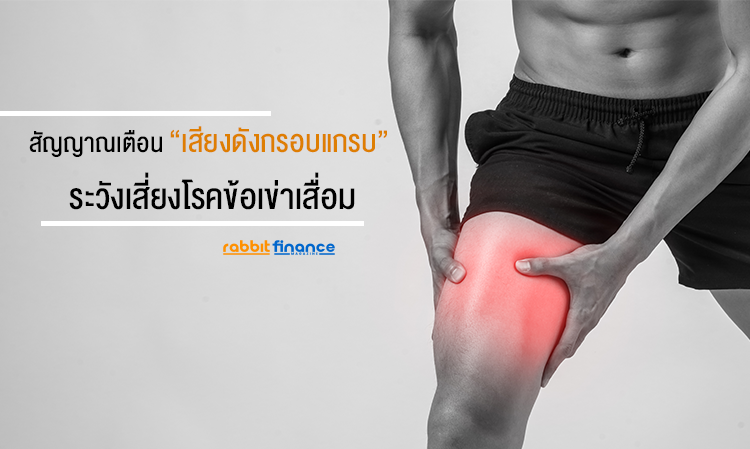
Warning Signs: "Cracking Sounds" Indicate Risk of Osteoarthritis
As we reach the age of 40, our bones begin to deteriorate with age. Some people may experience cracking sounds in their joints, caused by gas in the synovial fluid forming bubbles. According to statistics, there are up to 7 million people in Thailand suffering from osteoarthritis, which accounts for 1% of the total population. Let's explore the true causes of this condition so we can prepare to prevent it effectively.

Causes of Osteoarthritis Symptoms
This condition arises from the cartilage in the joints, leading to cracking sounds in the knees. As the cartilage deteriorates, it becomes thinner and rougher, resulting in more frequent cracking sounds, not just during exercise.
Eventually, bone spurs known as osteophytes may develop. When inflammation occurs, the synovial membrane produces more synovial fluid, causing the joints to swell. Muscle atrophy occurs, and the changes in the joints happen gradually, often unnoticed.
Besides the knees, similar issues can arise in the neck, fingers, back, and ankles, where gas in the synovial fluid forms bubbles. This occurs when finger joints are cracked, causing the joint capsule to stretch and reduce pressure in the joint, allowing dissolved gas in the synovial fluid to form large bubbles.

When the joint is stretched further, the synovial fluid flows back into the joint, causing those large gas bubbles to quickly collapse into smaller bubbles, resulting in the cracking sounds within the joint.
At the same time, there is another sound or sensation that occurs when moving large joints, known in English as Crepitus. This can be observed by placing a palm on the joint and moving it back and forth, noting the sensations in the palm, which can be categorized into two types:
Fine Crepitus
This sensation resembles rubbing hair with fingers, resulting from the grinding of thickened synovial membranes due to chronic inflammation. It is found in patients with rheumatoid arthritis and tuberculous arthritis.
Coarse Crepitus
This is similar to a clunking sound or may be heard as a snap in the joint during examination, caused by the friction of rough cartilage surfaces or small pieces of cartilage that have broken off and are floating within the joint. It is commonly found in patients with osteoarthritis or late-stage rheumatoid arthritis where the cartilage surface has been severely damaged.

Treatment for Osteoarthritis Symptoms
Most patients who visit doctors often experience cracking knees and knee pain. Initially, doctors will take a history and perform a physical examination focusing on the knee joint. An X-ray or MRI may be done to examine the inside of the joint. If it is indeed due to osteoarthritis, a narrowing of the space between the knee bones will be observed. Blood tests will be conducted to diagnose any related joint diseases, and synovial fluid will also be examined.
Once a clear and definite diagnosis is made, the doctor will determine a treatment plan, which can be divided into two methods:
- For osteoarthritis, non-surgical treatment includes lifestyle modifications, weight management, medication, and physical therapy.
- In cases of severe osteoarthritis, surgery may be required. Currently, arthroscopic surgery is performed, which is a type of MIS (Minimal Invasive Surgery). This surgical method is highly safe, with small incisions and minimal pain. It aids in accurate diagnosis and simultaneous treatment, and since the incisions are small and cause little pain, recovery time is significantly reduced.
Preventing and Caring for the Body Against Osteoarthritis

1. Manage Your Weight
If you allow your weight to increase, leading to obesity, the joints in your body will bear an even heavier burden. Therefore, managing your weight is one way to help preserve your joints.

2. Avoid Staying in the Same Position for Too Long
Sitting in incorrect positions for extended periods, whether squatting, bending your legs, or staring at a computer screen, can negatively affect the joints in your neck and lower back. Therefore, whether sitting, lying down, or standing, you should maintain proper posture. Importantly, make sure to move around and stretch your arms and legs regularly to keep your joints functioning well.

3. Avoid Over-Exercising
This can directly affect your joints and bones. However, if you want to exercise, it should be combined with muscle strengthening because muscles help alleviate the burdens on the joints when the body needs to move vigorously. Especially having strong abdominal and back muscles will reduce the load on the spinal discs during movement and various forces, significantly lowering the risk of deterioration.

4. Stop Using Certain Medications Unless Necessary
For example, injected steroids to reduce joint inflammation can have adverse effects on the joints and bones if used frequently, leading to joint damage and bone thinning.
6 Types of Foods to Nourish Joints with Osteoarthritis

1. Consume Calcium
This includes yogurt, cheese (preferably low-fat), green vegetables, broccoli, kale, small fish that can be eaten with bones, black sesame, and tofu, as this mineral helps strengthen bones.

2. Vitamin C and Antioxidants
This substance and vitamin C are abundant in citrus fruits like oranges, which help reduce the risk of developing osteoarthritis and also aid in repairing tissues and strengthening blood vessels.

3. Eat a Variety of Colorful Fruits and Vegetables
Colorful fruits and vegetables provide different nutritional benefits, including fiber and antioxidants, which are essential nutrients for joints found in tomatoes, carrots, purple cabbage, corn, pumpkin, and various leafy greens.

4. Eat Deep-Sea Fish
Especially salmon and mackerel, which should be consumed at least 2-3 times a week due to their high omega-3 fatty acid content. This nutrient helps strengthen joints and reduces pain and inflammation in arthritis patients.

5. Avoid Caffeinated Beverages
Because substances in coffee can cause the body to excrete calcium through urine, leading to an imbalance in calcium levels in the body. This results in the breakdown of calcium in bones for use, and excessive amounts can lead to decreased bone mass.

6. Eat a Variety of Foods
Eating a diverse range of foods helps the body receive a complete array of nutrients and vitamins. If this is not possible, consider taking a multivitamin supplement, which will provide you with essential vitamins and minerals that may be lacking, such as calcium and vitamin K, which aid in bone formation, vitamin C for tissue repair, folic acid, and vitamin E for nourishing the muscles around the joints.
Preventing joint deterioration or extending their lifespan is not difficult if you follow these initial recommendations. However, if symptoms arise, do not delay in consulting a doctor to prevent the condition from worsening.
Thanks to information from Samitivej Hospital, Bumrungrad Hospital, Dr. Sumapa Chaiamnuay, a specialist in joint diseases, and Cheewajit.
Thanks to information from rabbitfinance.com