Case Study: How to Rent Out an Apartment?
Case Study: How to Rent Out an Apartment?
1. The Apartment Business Cycle
The Building Life Cycle is divided into two main parts: Part 1: Completion, which typically involves the initial stages of project development, such as project analysis, operational planning, design, and construction management; and Part 2: Monitoring and Improving Building Usage, which includes project management and building renovations.
Each age phase of an apartment building usually involves different activities:
• 0-1 year: This is the period for various transactions, such as registration, hiring, and budget allocation.
• 2-5 years: This is the time to find ways to maintain and manage the building.
• 5-15 years: Repairs and renovations of the building are necessary.
• 15 years and beyond: The building deteriorates, requiring major component replacements, such as elevator cables, and budget allocation for new building designs.
Clear Signs It's Time to Renovate the Apartment: Observe the apartment market situation in your area. How has it changed? How much has competition increased? Most importantly, if the apartment is affected and the rental rates/occupancy rates are below the market average, renovations should be made immediately without delay. Each project often has different issues, so it is advisable to analyze problems on a case-by-case basis to find appropriate solutions.
2. Where to Invest?
Locations with potential for apartment investment are primarily in Bangkok and its suburbs, as well as major cities across the country, including Chiang Mai, Khon Kaen, Maha Sarakham, Ubon Ratchathani, Nakhon Ratchasima, Nakhon Pathom, Chonburi/Pattaya, Hua Hin, Hat Yai, and Phuket.
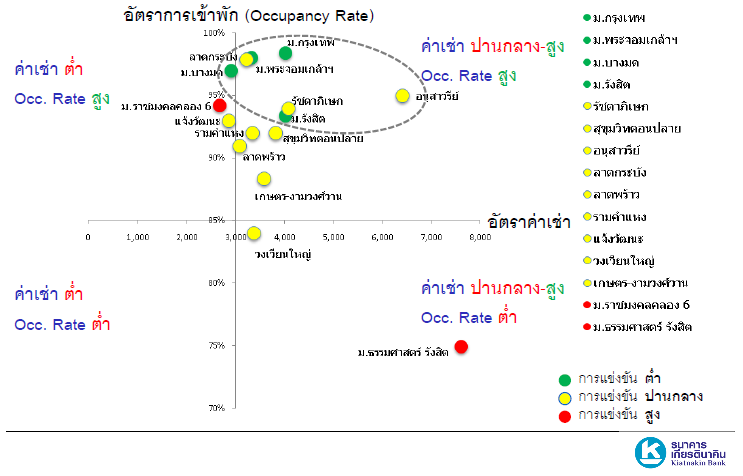
The key factors to consider when investing in apartments are rental rates, occupancy rates, and competition levels. Let's take a look at the 12 apartment locations around universities in Bangkok.
( Example study from Kiatnakin Bank )
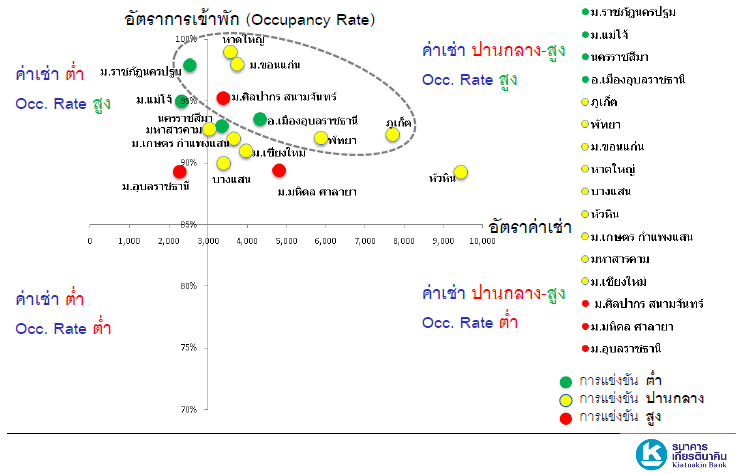
Overview comparison of occupancy rates, rental rates, and competition of apartments around universities in provincial areas.
( Example study from Kiatnakin Bank )
Target Tenant Groups can be divided into four main groups: expatriates working in Thailand (Expats), working adults, students, and laborers. The most interesting target groups are working adults and students, as they can command higher rental rates than laborers. The Expats group has limited demand concentrated in certain central city areas and requires a high investment.
( Example study from Kiatnakin Bank )
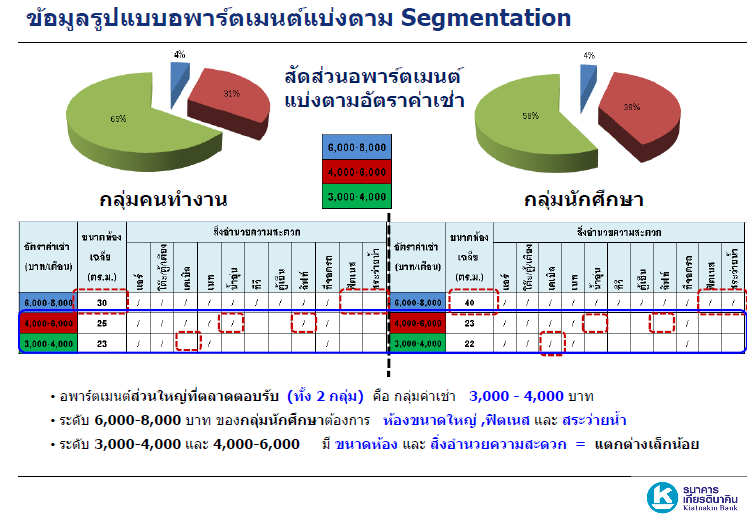
Research on the demand for apartment living shows that most working adults and students prefer rooms with rental rates of 3,000-4,000 baht per month, along with amenities such as air conditioning, furniture, internet, and parking.
3. Apartment Design
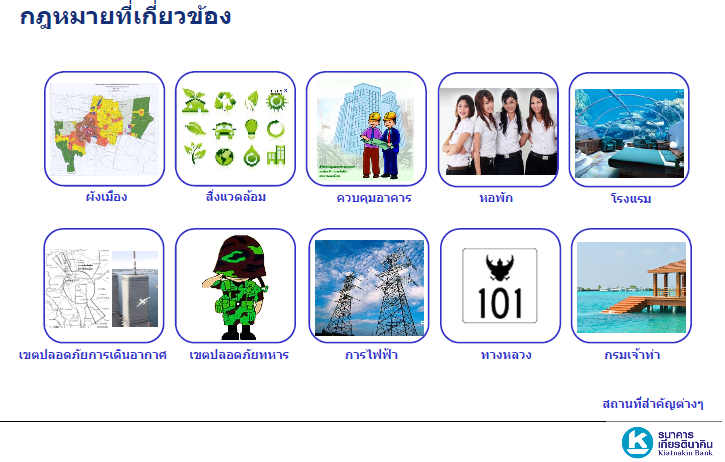
Investing in apartments should involve a thorough study of the land before purchasing to determine if the plot can indeed be developed into an apartment project. This begins with a feasibility study of the project according to legal requirements.
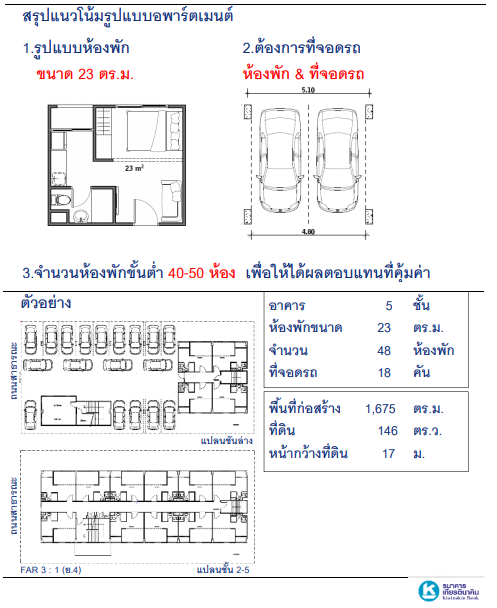
Building Design can convey various messages, such as room price levels, target tenant groups, and the image of the apartment. Therefore, the building design, room sizes, and amenities are crucial factors that investors must pay attention to and find suitable answers that meet the needs of tenant groups and rental rates. Developing an apartment project today is not as simple as before; it is not just about developing land and waiting for customers to move in. Nowadays, some apartment investors enhance their competitive strategies by adding amenities similar to condominiums, such as common areas, swimming pools, and fitness centers. Some investors address vacancy issues in less desirable locations, such as rooms near elevators, by creating themed rooms appealing to female students with cute bedding designs. This not only reduces vacancy rates but can also increase rental rates. At the same time, if a location has a high occupancy rate, one should be prepared for high competition or the entry of major operators. Some condominium developers have reduced room sizes to 21-25 square meters to accommodate these student groups.
( Example study from Kiatnakin Bank )
4. Apartment Construction Technology
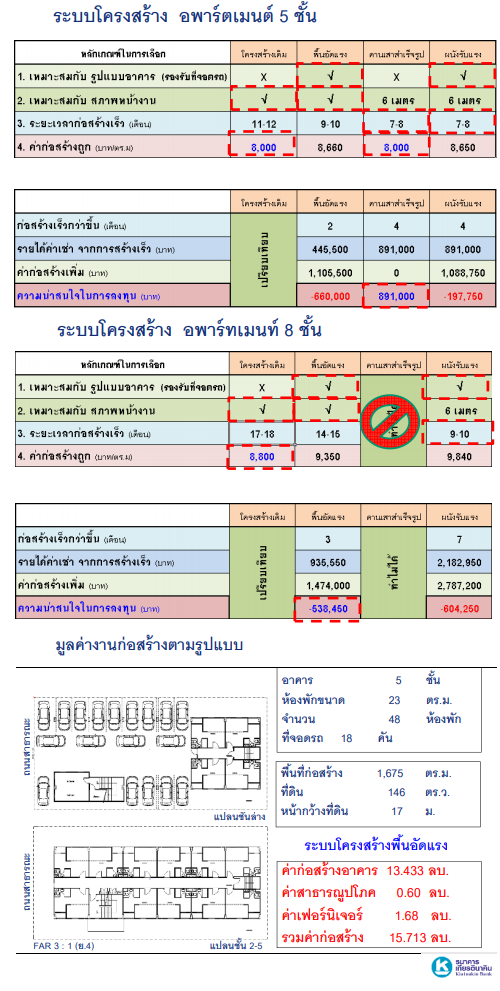
Structural Systems come in various types, each with its own advantages and disadvantages:
• Conventional Beam and Column System: Advantage: Well-known among general contractors; Disadvantage: Limited column spacing, parking constraints, and a maximum height of 5 stories.
• Precast Beam and Column System: Advantage: Quick construction; Disadvantage: Requires 6 meters of surrounding space and a maximum height of 5 stories.
• Post-Tensioned Slab System: Advantage: Wide column spacing, no beams, high ceilings, and can be built up to 7-8 stories; Disadvantage: Electrical and plumbing systems should be prepared before pouring.
• Load-Bearing Wall System: Advantage: Quick construction; Disadvantage: Higher costs than other types and requires 6 meters of surrounding space. Currently, few contractors can build with this system.
Criteria for Choosing a Structural System
• Suitability for the building design (to accommodate parking)
• Suitability for site conditions
• Construction time (months) - the quicker, the better
• Construction costs (baht/square meter) - the cheaper, the better
( Example study from Kiatnakin Bank )
5. Return on Investment
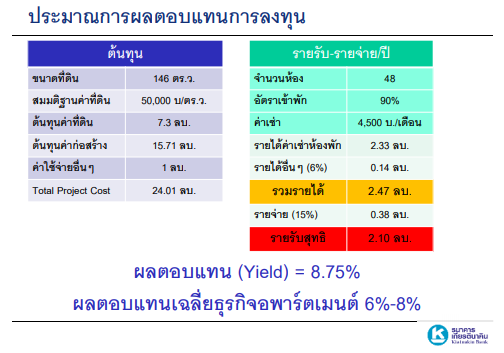
Estimating Return on Investment includes construction costs, such as land costs, building construction costs, and related expenses, as well as annual income/expenses that will occur once the service is opened, to check whether the apartment project provides a worthwhile return on investment.
( Example study from Kiatnakin Bank )
Comparing Locations with Returns involves selecting locations that still have plots of land for sale at prices that can still be developed into apartment projects that yield expected returns. In addition to land costs, legal construction requirements should also be considered.
( Example study from Kiatnakin Bank )
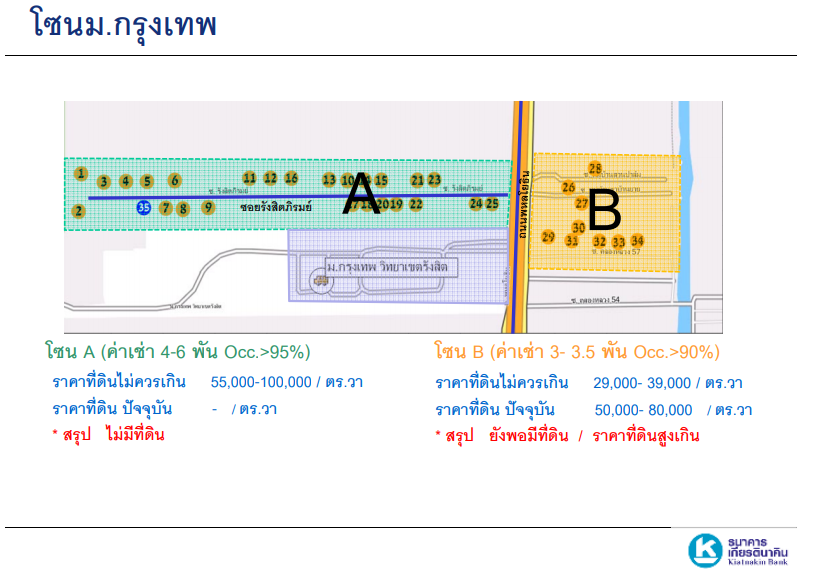
In the Bangkok University area, it was found that Zone A has no available land plots left, while Zone B has an average land price of 30,000 – 40,000 baht/square wah, which is assumed to be higher than the estimated land cost. Therefore, if good returns are desired, this location may not be suitable for investment. However, if one can accept a lower-than-expected return, the project can still be invested in.
Finally, investing in apartments requires comprehensive research across all aspects. Therefore, I would like to conclude this article with a summary of important steps that should not be overlooked:
• Study market information, location, and target groups.
• Study relevant legal requirements.
• Design to be competitive; preparing for the future is even better, such as offering better room grades than the market at reasonable rental rates.
• Choose appropriate construction techniques; sometimes choosing the cheapest construction method may not be beneficial if it impacts other aspects in the long run.
• Analyze financial returns and budget allocation according to each time period.
• Diversify risks with locations and target groups.
• Analyze and plan building renovations at appropriate times. ---TerraBKK
Thanks for the information from the seminar on apartment project development by Kiatnakin Bank

Article by: TerraBKK Investment Tips
TerraBKK: Find good, valuable, and affordable homes