
Case Study of TKN: The Stock That Hit Turbulence
For stock investors, buying shares when they look “good”<\/span> often leads to acquiring stocks at exorbitant prices, especially “growth stocks”<\/span> with interesting stories that can push their prices to “Mars”<\/span> ... This is one of the situations where we need to apply “investment psychology”<\/span> to guard against the urge to buy or greed during a bull market.
This case study will focus on TKN, a stock that has experienced rapid growth in both sales and stock price in recent times. Looking back at its stock price, we can see that it has increased several times since its IPO, peaking at around 30 baht per share.
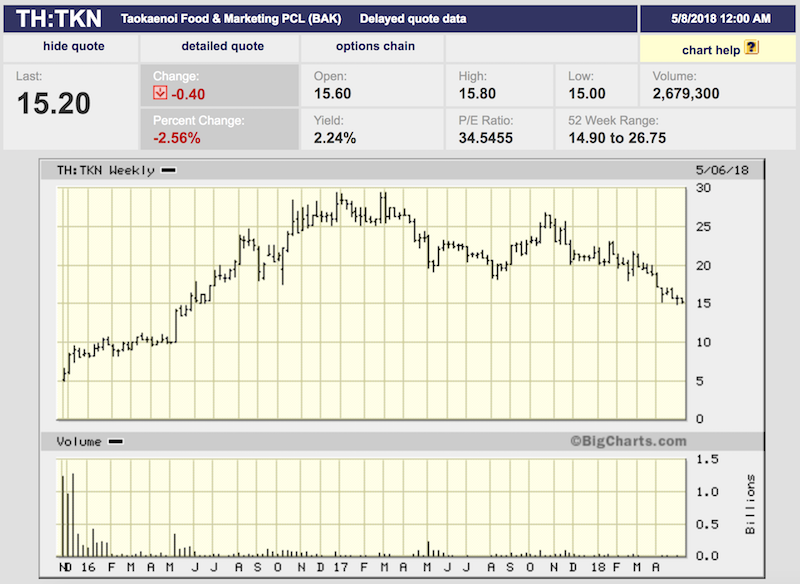
(Source ... big chart)
After reaching its peak last year, suddenly the stock price began to “drop”<\/strong> continuously, like an airplane soaring high but suddenly hitting “turbulence”<\/strong>, causing the price to fall by more than half from its peak ... The question is, what caused this turbulence, and how is the company managing it? Let's take a look...
First, “the cost of raw seaweed has risen”
Revenue minus costs equals the margin, which affects “profits”. The main reason for the profit decline often stems from an inability to control production costs, and the production cost for TKN is “raw seaweed”<\/strong>.
Looking at sales revenue, it has indeed “grown” over the past three years, with sales revenue increasing from <\/em>3,499 million baht to 5,263 million baht in 2017.
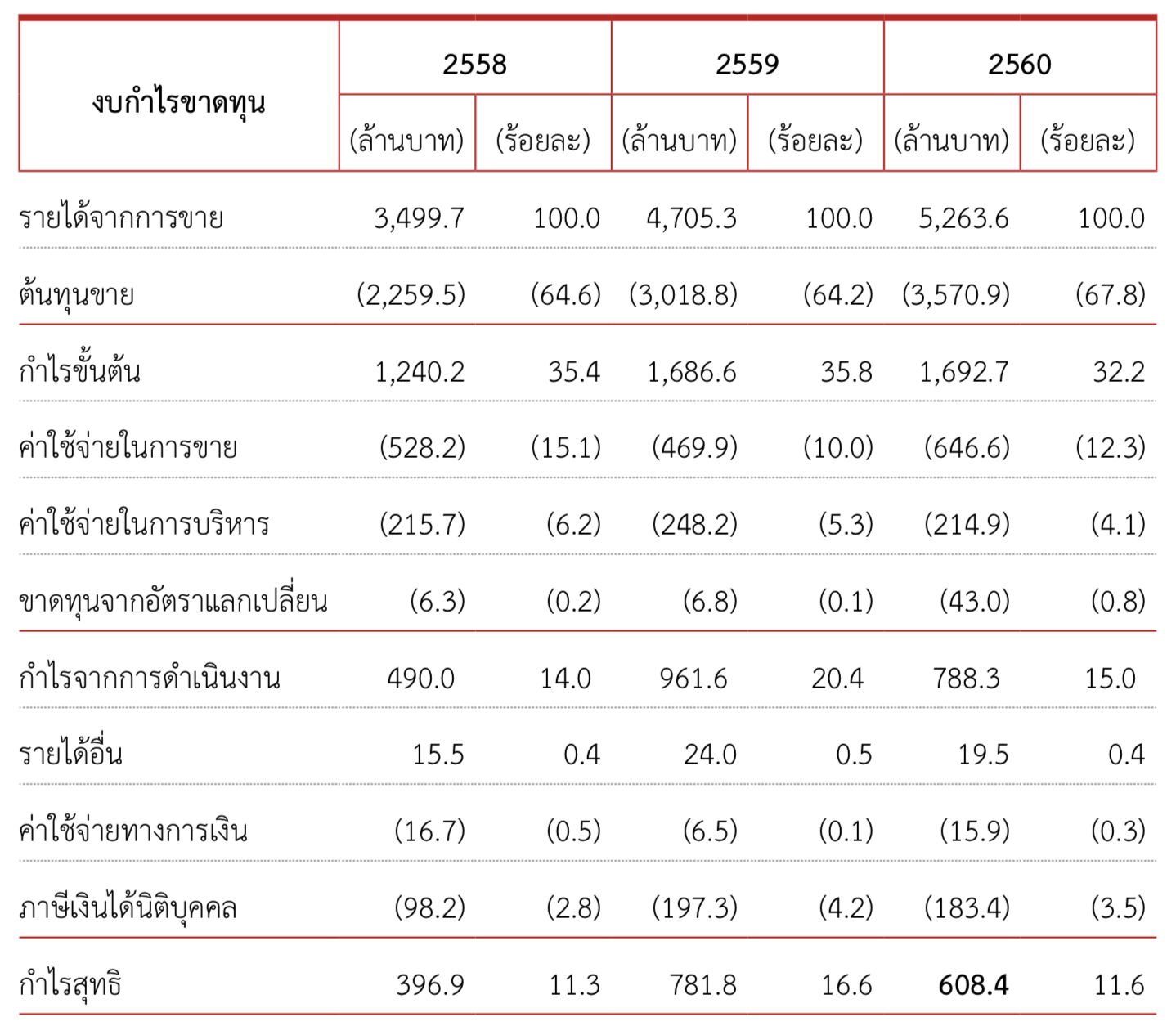
However, what has grown just as rapidly as sales is the “cost of sales,” which exceeded 3.5 billion baht in 2017.
The company explained that the production volume of raw seaweed from farms in China decreased by 35% (according to the company's operational report), which has had a widespread impact on the global seaweed industry.
Another reason for the rising costs is the operation of a new factory in the Rojana Industrial Park, leading to increased investment expenses, and the seaweed production process is still being refined, requiring further adjustments. These high costs from both reasons have pressured profits and caused the stock price to decline as seen.
Second, “TKN's problem-solving approach”
Now that we know the causes of the turbulence, investors need to look at how the company plans to address these issues. TKN's problem-solving strategies can be summarized as follows:
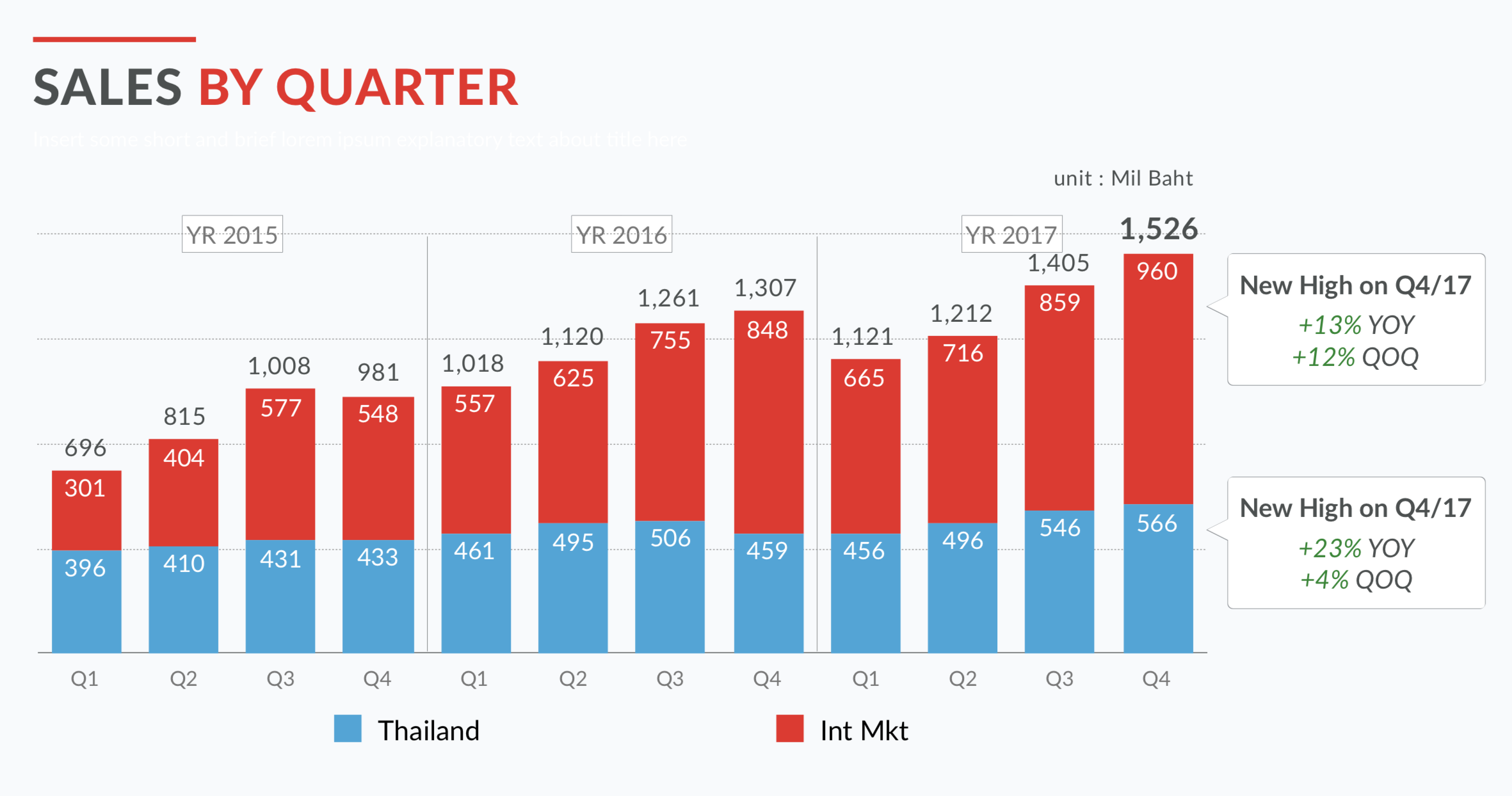
- The company has restructured its cost base by locking in seaweed prices in advance, allowing for better control of seaweed costs, and improving the efficiency of the production capacity of finished seaweed.
- New products have been launched with higher gross profit margins than the previous average, with a projected gross profit margin increase of 35%.
- New machinery has been installed in both factories to enhance production efficiency.
- New markets have been expanded, such as the United States.
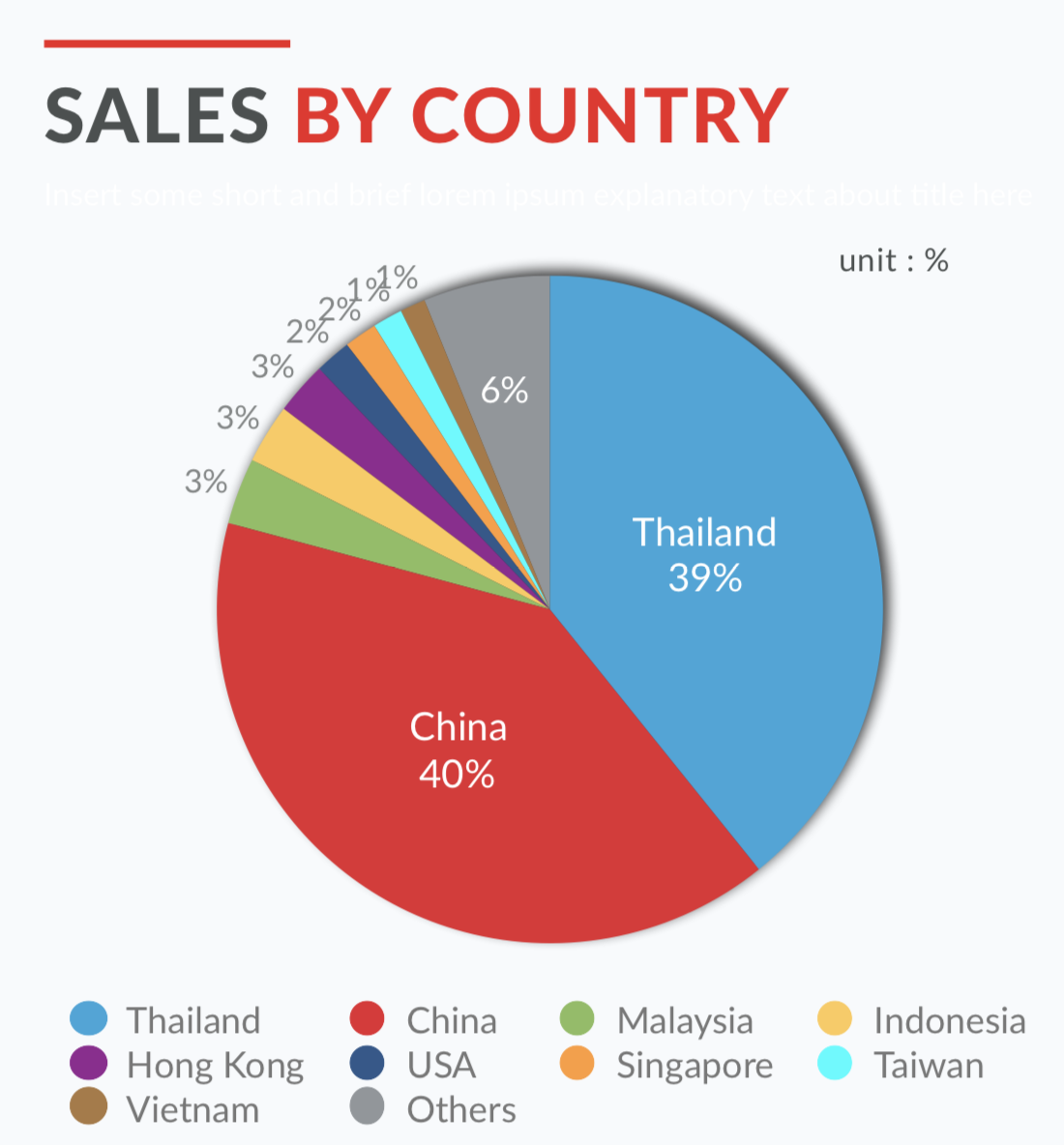
If we look at the customer distribution of this stock, we find that sales from China have surpassed those from Thailand, with China accounting for over 40% of sales while domestic sales are only 39%. This indicates that in the future, the impact on the business may come more from abroad than from within the country.
Finally, “Is the stock experiencing temporary turbulence?”
Based on all the conclusions mentioned, if we are investors, we must carefully consider whether this stock is experiencing temporary turbulence, or if the business is in free fall, or if it has reached saturation.
Notably, sales continue to grow, but the faster-growing factor is the cost of sales. The main reasons stem from the cost of raw seaweed and the opening of a new factory. The raw seaweed cost is unpredictable, but the factory opening should be a temporary expense, and if the factory operates efficiently, it will reduce the cost of sales from this aspect.
In conclusion... Investors with the right investment psychology often prefer to buy stocks during temporary bad news, and if they assess the stock price as acceptable and not too expensive, it is worth accumulating in their portfolio. This is in contrast to chasing prices along with a large crowd, which can lead to significant losses. As for <\/em>TKN, it remains to be seen whether it will recover or if this is just a temporary “turbulence.”
 <\/em>
Thanks for the information from Mr. Waen Invest
<\/p>