How to Choose a Second-Hand House Without Regrets
Currently, the prices of land and newly constructed properties are continuously rising, making the search for second-hand houses an attractive option for those wanting to own a home. The demand for second-hand houses is also expected to increase significantly in the future, potentially becoming a substitute for new homes. Buying a second-hand house is certainly a good choice for those who do not have enough budget for a new home. However, if you haven't read this article yet, don't rush into buying a second-hand house anywhere, as you might regret it later. TerraBKK recommends the most valuable and careful ways to choose a second-hand house in this article.
Look for a Second-Hand House in a Good Location for Both Now and the Future
According to data from terrabkk.com, which compiles information on various types of second-hand houses such as condominiums, townhomes, and single houses, the most searched locations for selling second-hand houses are in Rangsit, particularly in the Thanyaburi area,
Rangsit Klong 2-4. The most searched second-hand townhomes for sale are in the Ram Inthra-Watcharapol area. Both locations are popular residential areas with many old and new projects, but new projects are also seeing continuous price increases.Meanwhile, if you are planning for the long term for renting out a house, the most searched locations for renting second-hand houses are in Phaholyothin- Rangsit, Bang Yai, and Nawamin - Ramkhamhaeng. The selling prices are not too high, ranging from 1.2 to 3.5 million baht, and can be rented for no more than 20,000 baht/month.
The popularity of searching for second-hand houses can indicate that these areas are popular residential locations with high population density, which will lead to continuous development to accommodate the expansion of the area, including amenities as well.
Check the Validity and Information of the Location
Another important issue is the future prospects of the location you choose. Before deciding to buy a second-hand house, if you already have a desired location in mind, you should check whether that location will be subject to expropriation. You can verify this with the Expressway Authority of Thailand or the Department of Highways in the relevant area, or check with the local district office.
In addition to the risk of future expropriation, the legality of the house's construction is also crucial to prevent future complications. You should check the house registration number with the municipal engineering department or the local engineering office to see if the construction was done according to the approved plans and conditions. Additionally, if the house has been extended, you should verify that the extension complies with the approved permits.
Furthermore, you should check the utility costs such as water, electricity, and telephone bills. Verify with the district office whether the previous owner has any outstanding debts to avoid issues with fines and back payments.
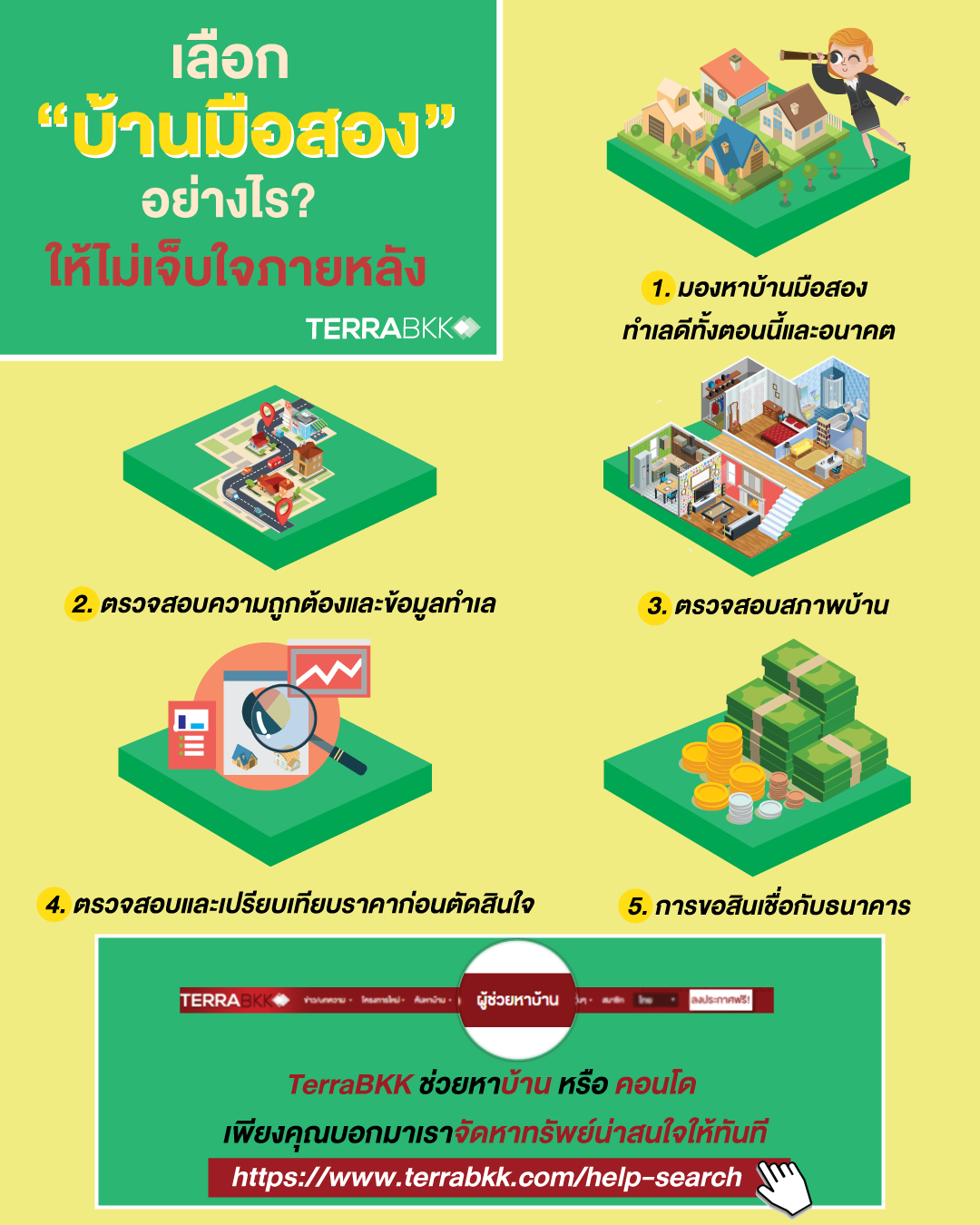
Inspect the Condition of the House
The almost final step in your decision-making process, after confirming that both the location and the house have no outstanding issues, is to inspect the condition of the house. Focus on the main structure rather than minor blemishes. The main structural components of the house include the load-bearing columns and beams, which are like the pillars supporting the house. To inspect a second-hand house, you should:
- Check if the load-bearing columns and beams are perpendicular.
- Look for cracks in the concrete structure inside the columns and beams.
- Inspect the ceiling of the second floor for cracks in two-story houses.
- Check for cracks at the corners of the walls, which affect the structural integrity of the house.
In addition to the main structure, check the utility systems for water and electricity to see if they are functioning properly or if there are any damages. This will help you negotiate with the previous owner for repairs. You should test all water faucets, look for leaks from the ceiling, floor, or walls, and check for any swelling or stains. For the electrical system, check for any signs of wear or short circuits.
Check and Compare Prices Before Deciding
Once you have checked everything, compare the prices of houses in the same area to negotiate a fair price with the previous owner. This is also the time to start contacting banks for a loan. Bank officials will come to appraise the price to ensure that the second-hand house is indeed priced appropriately.
Applying for a Loan with the Bank
The factors considered when applying for a loan are similar to those for a new home loan, including repayment ability, interest rates, repayment periods, and the type of collateral, which in this case is the second-hand house you are purchasing, as well as the down payment or deposit.
Preparing Property Ownership Documents: A copy of the land title deed must be the same size as the original, which can be obtained from the seller.
Prepare Financial Documents for Loan Application
Repayment Ability: Calculate your income to assess your repayment capacity. The repayment amount should be about one-third of your total monthly income.
Financial Evidence: Prepare financial evidence, including proof of regular income deposits for at least six months, and you should have savings, whether in fixed deposits or savings accounts, for a down payment of about 10-15% of your budget for purchasing the house. This will make it easier to apply for loans from various banks and help reduce the burden of monthly repayments.
Prepare Money for Various Expenses such as appraisal fees, transfer fees, stamp duty, and mortgage fees, etc. ---TerraBKK
Article by: TerraBKK Find Second-Hand Houses
TerraBKK Find Good Houses at Great Prices