The Charm of Ari: A Potential Area for a Stylish Life Near the BTS
Looking back at the growth of Ari, it was once a residential area for the wealthy and aristocrats, with limited land use diversity. The clustering of residences was quite evident as a hub for affluent individuals. However, today, Ari is gradually transforming into a hipster neighborhood, a gathering place for creative businesses and newcomers. TerraBKK sees that Ari is developing similarly to central Sukhumvit, evolving into a full-fledged Lifestyle & Hangout District.
Land Use Proportions in Ari
Historically, Ari was primarily a residential and hotel area, but it has clearly evolved. It is now recognized as a hub for hipsters, featuring a variety of restaurants, cafes, and emerging businesses, particularly around the Ari BTS station, Phahonyothin Soi 7 (Ari Soi), and Pradiphat Road. The land use in Ari is also diverse, with a mix of government agencies, office buildings, hotels, and both old and new commercial establishments, making Ari rich in resources without being overly crowded.
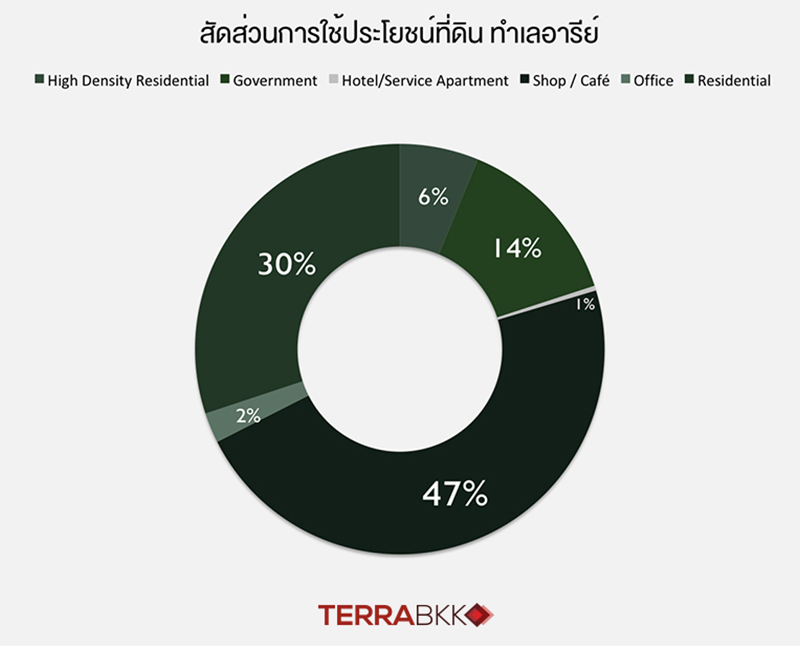
TerraBKK has surveyed the Ari area and categorized the buildings based on land use into six types: low-rise residences, high-rise buildings (8 stories and above), government institutions, hotels/hostels/service apartments, rental office buildings, and dining and entertainment venues. The most prevalent type is dining and entertainment venues (47%), followed by general low-rise residences (30%), government institutions (14%), high-rise buildings (6%), office buildings (2%), and hotels (1%).
Regarding employment sources, although the land use for employment accounts for only 16%, the size per square meter is quite interesting.
In 2017, Bangkok had a total supply of approximately 8.7 million square meters of rental office space, primarily concentrated in Silom, Sathorn, Ploenchit, Sukhumvit, Asoke, and Rama 9. In the Ari area, specifically around the Ari BTS station, there is a rental office supply of about 260,000 square meters, with an average rental price of 480 THB/square meter, expected to increase to 286,000 square meters by the end of 2018, with an average rental price rising to 520 THB/square meter. It is estimated that with an occupancy rate of 60% and a space usage of 10 square meters per person, there will be around 15,500 employees working in these buildings, increasing to 17,100 by the end of 2018. Additionally, there are nearly 20 government agencies clustered in the area, such as the Ministry of Finance, the Ministry of Natural Resources and Environment, the Revenue Department, the Treasury Department, the Water Resources Department, and the Office of the Auditor General.
Importantly, Ari is the area with the highest concentration of rental offices along the northern Green Line BTS.
Concentration of Activities in Ari
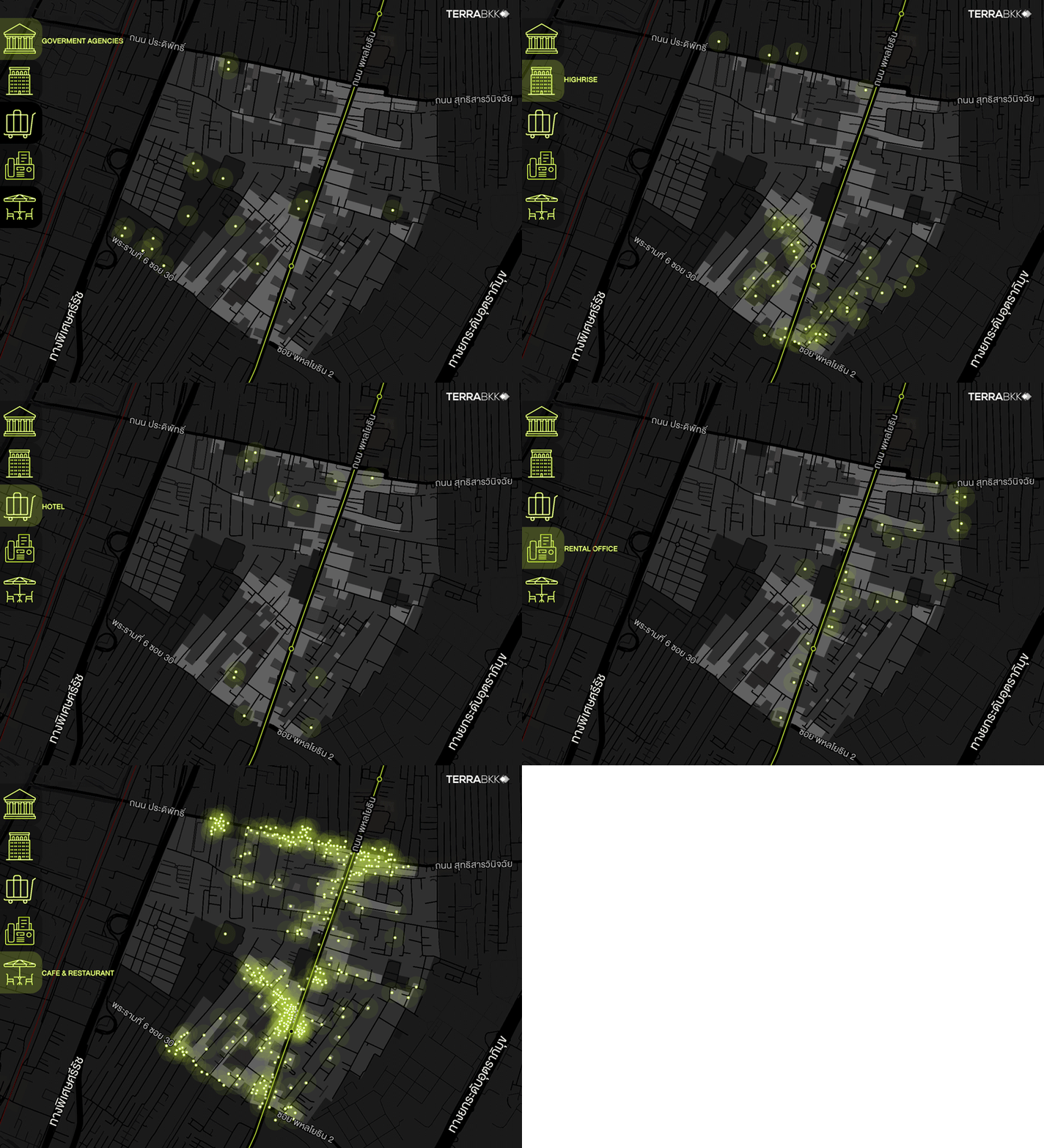
From the categorization of buildings in Ari based on land use proportions by TerraBKK, there is a clear clustering of interesting activities. It is observed that within Ari, there are distinct clusters of activities. For example, government institutions are clustered along Rama 6 Road, including the Ministry of Finance, the Ministry of Natural Resources and Environment, the Revenue Department, and the Treasury Department. Hotels are clearly clustered along Pradiphat Road, featuring both long-established hotels and new hostels, with some spread around Senarom Soi and Phahonyothin Soi 5.
The clusters of high-rise buildings, office buildings, and dining and entertainment venues are interrelated, concentrated around the Ari BTS station, Pradiphat Road, and Phahonyothin Soi 7 (Ari Soi), which is home to several condominiums and dormitories, such as Noble Reflex, Noble RE:D, and Noble Reform. This reflects the simultaneous growth of condominiums and emerging retail businesses in the area.
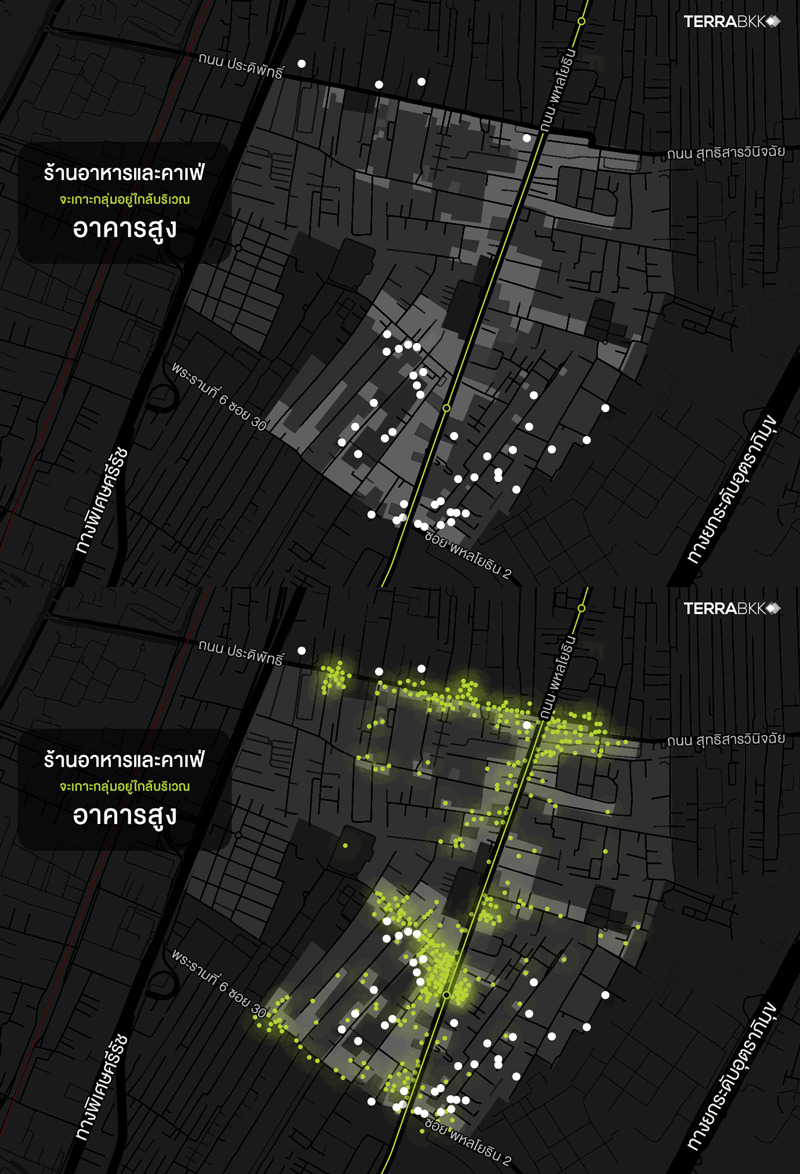
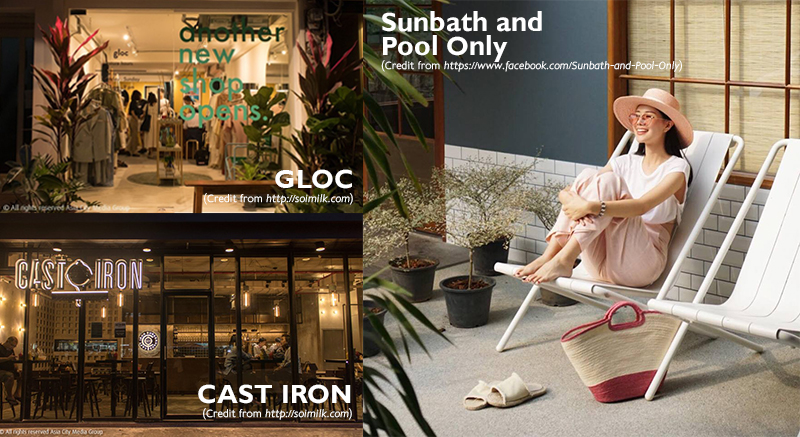
Additionally, it is found that there are over 450 shops and dining venues in the Ari area, which are new businesses that have chosen to establish themselves in Ari, particularly cafes, restaurants, and multi-brand stores, making Ari a hipster neighborhood. The influx of newcomers has transformed Ari into another Lifestyle District in Bangkok.
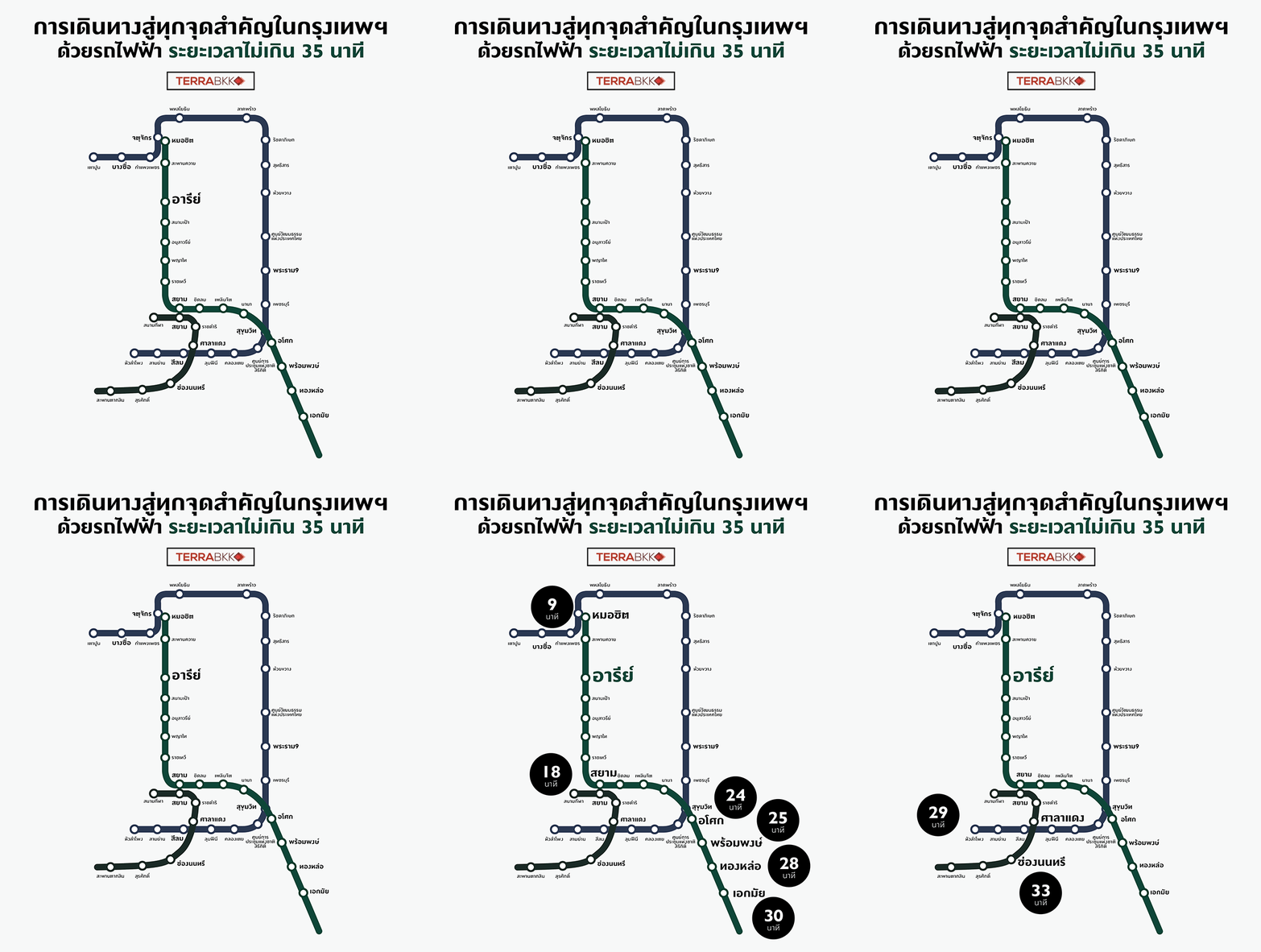
Traveling to All Key Points in Bangkok via BTS in Under 35 Minutes
In 2014, the Ari BTS station had an average of 22,484 passengers per day, with a continuous upward trend due to the increase in lifestyle and employment sources. From the Ari station, it is possible to connect to key locations in Bangkok within 35 minutes, such as Silom, Sathorn, Siam, Asoke, Thonglor, Ekkamai, Rama 9, and Bang Sue Central Station, which is a significant advantage that gives Ari great potential in terms of transportation.
As we know, the appeal of Ari caters to all aspects, whether it’s the employment sources from office buildings, the leisure spots for delicious food, or the convenient transportation via BTS. This is one reason why condominiums in the Ari area are quite attractive. Let’s take a look back at the situation of condominiums in the Ari area over the past 10 years.
Condominiums in Ari: Supply of New Projects Continues to Decline
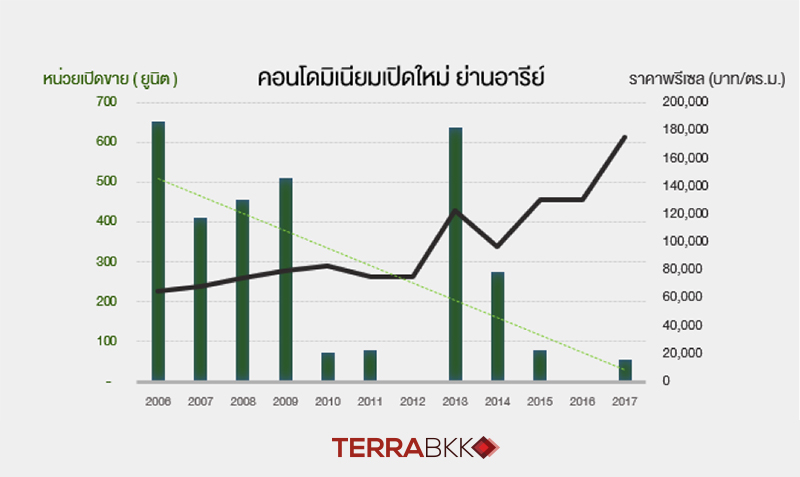
Over the past 10 years, the launch of new condominiums in the Ari area has shown a continuous decline. Back in 2006-2009, there were typically about 4 new condominium projects launched each year, with an average of 400-500 units sold each year. After that, the number of new projects and units sold significantly decreased, and by 2012, there were no new projects launched at all. A new project was introduced in 2013, bringing the number of units sold back to the hundreds. Since then, condominiums in the Ari area have not launched more than 2 new projects per year. In the last three years, from 2015-2017, the number of units sold per year has been less than 100, a noticeable decrease compared to the past, partly due to the scarcity of land and high prices, with the latest land appraisal in 2016-2019 for Phahonyothin Road in the Phaya Thai area reaching 300,000-400,000 THB per square wah.
The average pre-sale price of condominiums in Ari has increased by 6.7% per year.
With the development of the Ari area, it is not surprising that the pre-sale prices of new condominium projects have been continuously rising, averaging around 6.7% per year. The average selling price was 65,000 THB per square meter in 2006, rising to the range of 70,000-80,000 THB per square meter for several years, before reaching over 100,000 THB per square meter today. The new projects launched in the past two years include Suanbua Residence Ari 1-Rajakru, with an average pre-sale price of 175,000 THB per square meter. Recently, the Noble brand has entered the market with the Noble Around Ari project near the Ari BTS station. It is believed that once this project is launched, we will see a resurgence of activity in the condominium market in the Ari area.
Condominiums in Ari can yield 4.7-6% per year.
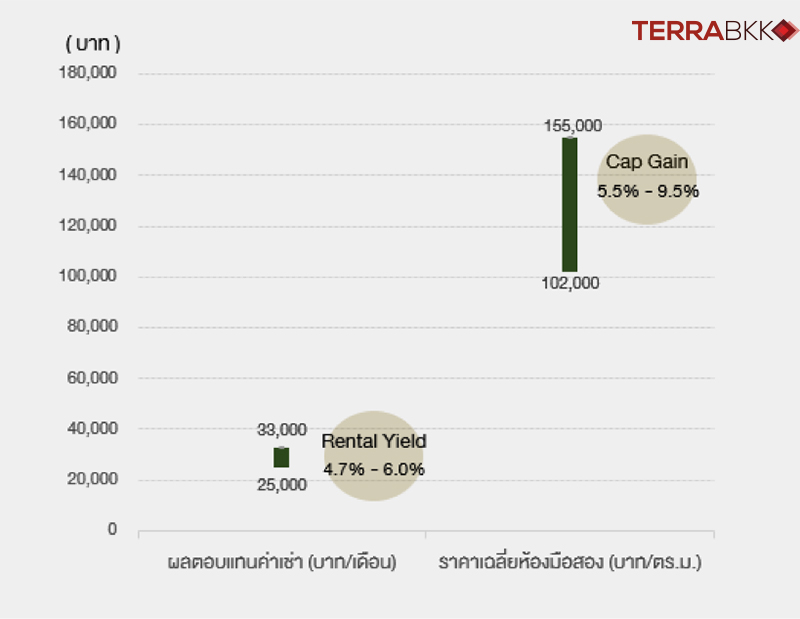
The overall rental return from over 26 condominium projects in the Ari area can be rented for an average of 25,000 – 33,000 THB per month, resulting in an average rental yield of about 4.7-6% per year. If held for the long term, the price of condominiums in the Ari area has increased by an average of 5.5-9.5% per year. Currently, the average price of second-hand units is 102,000-155,000 THB per square meter, which is quite a reasonable figure.
If anyone is interested in condominiums in the Ari area, as mentioned, Ari does not have many new condominiums launched. The latest project from the Noble brand, Noble Around Ari, a high-rise condominium of 39 stories on approximately 3 rai, is certainly worth watching. Although details about the project are still limited, the location of Noble Around Ari is quite promising, as it is reported to be adjacent to Phahonyothin Road and not far from the Ari BTS station. Such a project location may be hard to find in the Ari area again.