Living in the City: The High Cost of Time for Urban Dwellers
In 2017, the number of registered vehicles in Bangkok reached 9,395,438, accounting for nearly 40% of the total registered vehicles in the country. This figure does not even include vehicles from surrounding areas or those registered in other provinces but driven in Bangkok. Just think about why Bangkok has long been known as the city of traffic jams.
A survey by Uber revealed that Bangkok residents spend an average of 72 minutes a day stuck in traffic, plus another 24 minutes searching for parking. There are 160% more vehicles on the roads than there should be. Everyone knows there are too many cars on the road, but if given a choice, no one wants to squeeze into unreliable public transport anyway.
According to the National Statistical Office in 2012, Bangkok residents spend about 20% of their income on transportation. Moreover, during traffic jams, Bangkok residents lose a staggering 60 million baht a day in opportunity costs, or 11 billion baht a year. This lost opportunity is not only due to the number of cars on the road but also includes issues with public transport systems and the unpredictable timing of public transport.
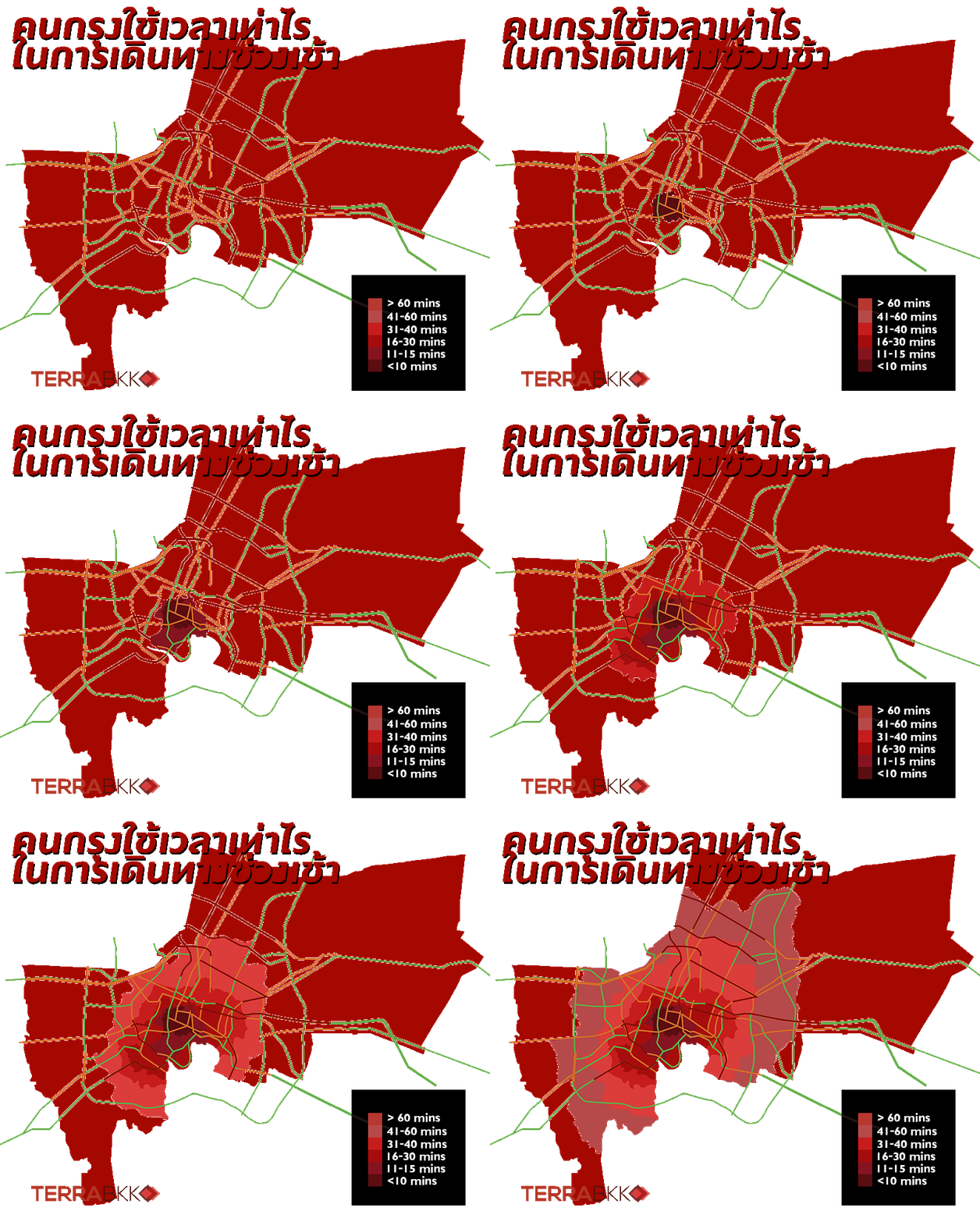
For example, Mr. K. lives in Ramkhamhaeng but has to commute to Silom for work. If he chooses public transport, he will spend about 93-150 baht a day for bus or motorcycle taxi rides (if his home is not near a station), the Airport Rail Link, and MRT or BTS to get to work, with a total travel time of about 30-50 minutes.
At the same time, Mr. K. does not earn enough to spend nearly a hundred baht a day on transportation, so he opts to travel by bus only, paying just 13-50 baht a day, but this means his travel time extends to 1-2 hours.
On busy days, Mr. K. chooses to drive his own car to work. If he avoids the expressway, it takes about 45-60 minutes, but if he uses the expressway, it only takes 25-35 minutes. He spends about 200 baht on tolls and fuel (not including wear and tear on the vehicle).
When Mr. K. compares driving his own car to work, the travel time is quicker, but he has to deal with the frustration of traffic jams. In contrast, using public transport requires multiple transfers and crowding, and sometimes he faces service disruptions. It’s no surprise that many people prefer to use their own cars over public transport.
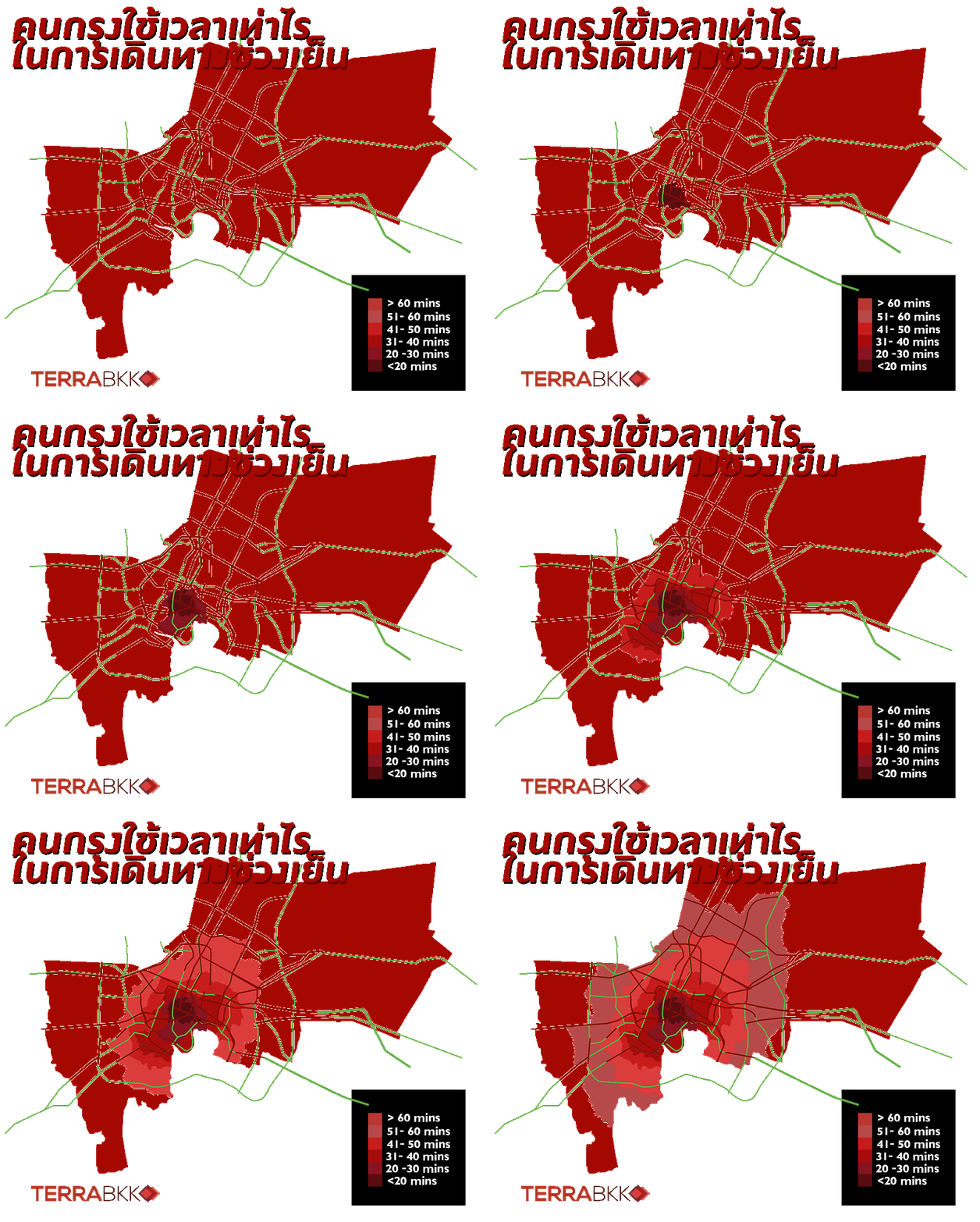
Additionally, there is a significant difference in travel times during rush hours in the morning (7:00-9:00 AM) and evening (5:00-7:00 PM). It has been found that there are more vehicles on the road in the evening than in the morning, resulting in an average increase in travel time of about 10 minutes. This means that even if Mr. K. is willing to pay more—50-187 baht more than public transport—for the convenience and faster travel time, this money could turn into lost opportunity costs due to the traffic volume that delays him more than public transport would.
Even though the government has consistently emphasized the development of public transport in Bangkok, it cannot guarantee that in the future, even with an extensive rail network covering the suburbs, the population will choose public transport over private cars. In reality, if urban planning is comprehensive, with a balance between job locations and residential areas (Job-Housing Balance), the vision of Bangkok's roads being free of congestion could become a reality. - เทอร์ร่า บีเคเค
Article by: TerraBKK Investment Tips
TerraBKK: Find good, valuable, and affordable homes