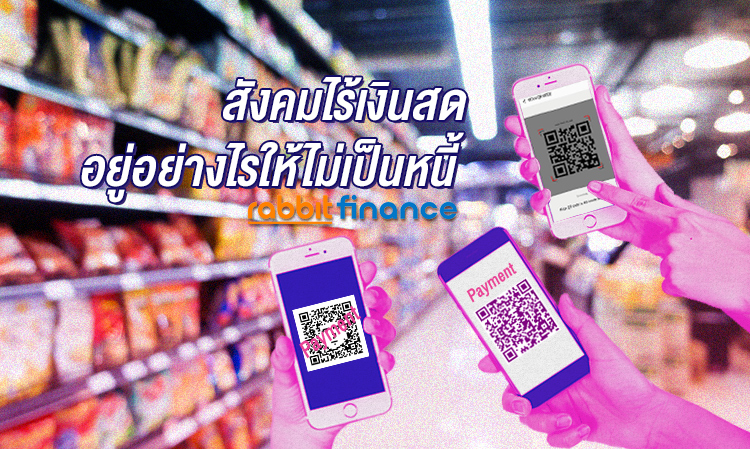
Living in a Cashless Society Without Falling into Debt
In another 10 years, anyone still spending with paper money will likely be looked at strangely by those around them, considered outdated like a dinosaur. Our world is expected to transition into a Cashless Society, or as we stylishly call it in Thai, สังคมไร้เงินสด. Currently, countries like China and Sweden are rapidly moving towards a fully cashless society, and soon other nations will undoubtedly follow suit.
What is a Cashless Society?
The concept of a Cashless Society has been around since the 1950s. It revolves around the social change where cash plays a lesser role and is replaced by computer systems and telecommunications for financial transactions.
In simple terms, the era of carrying cash and pulling out bills and coins to pay will fade away, replaced by payments made via credit cards, debit cards, or smartphones.
What are the Benefits of Not Using Cash?
The main advantage of being in a cashless society is that we can conduct financial transactions anytime and anywhere, making it much more convenient, faster, and easier without the need to carry cash.Just imagine, in the future, we can leave the house with just our phone. We can take the train, ride the bus, call a motorcycle taxi, enter convenience stores, shop for groceries, buy meals, or even donate money using just a QR Code or Mobile Banking. No more wasting time withdrawing cash from ATMs or going to banks to deposit or withdraw money.
Another significant benefit is that it can save banks a tremendous amount of money. Consider how much banks spend each year on managing and storing customer transaction documents, not to mention the maintenance of ATMs. The budget for printing banknotes each year is also quite substantial.
A cashless society will help banks reduce costs and also stimulate the economy.

Cashless Society Makes It Easier to Go into Debt
Everything usually has two sides. While a cashless society has its advantages, it also has significant drawbacks. The first concern is data security. Whenever you conduct any transaction online, your personal and transaction data is recorded. If this information leaks or is stolen, it can lead to serious consequences.
Another major issue with a Cashless Society is that it can make it easier for us to go into debt.
The Less We Use Cash, the Easier It Is to Go into Debt!
For example, using a credit card is incredibly convenient. Anyone who regularly uses credit cards knows how easy it is to swipe and get what you want. At the moment of swiping, you don’t feel the pinch, but the reality hits when the bill arrives in your mailbox.
Consider that credit cards are just one tool in a cashless society. There are many other e-payment methods available, such as QR Codes, Mobile Banking, e-wallets, Membership Cards, or Promtpay.
These methods differ from credit cards in that they are directly linked to our bank accounts, meaning we are using our actual savings.
Research from The American Psychological Association shows that our brains remember cash payments better than other forms of payment, like credit cards.
When we are unaware of how much we are spending, it increases the risk of falling into debt. Other e-payment methods are not like credit cards, where you spend first and pay later; they involve using real money from our accounts, just without physically handing over cash.
Additionally, various e-payment methods often come with increasing fees. While we may find spending easier, we might end up paying more.
How to Navigate a Cashless Society Without Going into Debt
Currently, Bangkok has transitioned to a cashless society by 41%. Although Thailand is still in the early stages of becoming a Cashless Society, new e-payment methods are continually emerging, with Promtpay and QR Codes being the most popular right now.
So how can we protect ourselves from falling into debt in this new era? The answer is to always remember that just because we don’t see cash disappearing from our wallets doesn’t mean our bank account isn’t decreasing.
The solution to the debt problem in a cashless society isn’t much different from the current society: you need to know how much you can afford and control your spending behavior. Don’t overspend.
Ultimately, whether using cash, credit cards, or e-payment, no one can stop you from going into debt except yourself.
Thanks for the information from finance.rabbit.co.th