Symptoms of Skin Allergies: Rashes and Hives
If you ask what an allergy is, why it occurs, and how it works, it can be said that there are many types of allergies. However, skin allergies are often seen as itchy rashes, blisters, and small red spots appearing on the body. Sometimes, the skin may appear drier than usual, flaky, scaly, itchy, and show signs of scratching.
If you ask why allergies happen, the simple answer is that it is due to a lack of immunity and resistance. People who do not have allergies have immunity and resistance. Some patients often ask if this condition is related to lymphatic issues, which can be explained in a simplified manner. A doctor once asked a patient what they meant by lymphatic issues, and the patient replied that their child had lymphatic problems because of a minor mosquito bite, resulting in itchy bumps all over the leg, while other children only had small red spots from mosquito bites. The treating doctor said that it could be considered a lymphatic issue, but it would be clearer to say it is an allergy to mosquito saliva.
People with allergies may have a hereditary predisposition, with family members such as grandparents and parents having similar issues. In these individuals, you may find relatives who have had allergies, suffer from year-round colds, frequent nasal inflammation, asthma, hives, or swelling of the lips and eyes. The skin symptoms in these individuals often present as red rashes, dry skin, and a tendency to scratch. If they are children, they may be restless. We refer to these individuals as having “atopic” conditions. The reason for their heightened allergic reactions is due to an excess of a specific type of allergy protein in their body, known as “Immunoglobulin E”, abbreviated as “IgE”.
When they come into contact with allergens such as food, pollen, or dust, there is a reaction between these substances and IgE, leading to allergic skin rashes, year-round colds, hay fever, asthma, or hives. I have a friend named Mr. Wit, whose wife is named Khun Nit. They have a youngest child, a 4-year-old named Khun Nok, who is as mischievous as a human ancestor and also has atopic conditions. When they brought him to see the doctor, the mother described her frustration with her child's persistent itchy rash that had not improved despite seeing many doctors and trying various treatments. The child is very active, and when asked if he is smart, the mother quickly changed the subject to say that he is a good learner and very clever, indicating that she could talk endlessly about this child.
Upon taking the family history, it was found that an older sister also had itchy rashes. During the questioning, the child was allowed to play, and it was evident that he was restless and not afraid of people. These children often experience itching when playing in dust, when the weather is too hot or too cold, when sweating, when eating the wrong foods, when bathing too often with strong soap, or wearing woolen clothing. When Khun Nok itches on his head, he grabs his mother's comb and scratches vigorously, making a loud noise. When he itches on his body, he scratches hard enough to leave marks. Therefore, it is advisable to keep his nails short. When the child was examined, it was found that his skin was drier than normal, with red rashes and spots on his face, arms, legs, and joints. The rash appeared in patches. If a blood test were conducted, it might show an elevated level of a type of white blood cell called eosinophils.
General Treatment Approaches
There are two main approaches: recommendations and medication. It is essential to advise avoiding and observing the triggers of allergic reactions and itching. For example, if itching occurs after bathing, one should not bathe too frequently. Some people are allergic to dust and should avoid it, as well as excessive heat or cold. Woolen clothing should be avoided, and various powders should be temporarily discontinued. If the child has never been vaccinated, it should be postponed until the pediatrician deems it appropriate. It is advisable to use cream soaps or mild soaps specifically designed for “atopic skin”. For oral medication, antihistamines such as chlorpheniramine from the Pharmaceutical Organization (costing 10 satang per tablet) can be given. For topical treatments, steroid creams like prednisolone (costing 5 baht per tube) or betamethasone cream (costing 11 baht per tube) can be used. When purchasing, be cautious as the Pharmaceutical Organization produces two types of these medications, one of which has the word “N” in it, which should not be used as it may cause allergies. Creams containing steroids and antihistamines can be used, such as Urex with hydrocortisone, etc.
After this, parents or mothers may ask why their child has this condition and when it will improve. Generally, it is best to avoid explaining about allergies, immune systems, antigens, antibodies, and genetics, as mothers are already anxious and this may increase their stress. It is better to explain that this child is intelligent, which is why he is mischievous, and because of this intelligence, he expresses it through skin reactions. I once explained genetics, IgE, and allergies to Khun Nok's mother, who did not understand much about it, and that was sufficient. She did not give up, as even Mr. Wit, who was once a champion boxer and is now a successful lawyer, could not convince her. Khun Nit secretly investigated her relatives and was sure that no one had ever had allergies, while the intelligence of their child was attributed to her, which Mr. Wit had to accept.
Hives
Hives are also related to allergies, often associated with inhaling, eating, or injecting allergens. Those who experience hives with swelling around the eyes and mouth should be cautious as the mucous membranes of the airways leading to the lungs may also swell, causing difficulty in breathing.
Characteristics of Hives are red circles of various shapes, resembling lipstick marks on the skin, some round, some oval, and some jagged, similar to a map drawn on the body. The area inside the circle is slightly raised and paler than the edges. The main symptom is intense itching. Patients often report that when they scratch a specific area, a red rash appears there. Hives typically last for 3-4 hours and may resolve on their own or reappear. They can be intermittent for up to 2 months, referred to as “acute hives”. If they persist longer, they are termed “chronic hives”, which can last for years.
Causes of Hives are numerous and complex. The mechanism that leads to the rash occurs when any substance that can cause hives comes into contact with the skin or is introduced into the body, whether through ingestion, inhalation, or injection (not necessarily through medication). For example, a mosquito bite in an allergic person will trigger a reaction in the body, releasing a substance called histamine (an allergen) from cells in the skin's lower layers, causing blood vessel walls to swell, leading to red, raised, itchy areas on the skin. It is said that other chemicals, such as “bradykinin,” “prostaglandin”, and “serotonin” also play a role in this reaction.
Causes of hives can include allergens such as food, medications, serums, animal venoms, cat and dog fur, seafood, eggs, oranges, and rice noodles. Environmental factors can also trigger hives, such as sunlight, heat, cold, water, ice, pressure, and heavy lifting. Certain medical conditions can also lead to hives, such as cancer, tooth decay, ear infections, intestinal parasites, or even stress and anxiety can cause hives.
Initial Treatment for Hives involves two approaches: symptom management and addressing the underlying cause. Symptom management includes taking antihistamines (allergy medications) and using topical treatments as mentioned earlier. Addressing the underlying cause is a complex and time-consuming process that may involve taking a detailed history, observation, and skin testing.
Sometimes, having hives can be beneficial. A 45-year-old woman with three children experienced prolonged recovery after giving birth to her youngest. When her husband started coming home late, she suspected he was out with another woman, which would trigger asthma and hives. No medication would help until her husband returned home, at which point she would take her medication and apply ointment herself, and her symptoms would resolve. Eventually, her husband decided to stop going out, and her hives disappeared, which was beneficial for the family.
Medications Can Also Cause Skin Allergies
Drug Allergies are not a direct effect or property of the medication but rather a complex reaction that the body produces in response, or other mechanisms such as genetics. Commonly allergic medications include penicillin and aspirin. The manifestations of drug allergies can vary, including rashes, spots, hives, and circular itching, among many others. It has been suggested that if someone presents with skin conditions, consider three diseases that can exhibit multiple symptoms: drug allergies, syphilis, and contact dermatitis.
Contact Dermatitis refers to itchy skin rashes that occur after direct contact with external objects that trigger skin reactions. This does not occur in everyone but only in those who lack immunity to that specific substance.
It should be explained that contact dermatitis does not involve hereditary mechanisms and cannot be passed on. The natural mechanism requires that contact must have occurred for some time, meaning that it is not an immediate reaction upon first contact. It may take several days, months, or even years of repeated exposure before symptoms arise. This indicates that there must be at least two instances of contact. The initial contact serves to stimulate the body to produce antibodies. For example, when exposed to silver, the metal can pass through the skin and stimulate the body to create antibodies. This initial phase is called the “latent phase”, which can last for days, months, or years, depending on various factors. After that, if there is another exposure to silver, a reaction will occur, referred to as the manifestation phase. After this, if exposed again, a rash will almost always develop.
Typically, housewives have regular tasks such as washing clothes and cleaning household items, often using detergents. Most people can perform these tasks without issues, but some housewives may develop red rashes and possibly peeling skin on their hands after doing this work for a while. These housewives are allergic to the detergent, which causes skin reactions that do not occur in the general population.
Generally, people wear watches on their wrists using straps made of leather or metal. Most people can wear watches without problems, but some may develop red, itchy rashes on their wrists. These individuals are allergic to the materials in the watch strap. If they use a metal strap, they should switch to a leather strap, and vice versa.
Soaps containing halogen compounds of salicylanilide are commonly available in the market. Many users do not experience any issues, but some may develop itchy rashes on sun-exposed areas after using them, such as on the face, neck, or arms. Those allergic to new soaps without such compounds may react.
Penicillin and pain relievers are widely available and commonly used without issues for most people. However, some may develop hives after taking penicillin, while others may develop circular rashes after taking pain relievers. These individuals are allergic to penicillin and pain relievers.
It is important to note that the antibodies produced are specific to the triggering substance. For example, antibodies to silver will only react to silver and not cause allergic reactions to other substances. Individuals allergic to dyes must have antibodies specific to those dyes, and a person may be allergic to multiple substances, each with its own antibodies. It is rare for one person's antibodies to react to another substance.
Additionally, contact allergy symptoms usually occur only at the site of contact with the triggering substance, such as an allergic reaction to underwear causing itching on the thighs or abdomen, or deodorant allergies causing itching in the armpits. This is different from hives, which can occur all over the body. However, it is possible for allergic reactions to occur away from the contact site, such as having symptoms on both the feet and hands when the contact was only on the feet.
Nonetheless, some individuals may develop rashes after a single exposure to a chemical. This is due to the skin being directly irritated or damaged by that substance, such as being bitten by rubber, stung, or bitten by insects.
Another type of skin allergy is a rash caused by occupational exposure, such as those working in industrial settings. For example, a woman working as an operator may develop rashes on her hands or ears from the telephone. A cement worker may be allergic to cement, with symptoms appearing on the webbing of their hands. A typist may be allergic to the typewriter keys or carbon paper ink, resulting in clear blisters on their fingers and areas exposed outside clothing. Those working in factories may be allergic to components used in manufacturing, such as rubber, metals, gases, and dust in textile factories. Some individuals who do not work directly with products, such as machine operators, may also be allergic to lubricating oil.
By taking a detailed history and examining the characteristics and locations of the rashes, doctors can determine if you have an allergy and may predict the cause. Definitive testing involves injecting suspected allergens under the skin and observing the resulting reactions.
The Best Treatment is to avoid the triggering substances. If avoidance is not possible, treat the symptoms with antihistamines like chlorpheniramine and apply steroid creams like prednisolone or betamethasone as mentioned earlier.
In conclusion, individuals with skin allergies and itchy rashes often have high IQs. Therefore, if your friends say, “You, the one with skin allergies, always have itchy rashes,” you should respond, ‘Even so, I belong to the category of the intelligent people of the world (you know)!’
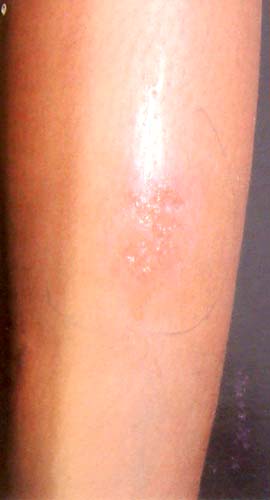
Figure 1: Nummular Eczema
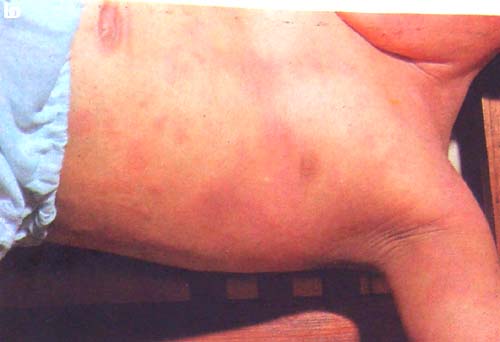
Figure 2: Atopic Dermatitis
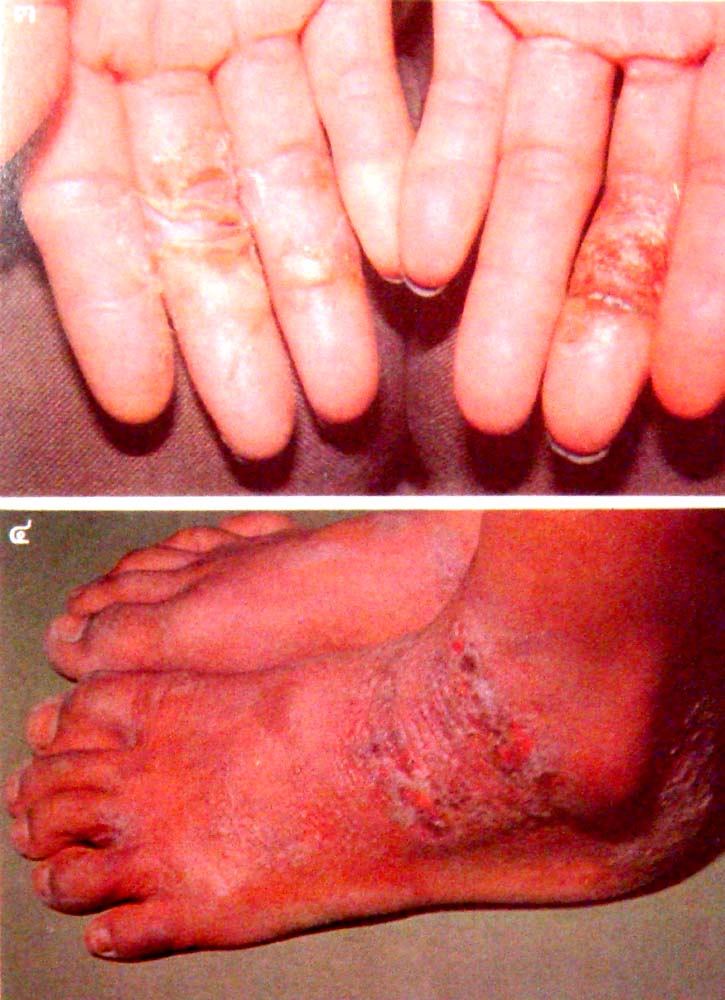
Figure 3: Drug Allergy Rash
Figure 4: Chronic Eczema, Patient with Drug Allergy
Thank you for the information from www.doctor.or.th