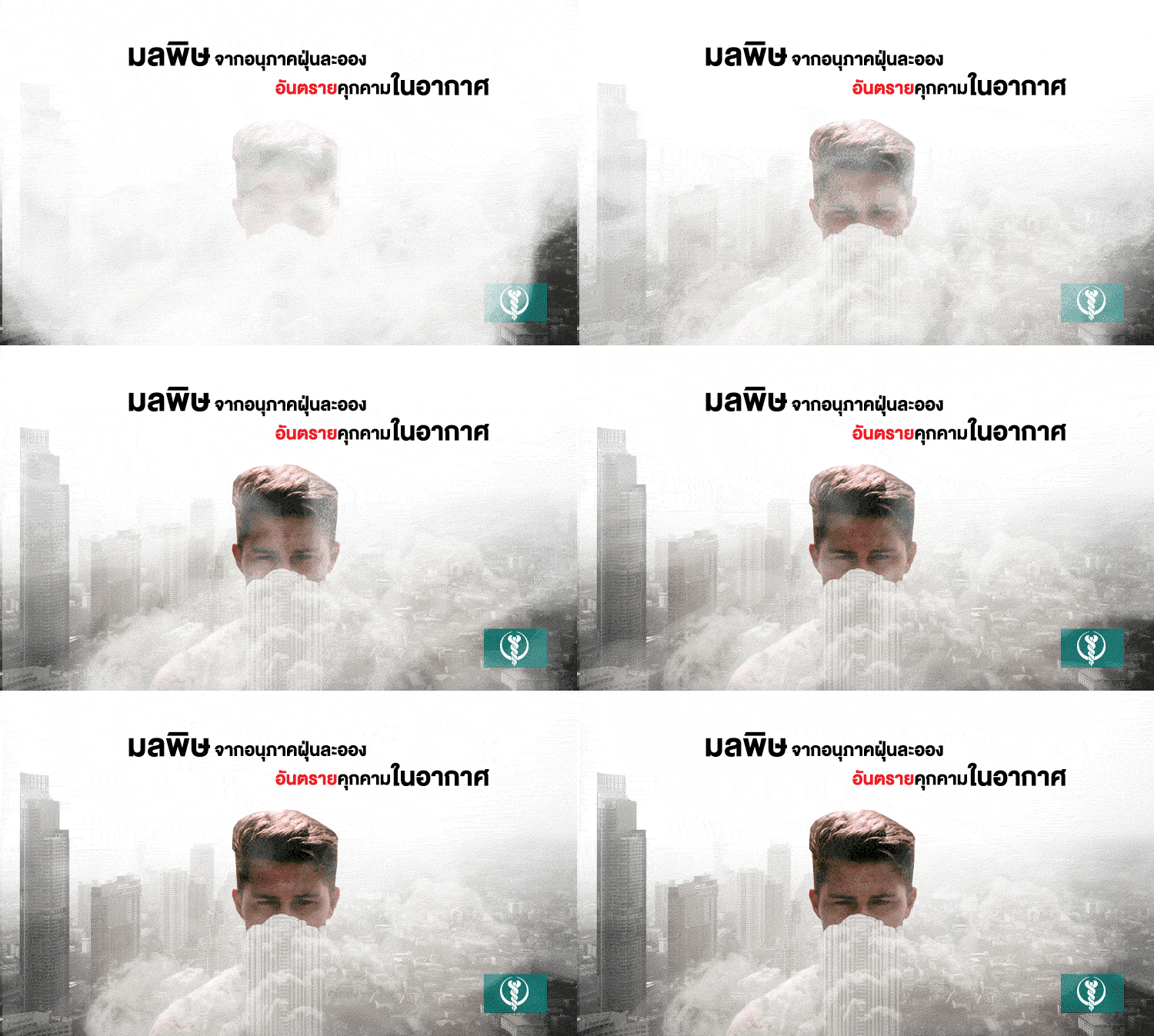
Airborne Dust Particle Pollution: A Dangerous Threat
Recently, the news about rising pollution levels in Bangkok has made unfamiliar terms more recognized and of interest, such as air dust pollution, particulate matter, N95 masks, and the Air Quality Index (AQI). This has heightened public awareness about the dangers of air pollution. It is understandable that people are concerned about the impact of such pollution on their health and that of their children, and they want to know what measures they should take to protect their health.
Information about the dangers of airborne dust pollution and self-protection measures is as follows:
Airborne dust pollution comes from various sources, including dust, particulate matter, ash, and smoke, originating from both natural sources (like sea salt) and human-made sources such as vehicle emissions. Urban areas and industrial zones with heavy traffic, factories, and extensive construction are more likely to face dangers from dust pollution, but rural areas are also at risk from unpaved roads, agricultural ammonia emissions from fertilized fields, and smoke from farmers burning land to prepare for the next planting season.
The smaller the dust particles, the more dangerous they are to health. All pollution is harmful, but airborne dust pollution with smaller particles poses a real health threat as it can be inhaled and is small enough to penetrate deep into the lungs and respiratory system. Some particles may even enter the bloodstream and circulate throughout our bodies.
The health impacts of dust pollution are more severe than previously thought.: From significant research over the past decade, we now understand that air pollution poses a greater health threat than we once realized. The World Health Organization estimates that more than six million people worldwide die "prematurely" due to air pollution each year, with about ten percent of these being children under five years old, approximately 600,000 children. Research also shows that as air quality worsens, emergency room visits and hospital admissions increase, as pollution exacerbates existing health issues, leading to heart attacks, strokes, asthma attacks, and many other problems.- Heart health risks: Studies have shown that exposure to air pollution can cause acute events in heart muscle, including heart attacks, arrhythmias, increased heart rate, reduced heart rate variability, and an increased risk of sudden cardiac death. Additionally, recent evidence suggests a link between arterial stiffness and long-term exposure to fine particulate matter, with plaque accumulation in blood vessels potentially leading to heart attacks and strokes.
- Risks to lungs and respiratory system: Air pollution is both a cause and a factor that exacerbates lung and respiratory diseases, including asthma, chronic obstructive pulmonary disease (COPD), and lung cancer.
- Risks to the brain: Long-term exposure to air pollution is believed to increase the risk of arterial stiffness in the brain, leading to higher blood pressure and increased blood viscosity, all of which are risk factors for stroke.
You may be in a high-risk group.: Exposure to fine dust particles is particularly harmful to children, pregnant women, the elderly, and those with lung or heart diseases.
- Children are at high risk for several reasons. Generally, the younger they are, the greater the risk. Children's lungs and immune systems are still developing. Research shows that exposure to air pollution can hinder lung growth in school-age children. Compared to adults, children spend more time outdoors playing sports and engaging in outdoor activities. Additionally, children are more likely to develop asthma and other severe respiratory diseases, which can easily worsen when pollution levels are high.
- Pregnant women are particularly vulnerable to air pollution. Recent studies have shown that exposure to high levels of airborne dust pollution during pregnancy is linked to preterm births, low birth weight, increased risk of miscarriage, and higher infant mortality rates.
- The elderly face increased risks related to pollution because their immune systems are often weaker, and their bodies are less capable of coping with air pollution. Additionally, older adults are more likely to have undiagnosed heart or respiratory conditions that can be exacerbated by air pollution.
- Individuals with lung or heart diseases, such as coronary artery disease, heart failure, asthma, emphysema, and chronic obstructive pulmonary disease, are at greater risk because dust particles can exacerbate pre-existing conditions.
|
Air Quality Index |
At-risk groups |
Recommendations |
|
Good 0-50 |
Air quality is very good; outdoor activities are encouraged. |
|
|
Moderate 51-100 |
Individuals in sensitive groups who are particularly vulnerable to dust pollution. |
At-risk individuals: Consider reducing strenuous or prolonged activities; monitor for symptoms such as difficulty breathing or wheezing, which indicate a need to reduce physical exertion. Everyone else: Should feel free to engage in outdoor activities. |
|
Unhealthy for sensitive groups 101-150 |
At-risk groups or sensitive individuals include those with lung or heart diseases, the elderly, children, and teenagers. |
At-risk individuals: Reduce strenuous or prolonged activities; outdoor activities are manageable but should include frequent breaks and less intense activities. Monitor for symptoms such as difficulty breathing or wheezing. Individuals with asthma should follow their asthma action plan and carry relief medication. For those with heart conditions: Be aware that symptoms like palpitations, difficulty breathing, or unusual fatigue may indicate serious conditions; consult a healthcare provider. |
|
Unhealthy 151-200 |
Everyone |
At-risk individuals: Avoid strenuous or prolonged activities; move activities indoors or wait for better air quality. Everyone else: Reduce strenuous or prolonged activities; take more frequent breaks during outdoor activities. |
|
Very unhealthy 201-300 |
Everyone |
At-risk individuals: Avoid all outdoor activities; move activities indoors or wait for better air quality. Everyone else: Avoid strenuous or prolonged activities; consider moving activities indoors or waiting for better air quality. |
|
Hazardous 301-500 |
Everyone |
Everyone: Avoid all outdoor activities. At-risk individuals: Stay indoors and limit activities; follow recommendations for reducing indoor dust particles. |
Source [O1] : https://www.epa.gov/pmcourse/patient-exposure-and-air-quality-index
You can reduce potential harm by monitoring real-time pollution levels and air quality index forecasts, which are available online and through smartphone apps such as Asia Air Quality (Android), Global Air Quality (Android), and Air Quality Index (iOS).
During periods of high pollution, consider the following:
- Reduce outdoor activities: The potential harm from air pollution increases with strenuous outdoor activities, time spent outdoors, and pollution levels. Therefore, we can reduce harm by lowering activity levels (for example, walking instead of jogging) and minimizing outdoor time, planning to avoid activities during high pollution times or in polluted areas, such as congested roads and busy highways.
- Stay indoors when pollution levels are high: When pollution levels reach dangerous levels, consider staying indoors and moving activities inside. For instance, instead of exercising outdoors, opt for a gym to benefit from cleaner air conditions.
- Improve indoor air quality: Keep windows closed during high pollution periods, set air conditioning to recirculate indoor air instead of drawing in outside air, and consider using air purifiers with high-efficiency particulate air (HEPA) filters to reduce indoor particle levels. Ensure that the air purifier is appropriately sized for the room, keep the home environment smoke-free, and avoid using combustion sources such as candles, grilling, or any products that produce smoke.
- Wear appropriate respiratory protection: When worn correctly, respiratory masks can filter out up to 99% of airborne dust particles (N95 masks filter at least 95%, while N99 masks filter 99%). However, these masks are effective only when worn properly, so ensure they fit snugly against the face. Note that pollution masks are not the same as surgical masks or cloth/paper masks, which are ineffective against airborne dust pollution. N95 and N99 masks are available at most home improvement and safety product stores.
Monitor symptoms: Consult a doctor if you experience new symptoms indicating heart or respiratory issues or if you notice a decline in your health.
Chronic symptoms such as difficulty breathing, unusual fatigue, or severe coughing may indicate underlying lung issues. The Bumrungrad Lung Center offers diagnostic testing and treatment for lung conditions, including asthma, chronic obstructive pulmonary disease, bronchitis, emphysema, lung infections, and lung cancer.
Thank you for the information from www.bumrungrad.com