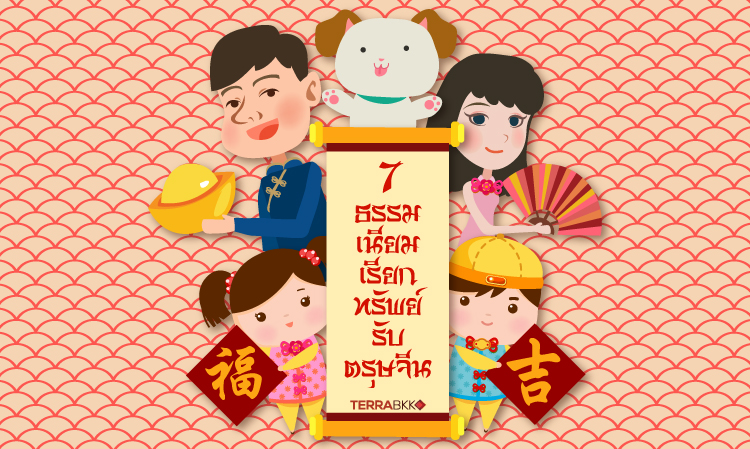
Know and Act Quickly: 7 Wealth-Inviting Traditions for Chinese New Year
The Chinese New Year, or Lunar New Year, is one of the most significant festivals for Chinese descendants. It marks a time for new beginnings and welcoming good fortune into life while leaving behind the bad from the previous year.
This belief has led to many long-held traditions that Chinese descendants adhere to, believing wholeheartedly that these practices will bring them good luck throughout the year. If you’re feeling a bit off after the global New Year and want to reset your life, take this opportunity during the Chinese New Year to start fresh with these 7 wealth-inviting traditions in true Chinese style.
1. Clean the House Most Chinese people believe in luck and good fortune. They think that evil spirits are obstacles that prevent them from encountering good luck. Therefore, one week before the Chinese New Year, the major task for Chinese descendants is to thoroughly clean their homes. This is believed to drive away evil spirits and bad things, as well as prepare the home to welcome deities descending from heaven to inspect the household.
2. Decorate the House with Red While Westerners decorate their homes with rainbow themes in red and green for Christmas and New Year, Chinese people prefer to hang red paper with auspicious characters, poems, and images that convey good meanings, such as peaches symbolizing longevity and pomegranates representing abundance. These decorations create a joyful atmosphere and welcome happiness and fortune.
3. Adorn the Home with Auspicious Items Chinese people believe that flowers symbolize wealth, fame, growth, and progress. For those who cannot plant trees, they can use flowers in vases, such as peonies or plum blossoms, which are considered auspicious symbols of prosperity and good fortune. Some may choose to decorate with kumquat trees, as the Chinese characters for kumquat mean gold and good luck. If planting is not an option, a simpler method is to arrange mandarin oranges in a bamboo basket and place them on the dining table.
4. Choose Lucky Numbers For Chinese people, numbers are not just quantities; they also influence life. Specifically, the numbers 4 and 8 indicate wealth. The number 8 is considered lucky because it sounds like the word for prosperity in Mandarin, while the number 4 sounds similar to the word for "death." Therefore, during auspicious times like the Chinese New Year, the number 4 is to be avoided.
5. Do Not Bathe One of the strange yet true traditions of the Chinese is that on Chinese New Year, they refrain from bathing or washing their hair. Instead, they bathe the night before with tea and pomelo leaves to drive away bad luck and invite good fortune. Additionally, on Chinese New Year, they do not do housework, sweep, or clean, as it is believed that such actions drive away good luck.
6. Exchange Red Envelopes
One of the symbols of Chinese New Year is the giving of red envelopes, known as "angpao," which serve as blessings to one another. This tradition can be practiced throughout the two-week Chinese New Year festival, where it is customary to place new banknotes in the envelopes. The amount of money varies depending on the recipient, but it is important not to include amounts with the number 4.
Another etiquette tip when receiving an angpao is to accept it with both hands and offer good wishes in return. Importantly, once you receive the envelope, it is considered impolite to open it in front of the giver immediately.
7. Prepare Auspicious Meals
The menu for this auspicious festival should consist of dishes that are selected for their auspiciousness, ensuring prosperity and good fortune. Essential dishes that must be on the table include fish, symbolizing abundance; noodles, representing longevity; abalone, indicating surplus; shiitake mushrooms, denoting fame; bamboo shoots, symbolizing happiness; shrimp, representing status; and crab, indicating greatness and progress.
While no one can prove that these practices will guarantee wealth, they are at least a beautiful cultural heritage passed down through generations.
Source: www.businessinsider.in