Public Spaces Transform Cities
Time and again, public spaces in cities have proven to be excellent at healing and adding value to urban areas and their inhabitants. We came across an article on the Facebook page https://www.facebook.com/marketingeverythingbook discussing a TED Talk by Amanda Burden, the City Chief Planner of New York City, who believes that public spaces are key to creating great cities, exemplified by The High Line.

Image source: http://www.bbc.com/news/
The High Line in New York City is considered a model public space that urban designers worldwide have likely seen. It originated from an old railway track established in 1847. Although the structure and rail system were intact and usable, the line fell into disrepair after the train service was discontinued, becoming overgrown with wildflowers and vegetation, leading to its nickname Death Avenue in the 1980s. Consequently, in 2001, then-Mayor of New York Rudy Giuliani signed an order for its demolition.
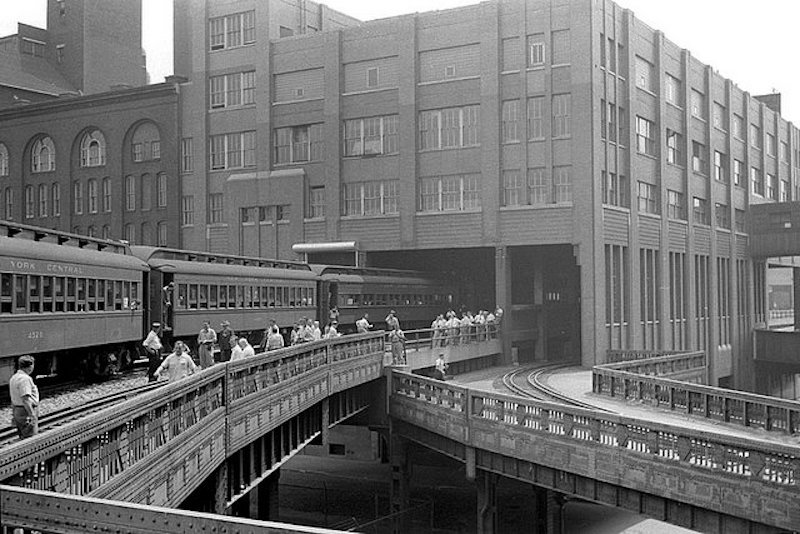
Image source: http://untappedcities.com/
A group of people felt it was a shame to demolish the railway outright, as wildflowers and other plants had flourished along the route. This led to the establishment of the Friends of the High Line, a non-profit organization aimed at transforming the old railway into a public space. Later, during Mayor Michael Bloomberg's administration, a budget of $50 million was approved for the development of this railway line, with Amanda Burden serving as the city planner at that time, tasked with the challenge from the mayor:
“New York will grow from a city of 8 million people to 9 million... where will we put the extra million people?”
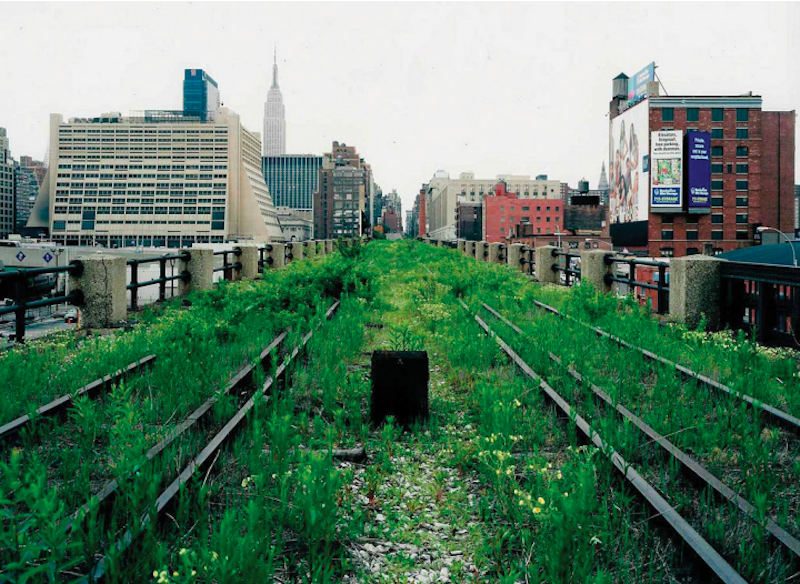
Image source: http://www.thehighline.org/
Zoning, or the categorization of land types, is a fundamental principle that urban planners worldwide use in city development. However, the key lies in the opinions of the city's residents, who must participate and agree with the various zoning arrangements. In our country, we see that whenever urban planning occurs, there are public consultations, typically held at least three times for each planning project. Yet, most people are unaware of this process, or even if there is a final public consultation before the plan is announced, it is often posted at government offices, such as district or municipal offices.
What Amanda did was to strive to understand the communities within the area, accessing the DNA and stories of each block and street in the city. Over 12 years, Amanda and her team changed the zoning of 124 communities, covering 12,500 blocks, which accounts for 40% of New York City. This allowed 90% of all newly constructed buildings in New York (resulting from the implemented zoning) to be within a 10-minute walk to public transportation.
Now, after understanding the principles of urban planning, let's return to the topic of The High Line. At this point, one might wonder how zoning relates to the organization of public spaces in the city.
The High Line is a public space that attracts nearly 6 million visitors annually. With such traffic, many may begin to see signs of some development. Certainly, those six million visitors do not just walk through; they utilize the space as well. The The High Line itself has organized its internal elements as follows:
Activity division in The High Line focuses on accessibility and connectivity with other places in the city. The simple principle is to do whatever it takes, stemming from the idea that public spaces are areas where people feel welcomed, attracted, and not alienated. This makes the activities within The High Line quite open and not overly crowded. The highlight of The High Line is the exhibition of art (since New York is a city filled with artists on every corner) and green spaces throughout, with a schedule for the blooming of various flowers rotating throughout the year. This attracts people from outside the community, not just those within it.
However, The High Line remains a public space, not a commercial one. Why is that?
Certainly, the emergence of commercial spaces in a city filled with shops but lacking public areas is not the best solution. The commercial spaces in The High Line are limited to restaurants and cafes only, because Amanda believes that the roles of “malls” and “public spaces” are vastly different. Public spaces invigorate the city, and the key is to ensure they do not become “dead” spaces. The areas surrounding The High Line are primarily designated for residential use. What benefit is there if access to public spaces must go through “malls” and other places before reaching them?
In 2010, Paul Pariser, Vice President of the commercial real estate company Taconic Investment Partners, predicted that property prices adjacent to The High Line, which at that time were priced at $200 per square foot ($2,200 per square meter or 72,600 THB per square meter), could rise to $400 per square foot ($4,400 per square meter or 145,200 THB per square meter). By 2017, properties adjacent to The High Line were selling for approximately 400,000 - 800,000 THB per square meter, with the total sale price for a one-bedroom, one-bathroom unit ranging from approximately $500,000 to $800,000, or about 16 to 26 million THB. For rental apartments, the average rent was about $3,000 to $4,000 per month (99,000 to 132,000 THB per month).
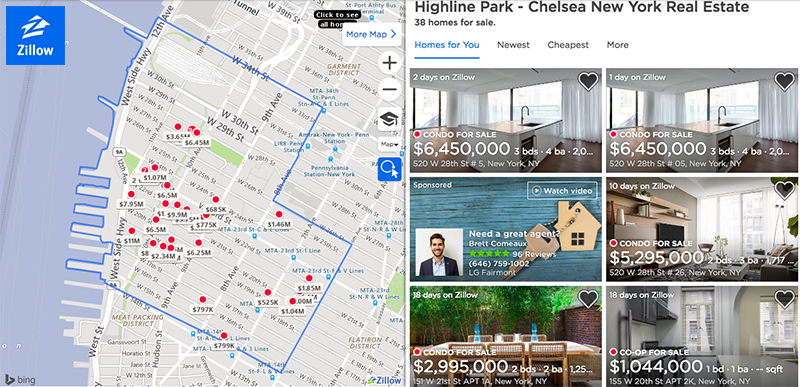
Image source: https://www.zillow.com/
The revitalization and development of The High Line and the new zoning in the area have stimulated high-end real estate around The High Line, as both leading developers and architects such as Rafael Vinoly, Isay Weinfeld, and Zaha Hadid have created immense value for the area. New projects continue to be launched along the line, making New York a blend of public spaces, attractions, green areas, and art exhibition spaces, harmoniously integrated with the growing real estate development since New York's peak years ago. The heart of the matter is to keep public spaces still “alive”, not just symbolic spaces - เทอร์ร่า บีเคเค
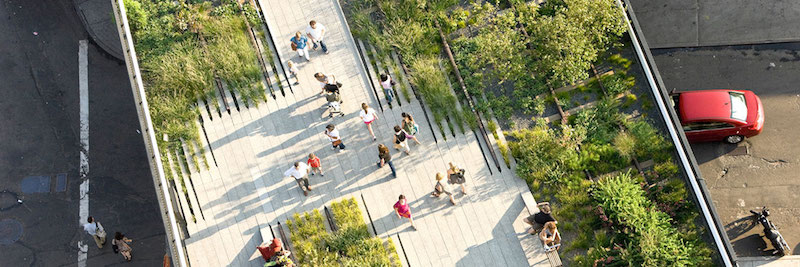
Image source: http://www.kuoni.co.uk/usa/new-york/new-york-high-line
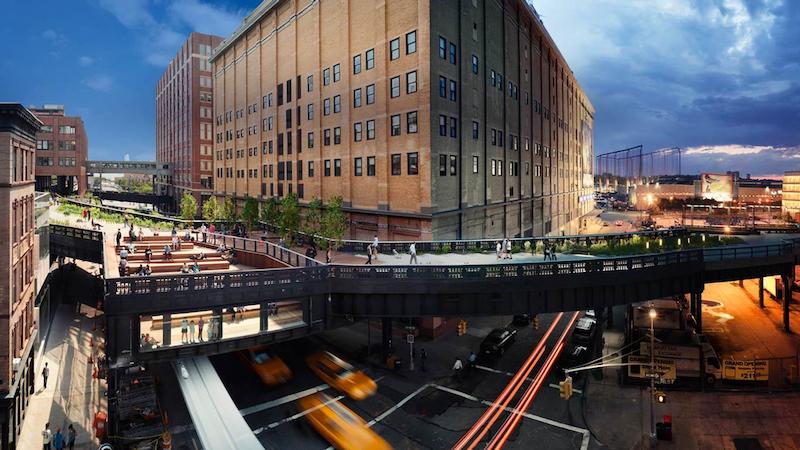
Image source: http://photo.andinadigital.com/
Article by: TerraBKK Investment Tips
TerraBKK: Find good, valuable, affordable homes