17 Trails Following the Footsteps of King Rama IX (Northern Region) (Part 2)
As we transition from the rainy season to winter, this year marks a time of sorrow for the Thai people. Today, TerraBKK presents 17 tourist destinations in the northern region that follow the footsteps of King Rama IX, which all Thais should see, learn about, and experience for themselves.
7. Royal Project Development Center, Huai Luk, Chiang Mai
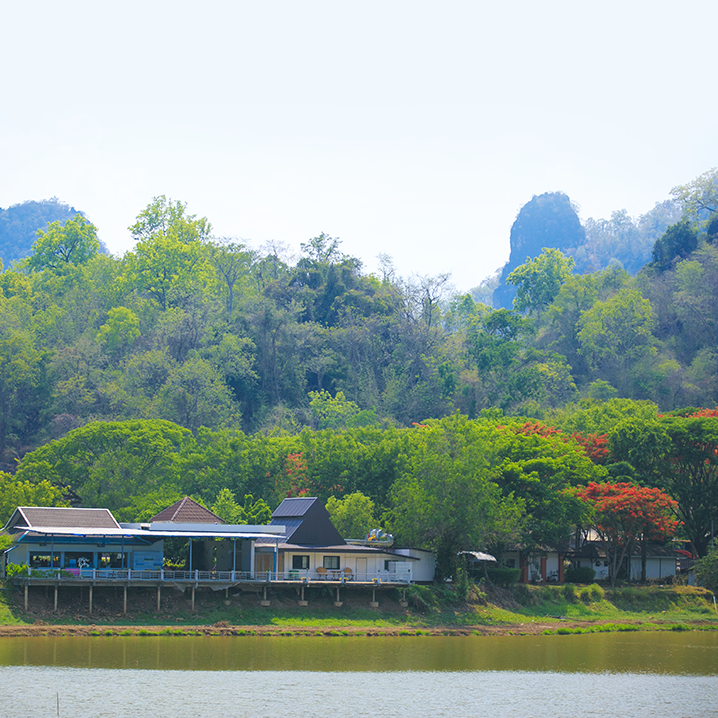
In 1978, the Hmong hill tribe submitted a petition to King Rama IX requesting new farmland to replace their old land, which was unsuitable for cultivation. His Majesty graciously ordered the Royal Project to assist in restoring the agricultural area in Huai Luk. Although it took a long time to replant forests and care for the land, Huai Luk eventually transformed into a fertile area filled with beautiful nature, suitable for agriculture.
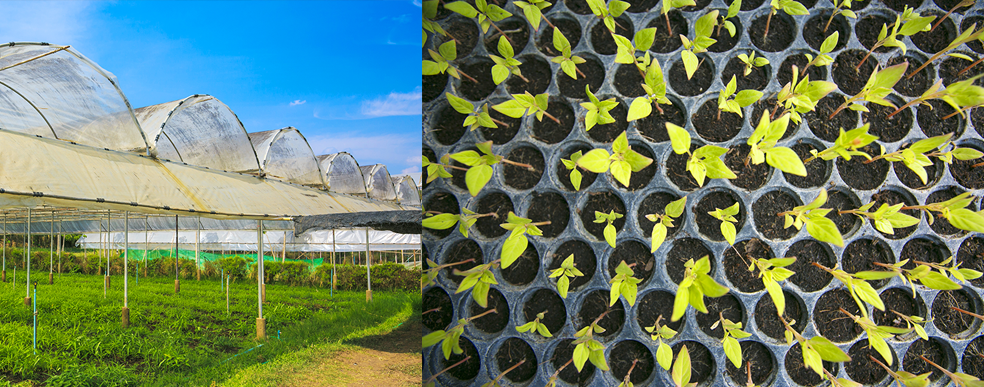
The Huai Luk Royal Project is responsible for two villages, consisting of Hmong, Karen, and local people. The terrain is mostly flat, interspersed with overlapping mountains, and has a cool climate, making it ideal for nature tourism. It has been designated as an area for sustainable agriculture, promoting research and breeding for hill tribe farmers, with plots for cold-weather crops such as cantaloupe, salad greens, lettuce, herbs, and chrysanthemums. These crops are cultivated in rotation throughout the year, making the Huai Luk Royal Project Development Center a must-visit destination.
" Starting from the petition of the hill tribes requesting land for cultivation from the King
It has become a Royal Project that creates sustainable agricultural income and careers for all hill tribe people. "
Must-See Attractions
- The stupa of King Naresuan the Great, an octagonal base with engraved stone plates depicting historical stories.
- Chiang Dao Cave, featuring natural stalactites and stalagmites, with a beautiful stream at the cave's entrance.
- Wat Tham Pa Plong, a peaceful meditation center surrounded by nature.
Must-Do Activities
- Get up close to the flower plots of local farmers.
- Purchase fresh and rare agricultural products at reasonable prices.
Chiang Mai Royal Project Tour Itinerary 4 Days 3 Nights
Day 1 Morning: Visit the Royal Project Development Center at Nong Hoi.
Afternoon: Experience the simple lifestyle of the Pga K'nyau people.
Day 2 Morning: Visit Huai Hom Village to study the nature trail of cold-weather crops while sipping tea from bamboo cups.
Afternoon: Visit Wat Chan to see the headwaters at Na U Ru and admire the Black Glasses Temple in Kalyanivathana District.
Evening: Enjoy the view at Khao Po Lu.
Day 3 Morning: Experience the morning nature at the Huai Luk Royal Project at Huai O Reservoir.
Afternoon: Visit the Royal Factory Museum No. 1, a source of Doi Kham products.
Evening: Visit the Royal Agricultural Station Angkhang.
Day 4 Morning: Observe the lifestyle of the Palong community in Ban No La and the Black Muser community in Ban Khob Dong.
Travel Directions
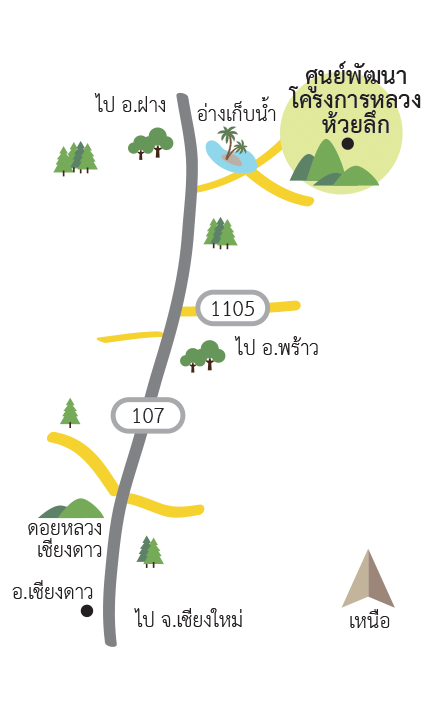
Head towards Highway 107, Chiang Mai-Fang, and continue straight for about 92 km until reaching Wat Huai Luk, then turn right for about 500 meters to enter the project.
Open for Visits: November-March, daily from 09:00 AM to 06:00 PM.
8.Chiang Mai Royal Agricultural Research Center (Khun Wang), Chiang Mai
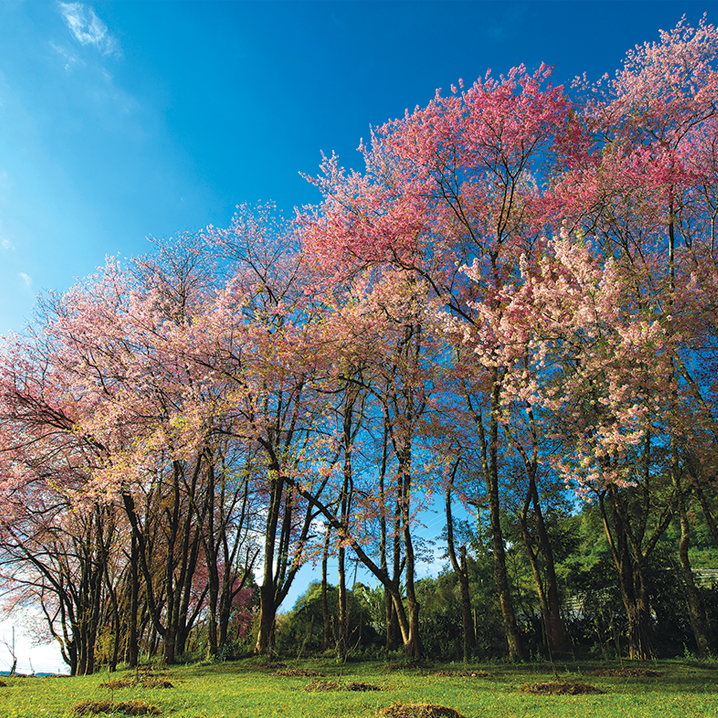
For tourists who want to enjoy the atmosphere of blooming pink flowers amidst the green mountains, the Chiang Mai Royal Agricultural Research Center (Khun Wang) is another important spot to see the Thai sakura or cherry blossoms, which bloom from mid-January to February at an altitude of 1,100 meters above sea level.
The Chiang Mai Royal Agricultural Research Center (Khun Wang) is located within the embrace of the Inthanon mountain range, between the Pga K'nyau and Hmong villages in Mae Win Subdistrict, Mae Wang District. It was established after King Rama IX visited Khun Wang in 1980, where he observed many villagers growing opium. He instructed the Horticulture Division of the Department of Agriculture to improve the area as a trial site for promoting and transferring cold-weather crop cultivation technology to farmers, replacing opium cultivation.

Currently, the project area is a source for cultivating and researching cold-weather fruits such as pears, plums, macadamia nuts, Chinese chestnuts, and strawberries. It has become a popular conservation tourism destination due to its cool climate year-round, with four guesthouses (accommodating 4-8 people) and two camping sites available.
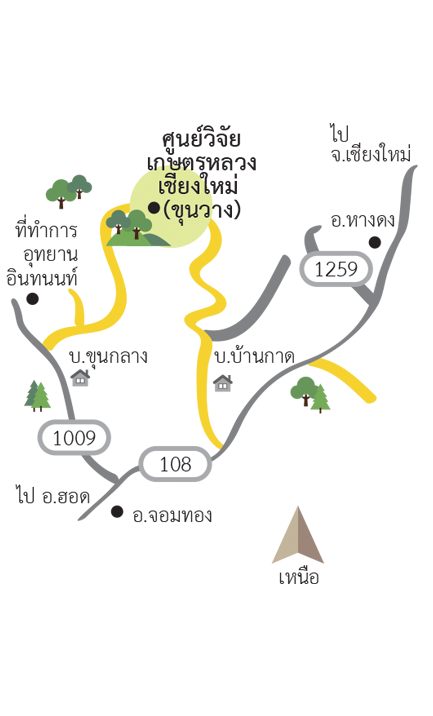
Travel Directions
Use Highway 1009, turn right at the intersection near Khun Klang Village (around kilometer 31), and drive straight for about 18 km until reaching Khun Wang.
Open for Visits: October-February, daily from 08:00 AM to 04:00 PM.
9.Huai Hong Khrai Development Study Center under the Royal Initiative, Chiang Mai
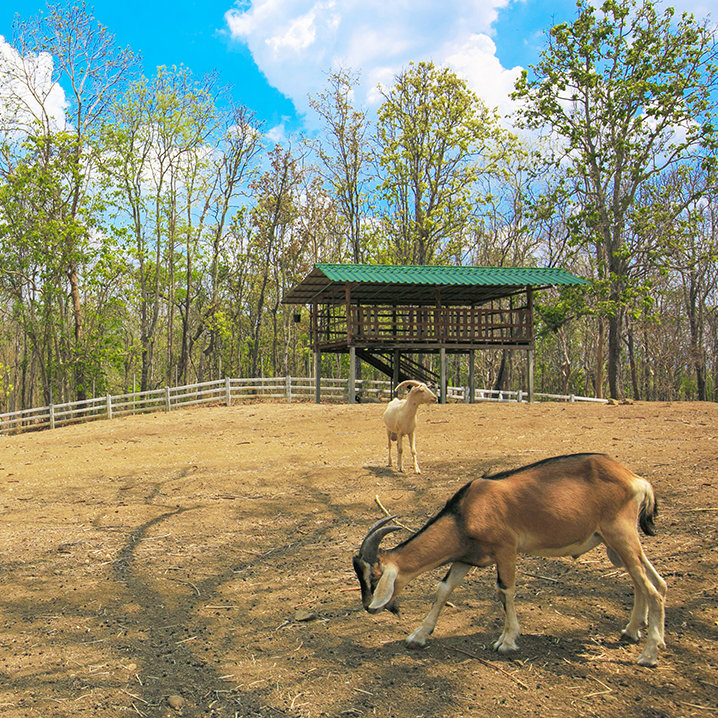
From a degraded forest, over 8,500 rai, it has taken more than 34 years for the Huai Hong Khrai Development Study Center under the Royal Initiative to diligently conduct research and develop irrigation systems, water sources, alongside forest development and land restoration.
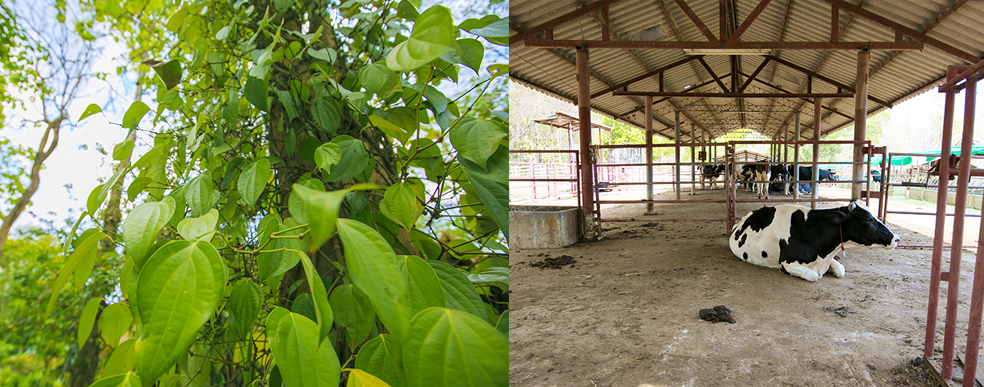
Today, Huai Hong Khrai is known as a living natural museum or an educational garden, where tourists can learn about forest development in an easy-to-understand manner along designated paths, alongside northern-style farms, such as livestock farming, dairy farming, poultry, and various species of frogs.
Must-See Attractions
- The Six Hundred Garden, the center of the living natural museum.
- Wat Pa Sala Pang Sak (Luang Ta Temple), practicing meditation according to the teachings of Luang Pu Man Phurithatto.
- The Royal Initiative Hot Spring Project at San Kamphaeng, a hot spring about 2 meters wide for relaxing foot baths.
Must-Do Activities
- Watch demonstrations of simple bamboo dam construction as knowledge for living in harmony with nature.
- Camping by the reservoir in Mae Ta Khrai National Park.
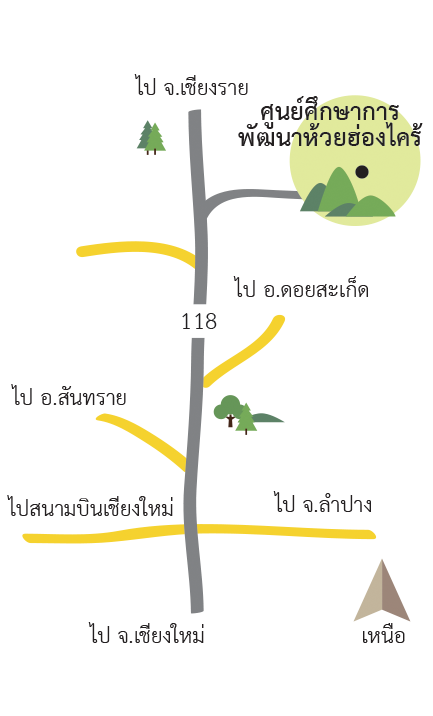
Travel Directions
Drive along Highway 118, Chiang Mai-Chiang Rai, and head northeast for about 24 km. The Huai Hong Khrai Royal Project Development Center will be on your right, about 2 km from the road.
Open for Visits: Daily from 08:30 AM to 04:30 PM
10.Angkhang Royal Agricultural Station, Chiang Mai
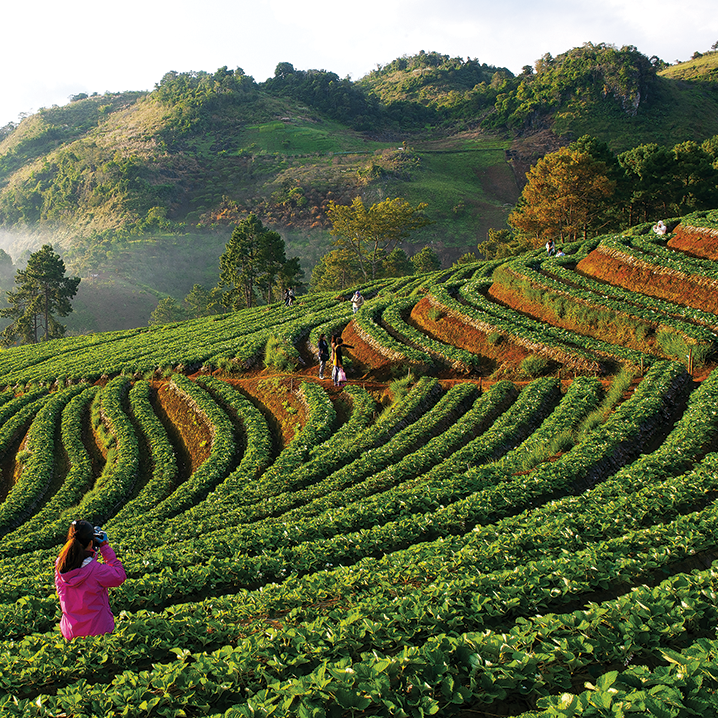
The beautiful cold-weather flowers, various fruits and vegetables, and blooming Thai sakura adorn the green mountains, attracting tourists to visit Doi Angkhang, where many may have forgotten that this was once the largest opium-growing area in Thailand.
The Angkhang Royal Agricultural Station was established in 1970 as a trial plot for cultivating high-quality cold-weather vegetables to replace opium fields. It was the first station of the Royal Project, with strawberries being the first crop tested here, leading to the development of a variety suitable for Thailand, named the 'Royal Variety.'
Today, the Angkhang Royal Agricultural Station has become one of Thailand's most beautiful natural tourist destinations, offering high-quality cold-weather fruits and vegetables for tourists to take home, generating income and strengthening the community for hill tribe people.
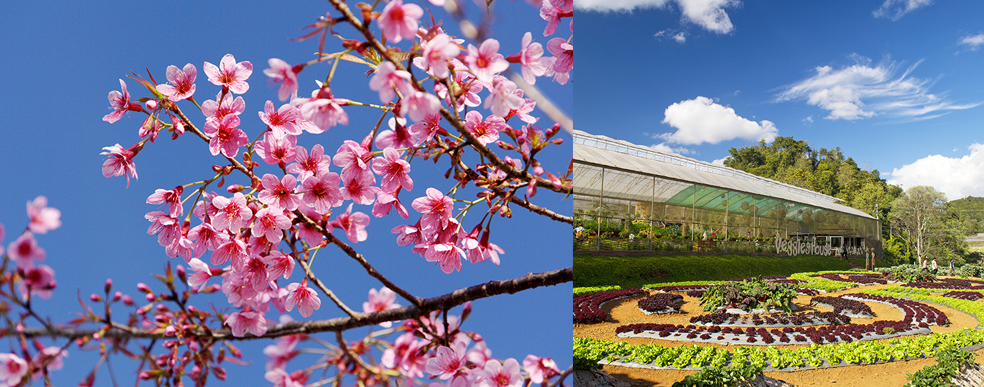
" Transforming from an opium mountain to beautiful cold-weather crops, making it one of the most attractive destinations in Thailand."
Chiang Mai Tour Itinerary 3 Days 2 Nights
Day 1 Morning: Travel to Angkhang and have lunch at the Angkhang Club.
Afternoon: Enjoy snacks under the sakura tree in the 80th Birthday Celebration Garden, viewing bonsai and cold-weather flowers.
Day 2 Morning: Taste fresh strawberries from the field of the Palong people / Purchase community handicrafts in Ban No La.
Afternoon: Visit the English rose garden and sakura along the road.
Evening: Visit Ban Khum Market / Enjoy snacks, sip tea, and observe the tea fields and the lifestyle of the Muser people in Ban Khob Dong.
Day 3 Morning: Learn about the history of the Royal Project at the Royal Factory Museum No. 1 in Ban Yang.
Afternoon: Taste Yunnan-style suki at Ban Din Lao Zhang.
Evening: Shop for souvenirs at Ton Phayom Market.
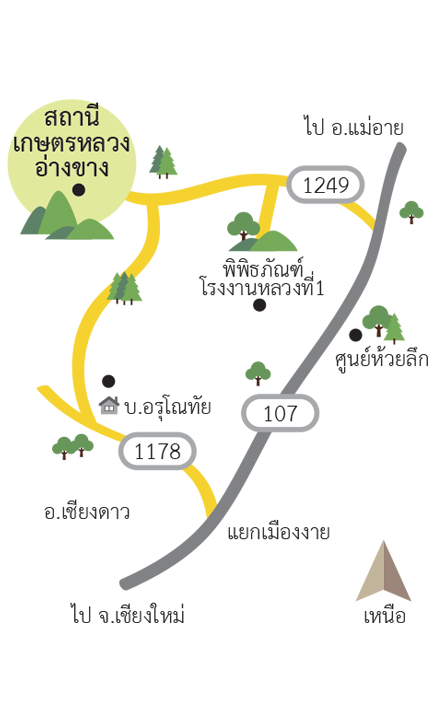
Travel Directions
From Chiang Mai, take Highway 107 (Chiang Mai-Fang) to Muang Ngai Subdistrict, turn onto Highway 1178, passing through Ban Arunothai to Doi Angkhang.
Open for Visits: Daily from 06:00 AM to 06:00 PM.
11.Phu Fa Development Center under the Royal Initiative, Nan
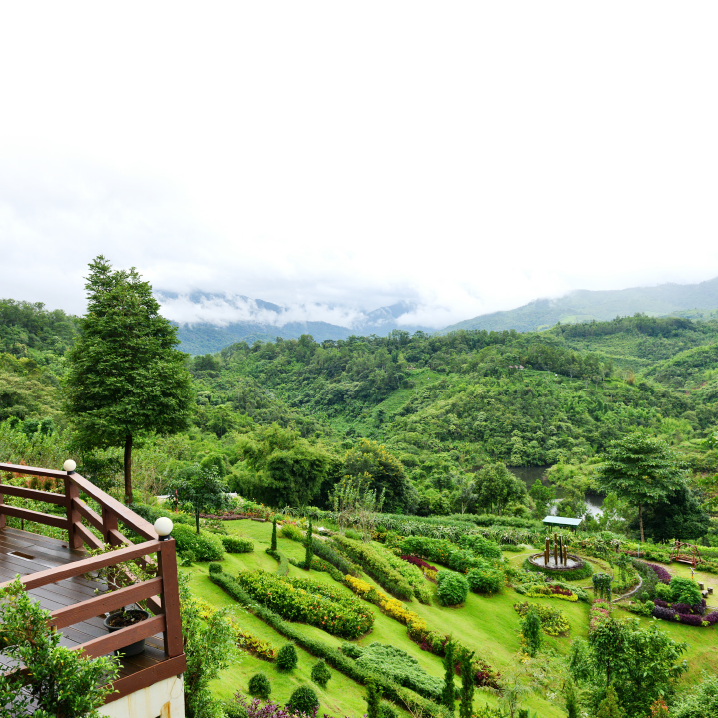
The Phu Fa Center was established through the benevolence of Her Royal Highness Princess Maha Chakri Sirindhorn after visiting the people and observing the salt wells in Ban Bo Luang. Upon learning of the issues, she initiated assistance for development, leading to the establishment of the Phu Fa Development Center under the Royal Initiative in 1999.
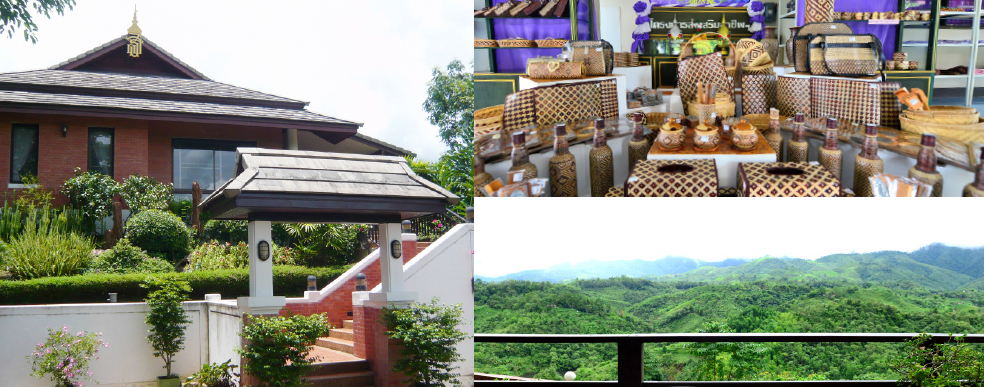
It serves as a model for development and knowledge transfer to the people in Bo Kluea District and Chalerm Phra Kiat District, improving their quality of life while developing the area as a conservation tourism destination to study nature and local culture in Nan Province, helping to reduce agricultural problems.
This makes the Phu Fa Development Center in Nan a worthwhile place to visit and learn about the lifestyle of the local people.
Nan Tour Itinerary 3 Days 2 Nights
Day 1 Morning: Observe the ancient tea harvesting process (400 years) and processing at Ban Sri Na Pan.
Afternoon: Take a tram ride around the city, experiencing the lifestyle of the Nan people and visiting temples.
Day 2 Morning: Travel to Bo Kluea to see the salt production on the mountain.
Afternoon: Visit the Phu Fa Development Center to learn about the Malabri and Lua tribes.
Day 3 Morning: Cycle to observe the lifestyle of the Bo Kluea people.
Travel Directions
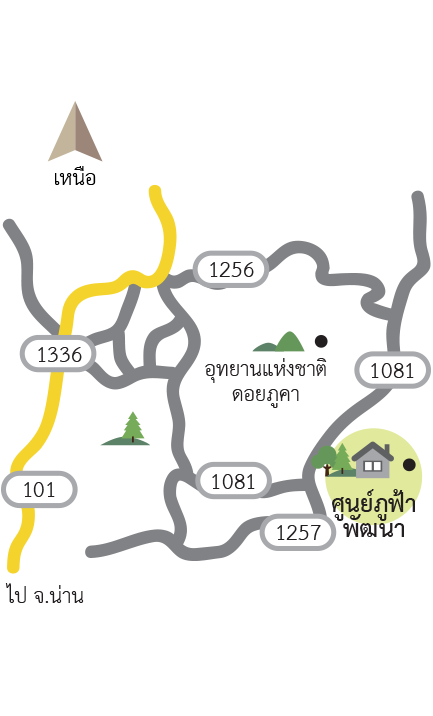
From Nan city, drive about 100 km to Bo Kluea, cross the bridge over the canal, turn towards the Phu Fa Center, continue straight for another 8 km from the Bo Kluea intersection, turn left onto Highway 1336, drive another 13 km to reach the entrance of the center, and continue for another 2.5 km to arrive at the center.
Open for Visits: Daily from 08:30 AM to 04:30 PM.
12.Highland Agricultural Development Station, Ban Sajak-Sakieng, Nan
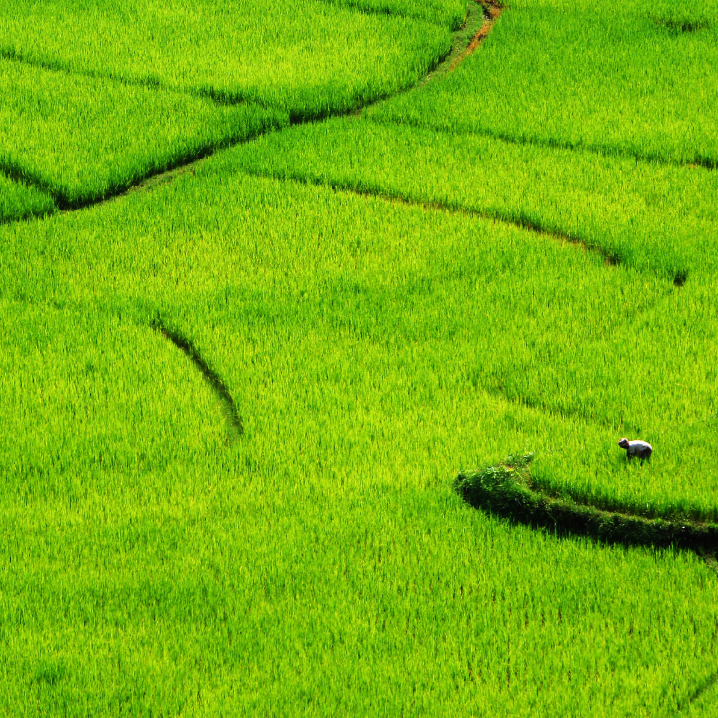
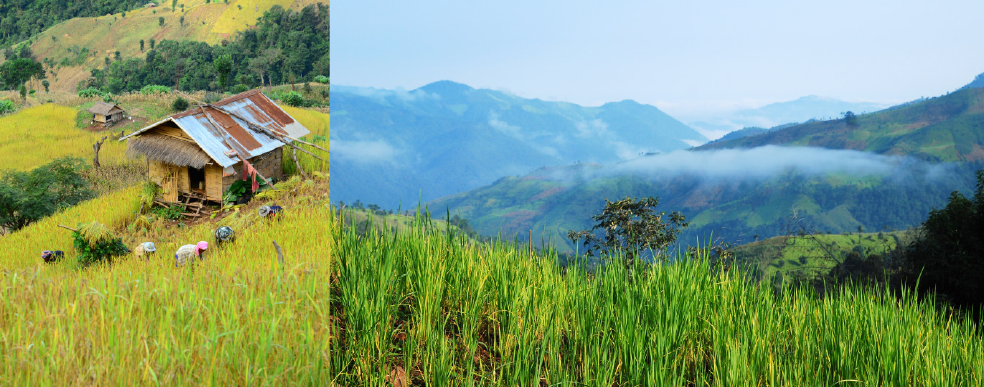
In the past, the Sajak-Sakieng village area, located in the national forest reserve of Doi Phu Ka-Pha Daeng, was an important watershed forest that faced degradation issues. Her Majesty Queen Sirikit initiated the establishment of the Highland Agricultural Development Station in the village to provide knowledge about terraced rice farming and promote the cultivation of cold-weather crops favored by tourists. Today, the villagers live happily as they can increase their yields and income.
The Highland Agricultural Development Station in Ban Sajak-Sakieng is another place that tourists should not miss. Although it may be a bit challenging to reach, if you visit during the planting season, you will find beautifully arranged terraced rice fields in a large valley, along with cool weather almost year-round, allowing you to truly experience the local lifestyle of the northern people.
Travel Directions
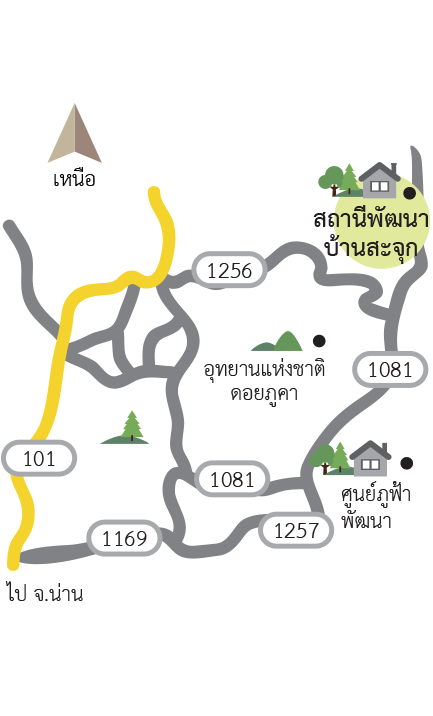
From the city, take Provincial Highway No. 1169 and drive for about 37 km until you reach the end of the road, then turn right onto the elevated road 1081, heading towards Santisuk District-Bo Kluea District. Continue straight past Khun Nan National Park for about 44 km to reach Sajak village.
Open for Visits: Daily from 08:30 AM to 05:00 PM.
Tourist Season: August-September (visit during the rainy season to see rice fields) / November-February (visit during the winter).
Thank you for the information and images from the Tourism Authority of Thailand (TAT).