
How to Take Leave Without Losing Pay
Entering the world of full-time employment means starting a life governed by the rules and regulations of work. Many times, we find ourselves confused when our hard-earned wages are deducted simply because we overlooked the conditions or regulations set by the company.
For most companies, deductions from employee wages for taking leave must adhere to the laws established by the Ministry of Labor. These laws serve as a framework for drafting regulations that employees must follow, aiming to reduce management issues within the company and maintain order. It is common for taking leave or time off to be a reason companies use to justify wage deductions.
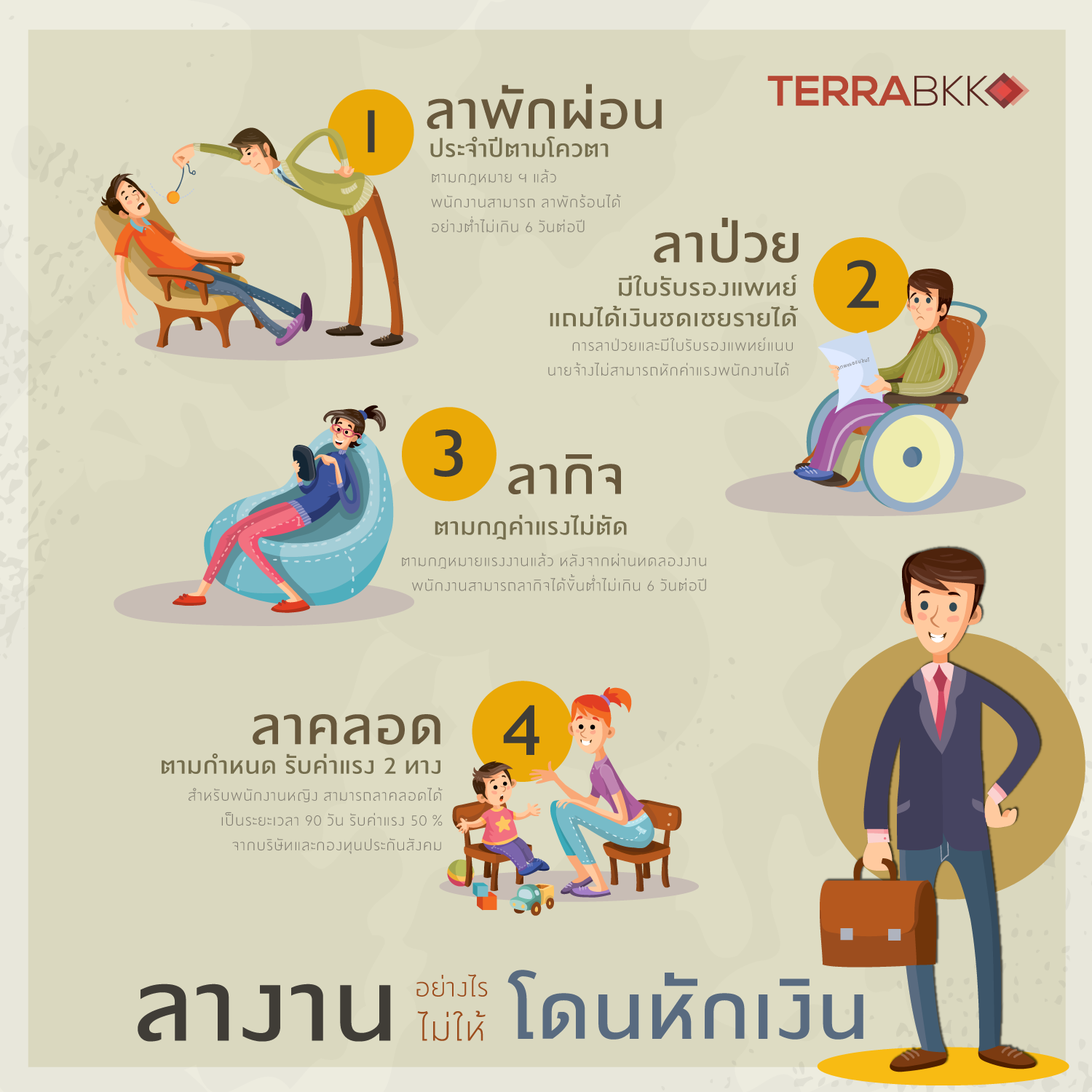
To help you understand how to take leave correctly and know your rights as a worker according to labor laws that most companies implement, today the Terrabkk.com team presents techniques for taking leave without losing pay as follows:
1. Take Annual Leave Within Your Quota
According to the law, employees can take a minimum of 6 days of annual leave per year. Some companies may offer more than the legal minimum, and any unused leave can often be carried over to the following year. If the employer does not allow carryover, they must compensate for any remaining leave days. Additionally, the length of employment may be considered when exercising leave rights, such as having worked for at least one year.
2. Sick Leave with a Medical Certificate Entitles You to Compensation
Regardless of whether you are a full-time employee or on probation, if you take sick leave with a medical certificate, the employer cannot deduct your wages. If an employee needs to take sick leave for 3 days or more, the company must pay regular wages for up to 30 days. If the leave exceeds 30 days, the employer can consider wage deductions or employment continuation.
If an employee takes sick leave due to a work-related accident for 3 days or more, but not exceeding 1 year, and has been employed for at least 3 months, they can claim compensation from the Social Security Office at a rate of 60% of their monthly income. Wow!3. Personal Leave According to Regulations Does Not Affect Pay
Under labor law, employees can take personal leave for a maximum of 6 days per year. However, be sure to check the company’s regulations to confirm if you can exercise this right after starting work. Most companies grant this right after the probation period, based on their work regulations.
4. Maternity Leave with Dual Compensation
For female employees, maternity leave can be taken for 90 days, during which they will receive 50% of their wages from the company and the Social Security Fund. Additionally, they are entitled to monthly child support for 6 years. There are indications that new laws may extend maternity leave from 90 days to 180 days.
It is essential to understand and study the work regulations each time you start a new job. Always remember that the rules set by each company are designed to protect both the company's interests and those of the employees, ensuring that the business can continue to operate while employees receive their fair rights.