OSAKA STATION: A Blueprint for Osaka Station Before Becoming Bang Sue Grand Station
Japan serves as a model for development among Asian countries, showcasing remarkable potential in culture, technology, and economy. This has positioned Japan as a significant global influence, particularly in the realms of electric trains and urban mass transit. With a comprehensive transport system that includes railways, buses, and pedestrian pathways, many cities in Japan have become case studies for urban management for other nations. The team from TerraBKK had the opportunity to visit Osaka Station, the main rail transport hub in Osaka. Observing the efficient management of the surrounding area prompted reflections on similar development plans back home.
The development plan in question is the Bang Sue Grand Station, which will become the largest rail mass transit hub in Bangkok and Thailand. The latest progress is in the stage of preparing to install the station's structure, with plans to commence operations by 2020. This project is quite exciting as it will not only serve as a central hub for both urban and intercity rail systems but will also include a Transit Oriented Development (TOD) plan for the surrounding area. It is expected to transform the Bang Sue-Jatujak area significantly. Many anticipate that this project will create a new hub or CBD for Bangkok. (Read related articles on TOD at TOD Model: Developing Real Estate Alongside Rail Transport)
TerraBKK invites you to explore the development plans for the areas surrounding Osaka Station and Bang Sue Grand Station.
The Evolution of Japanese Mass Transit
Before we delve into Osaka Station, let's take a look back at the evolution of Japan's rail mass transit system. The development of Japan's rail system began around the 1950s, nearly 70 years ago, with trams operating in urban areas. At that time, the total length was 1,478 kilometers, transporting 2.2 million people annually. By the year 2000, the introduction of both underground and above-ground electric trains expanded the service length to 2,229 kilometers, increasing the annual passenger count to 12.5 million.
Today, Osaka boasts a total of 48 lines of electric trains, railways, and subways, providing comprehensive travel across the Kansai region. One of the largest transfer stations is Osaka Station, which sees daily operations of electric trains, subways, monorails, trams, city buses, intercity buses, and taxis, making it a well-rounded transportation hub. Additionally, it connects to Umeda Station, a local train station, allowing for easy pedestrian access and a vibrant array of activities within the station.
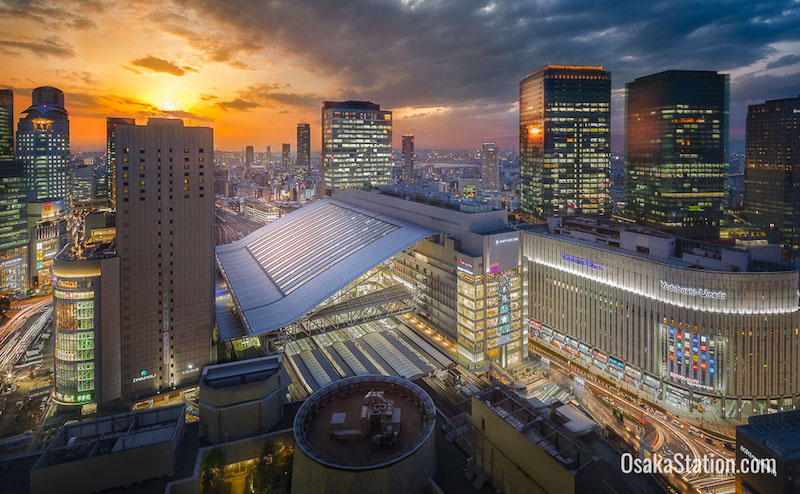
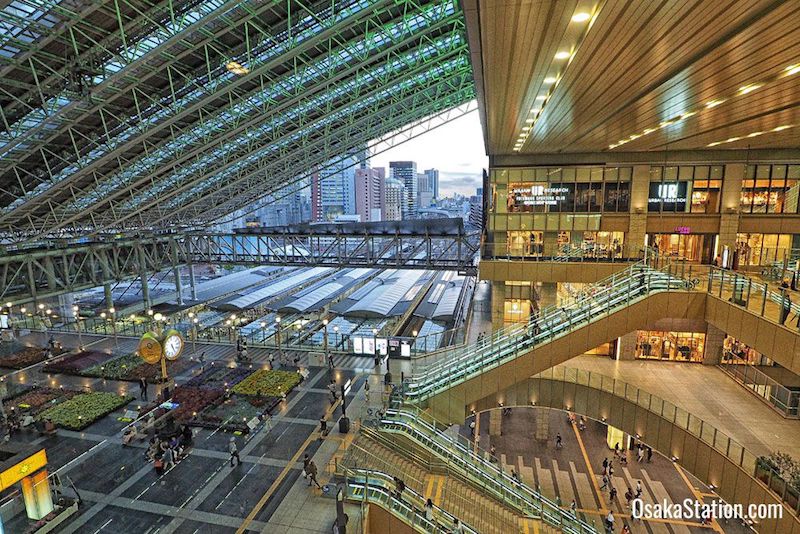
Image source: https://www.osakastation.com/
Development of the Area Surrounding the Station (TOD)
The concept of Transit Oriented Development (TOD) has gained global traction, characterized by mixed-use zoning that includes residential, commercial, employment, and recreational spaces. The focus is on pedestrian mobility within the area to encourage high-density usage, as mass transit stations attract a large number of users. Creating activities in the area stimulates spending, maximizing land use efficiency.
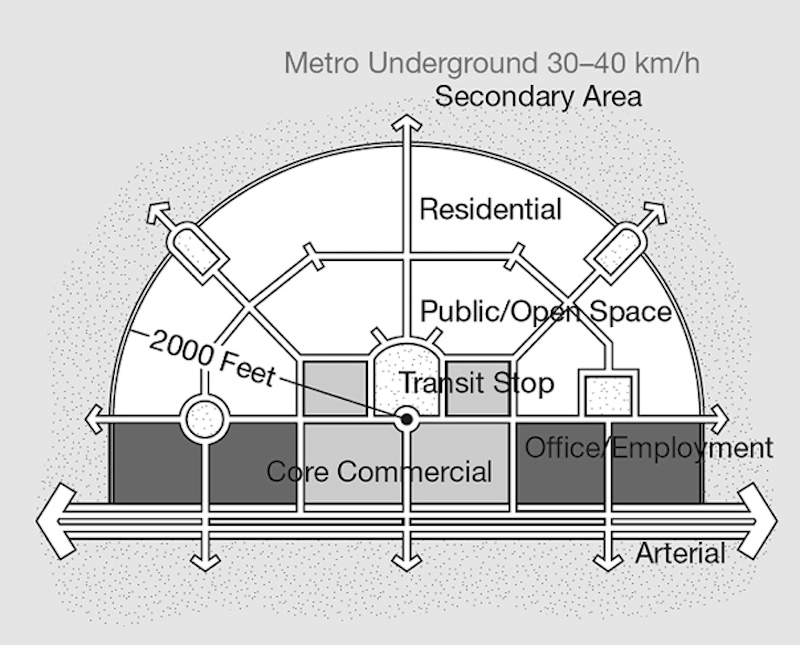
Image source: http://www.its.leeds.ac.uk/
Osaka Station
For Osaka Station, the team analyzed the land use within a 1.5 km radius, a distance reasonable for walking. Comparing the land use around the station with the TOD concept revealed significant similarities, which can be explained as follows:
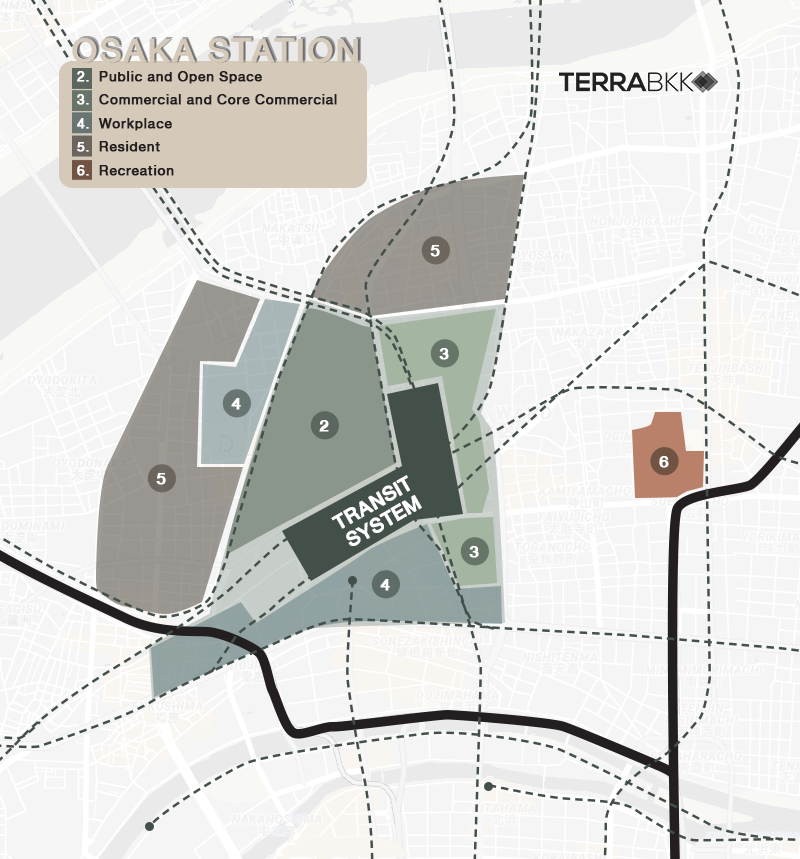
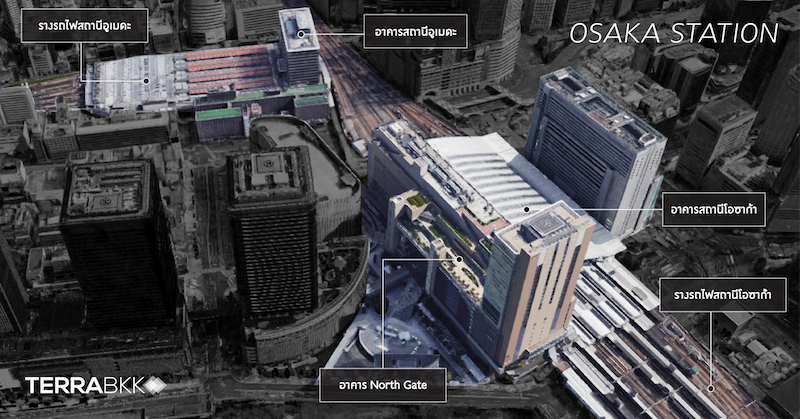
- Transit Stop - The focal point of activity in the area is the station, which includes both Osaka Station and Umeda Station, accessible by walking without leaving the station building. The transport hub spans floors 1-3 and houses a shopping mall, restaurants, entertainment, and other amenities.
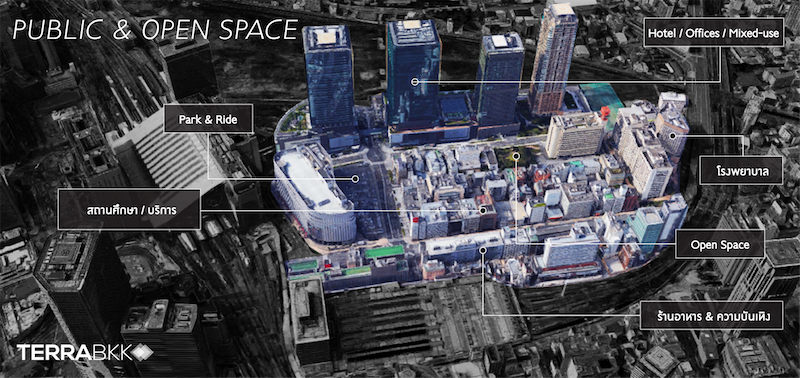
- Public & Open Space - Surrounding the station, there is diverse land use beyond just commercial activities, including small parks, tutoring centers, restaurants, shops, entertainment venues, hospitals, and parking lots. Most high-rise buildings in this area are mixed-use, combining hotels, office buildings, and services.
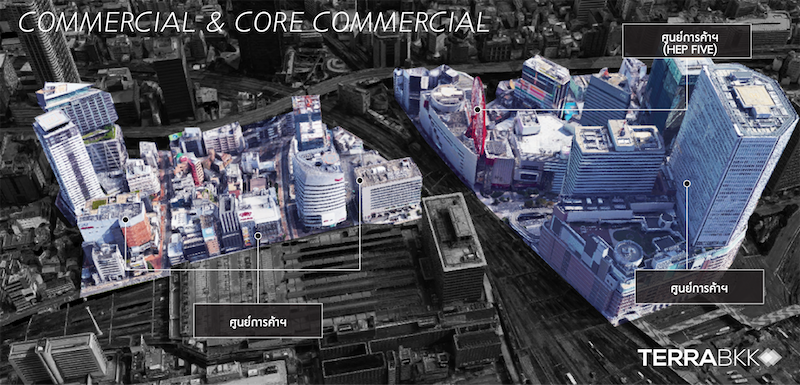
- Core Commercial Area - The outer area surrounding the station is designated for intensive commercial use, housing shopping centers, department stores, brand-name stores, and a Ferris wheel that serves as a landmark in Osaka, HEP FIVE. The pedestrian pathways are wider and more prevalent than the roads, emphasizing walkability in the area.
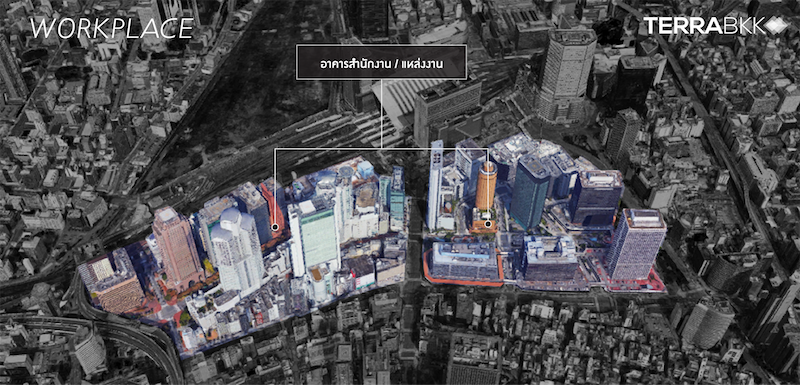
- Workplace - Another aspect of land use is as a workplace, accessible via main roads and public transport. The concentration of office buildings increases foot traffic, enhancing the efficiency of mass transit as it accommodates a diverse volume of people, reducing reliance on private vehicles due to the accessibility of public transport and amenities within a 1.5 km radius.
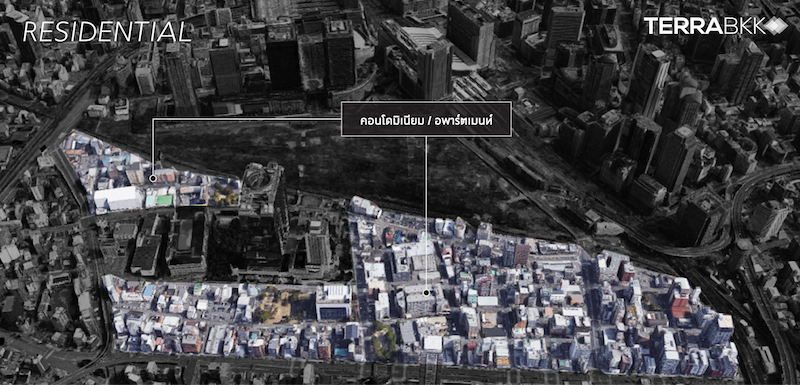
- Residential Area - Due to the high intensity of land use, residential areas surrounding the station are designed as high-rise buildings, optimizing land use and aligning with urban planning, with residential structures ranging from approximately 3 to 15 stories.
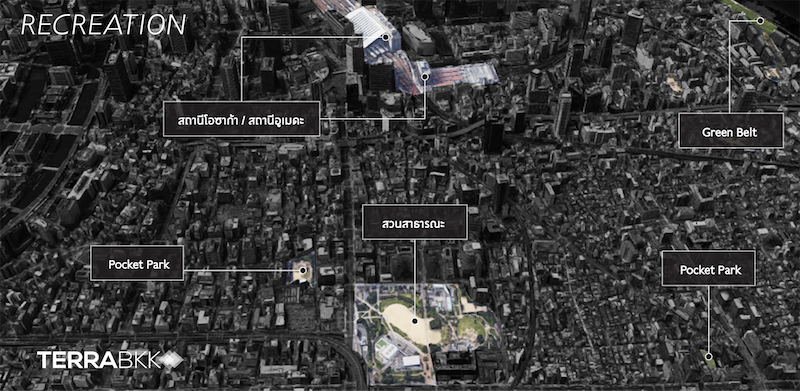
- Green Spaces - In addition to small green areas (Pocket Parks) scattered throughout the district, within a 1.5 km radius from Osaka Station, there is Ogimachi Park, a large park that accommodates activities for the urban population, similar to Lumpini Park in Bangkok.
Development Approaches in Japan
To develop the area surrounding the station into a well-organized and highly functional space, several developmental processes must be undertaken. According to a presentation on Transit Oriented Development and Land Value Capture in Japan by Takeo Murakami from the Japan Ministry of Land, Infrastructure, Transport and Tourism (MLIT) – 2015, the development of mass transit through land management involves the following tools:
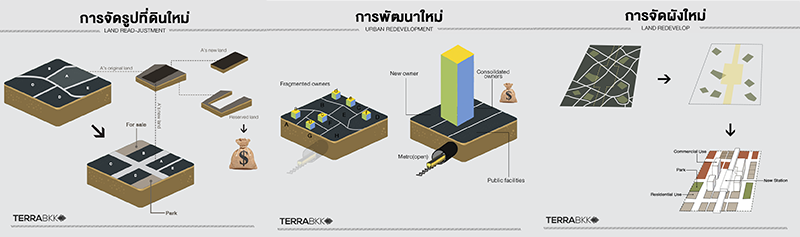
- Land Readjustment - This process is not commonly seen in Thailand as it requires cooperation from multiple stakeholders. The nature of land readjustment involves redesigning land plots while improving or managing infrastructure and equitably distributing burdens and benefits among stakeholders to ensure optimal land use in accordance with urban planning.
- Urban Redevelopment - This process is similar to land readjustment, involving the redesign of multiple land plots along with infrastructure improvements. However, the distribution of benefits and ownership may take the form of ownership over condominium units, possibly increasing FAR or transferring development rights (TDR) to ensure suitability for the area.
Bang Sue Grand Station
This project represents the hope for an efficient rail mass transit system for Bangkok residents. Covering over 2,235 rai, it will serve as the largest and most significant travel hub in the country, including long-distance trains to the north, east, northeast, and south, suburban trains, electric trains, airport rail links, and high-speed trains. Currently, construction of the roof structure is underway. Bang Sue Grand Station or Phahonyothin Transport Center will also adopt the TOD concept for the development of the surrounding area, allocating the space into six major zones:
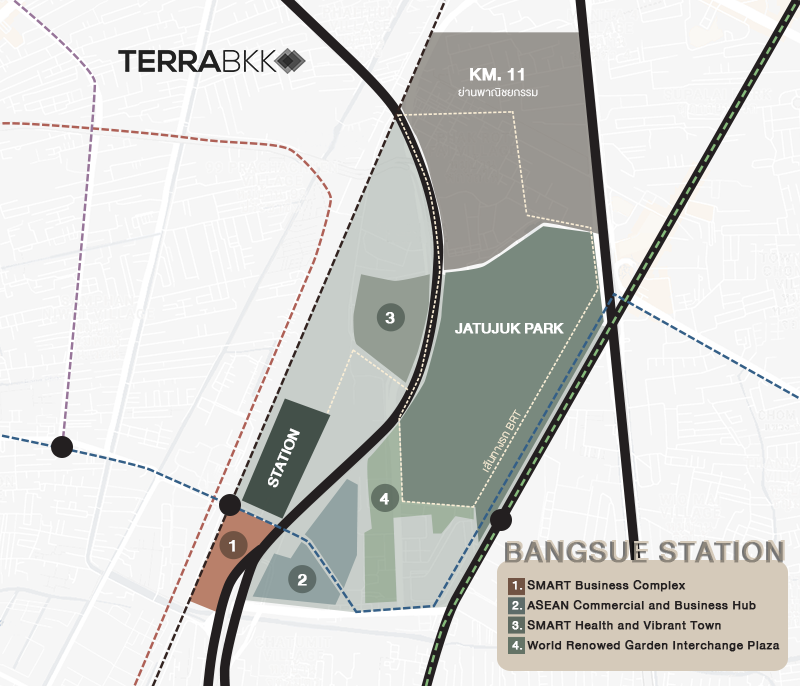
- Zone A: Smart Business Complex - Located adjacent to Bang Sue Grand Station to the south, covering approximately 35 rai, designated for commercial development in the form of retail, including shops, restaurants, beverage outlets, and logistics service businesses, along with hotels supporting travel activities.
- Zone B: ASEAN Commercial and Business Hub - Covering approximately 78 rai, developed as a wholesale and retail commercial area, building upon the Jatujak market, along with modern office buildings, business hotels, exhibition halls, and accommodations.
- Zone C: Smart Healthy and Vibrant - Covering approximately 105 rai, currently home to the Transport Company Limited (Bor.Kor.Sor.), this area will be developed into residential spaces adjacent to recreational areas and workplaces.
- Zone D: World Renowned Garden Interchange Plaza - Covering approximately 80 rai, developed as a transportation hub and connecting walkway for transport systems.
- Railway Industrial Zone Km. 11 - Covering approximately 279 rai, this area will be divided into office buildings, international convention and exhibition centers, international hospitals, residential areas near parks, and accommodations for railway staff.
If the 2,235 rai area is fully developed, it could lead to the emergence of a new town in Bangkok and potentially create another new CBD. The allocation of space for the development of Bang Sue Grand Station is intriguing due to its high land use intensity and activities, aligning with the TOD concept. However, whether sufficient attraction factors will draw people in remains to be seen, depending on which private entities will be involved in the development. Additionally, public spaces and basic services should be appropriately allocated to ensure that users are not limited to just station users but can also attract people from nearby areas. Furthermore, access to both mass transit, feeder systems, and private vehicles should be zoned and sequenced appropriately to promote pedestrian connectivity, ultimately fostering genuine activity circulation in the area. - เทอร์ร่า บีเคเค
Article by: TerraBKK Investment Tips
TerraBKK: Find Good, Value-for-Money, Affordable Homes