
14 Indicators of Real Estate Trends
In the past few years, the real estate business has begun to enter a slowdown phase. However, in the second half of 2017, we can see a fairly good recovery, as evidenced by the housing market becoming more active with a significant number of residential project launches, especially condominiums. TerraBKK has provided economic variable data that can reflect the trends in the real estate market, divided into two groups: economic indicators and real estate business indicators. These indicators will help indicate the direction of the real estate market.
Economic Indicators
Indicator 1 “GDP”
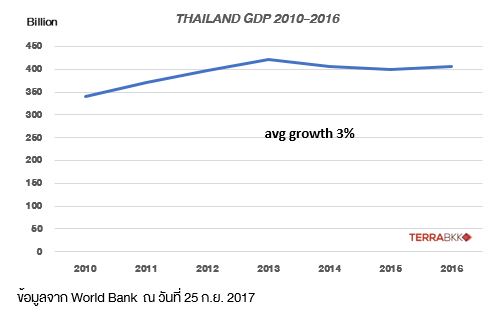
GDP, or Gross Domestic Product, is the market value of all final goods and services produced within a country during a specific period, regardless of whether the output comes from domestic or foreign resources. GDP is an indicator of the standard of living of the population in the country. When GDP is positive, it means that the overall economy is growing, and people in the country are spending more.
GDP = C + I + G + (X - M)
C = Consumption, which is the value of private sector consumption.
I = Investment, which is the value of investments from various private sectors.
G = Government Spending, which is the value of government expenditures or investments from the public sector.
X = Export, which is the value of exports.
M = Import, which is the value of imports.
Indicator 2 “Unemployment Rate”
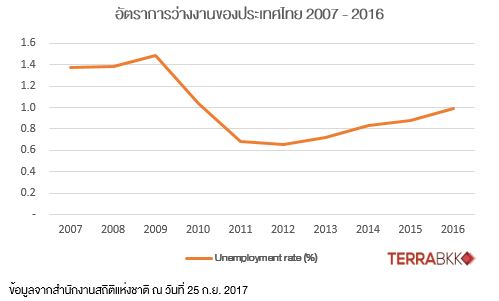
The Unemployment Rate is the proportion of the labor force that is unemployed, where the labor force refers to individuals aged 16 and older. A high unemployment rate indicates a relatively stagnant economy currently or in the past, leading to layoffs and resulting in a loss of income for the population, which decreases spending and negatively impacts the real estate sector.
Indicator 3 “Household Debt”
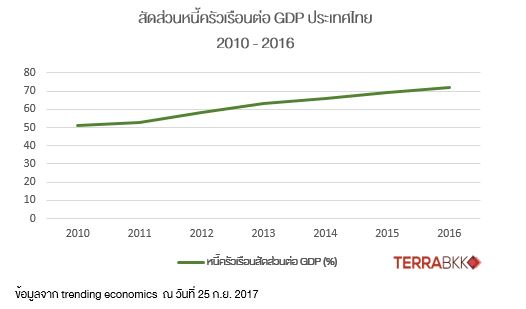
Household Debt refers to the debt incurred by individuals from borrowing money for expenditures such as buying cars, homes, or various consumer goods. This household debt variable is often compared with GDP as it indicates the ratio of debt to income in the country. If the household debt ratio is high, it will lead to stricter lending practices, affecting the investment sector negatively.
Indicator 4 “CPI”
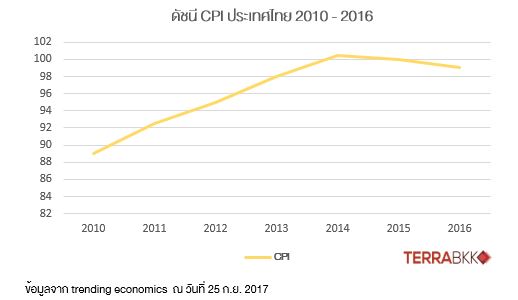
CPI stands for Consumer Price Index, which is an index that averages the changes in prices of over 200 types of consumer goods, with the most important groups being food and beverages, housing, clothing, transportation, health, recreation, education, and communication. This index reflects the inflation rate for consumers within the country.
Indicator 5 “Private Sector Investment Index”
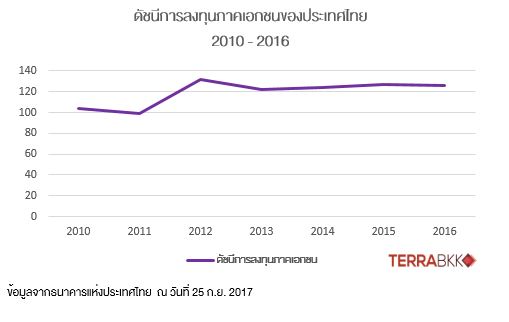
The Private Sector Investment Index indicates the direction of private sector investment. This index consists of five components: the area permitted for construction nationwide, the index of domestic construction material sales, the import of capital goods, the volume of machinery and equipment sales domestically, and the index of domestic vehicle sales for investment.
Real Estate Business Indicators
Indicator 1 “Housing and Land Price Index”
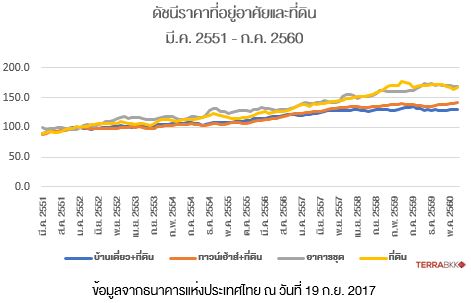
The Housing and Land Price Index consists of four types of housing price indices: single-detached houses with land, townhouses with land, condominiums, and land, calculated from mortgage data secured by commercial banks registered in the country. The value of the index over time can indicate the trends in land and real estate prices in the country.
Indicator 2 “Commercial Bank Real Estate Loans”
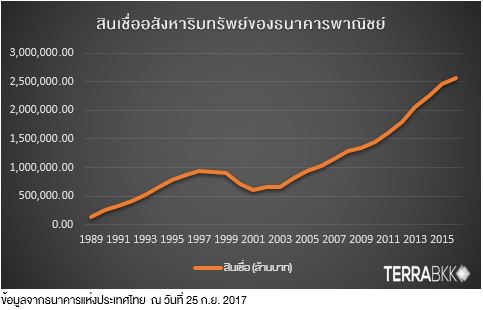
Commercial bank real estate loans refer to the outstanding loans from commercial banks to real estate developers and property buyers. A higher outstanding amount indicates greater investment in real estate by the population.
Indicator 3 “New Residential Registrations in Bangkok and Surrounding Areas”
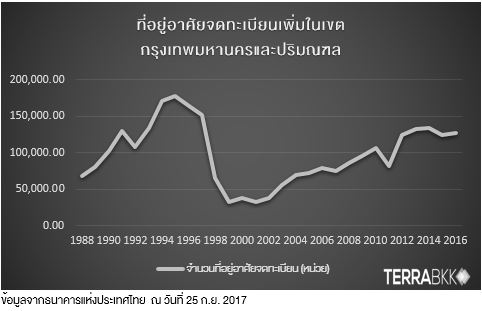
New residential registrations (in Bangkok and surrounding areas) are data obtained from the Government Housing Bank, compiled from house number requests through various district offices in Bangkok. This variable provides information on how many people purchase real estate each year.
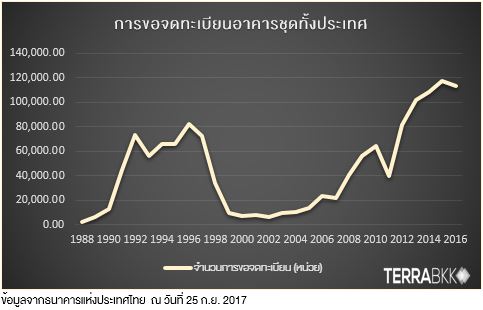
Indicator 4 “Condominium Registration Requests Nationwide”
Condominium registration requests nationwide refer to the registration requests for new condominiums by developers after the construction of the building and public utilities is completed. This variable provides information on the number of new real estate projects launched by developers.
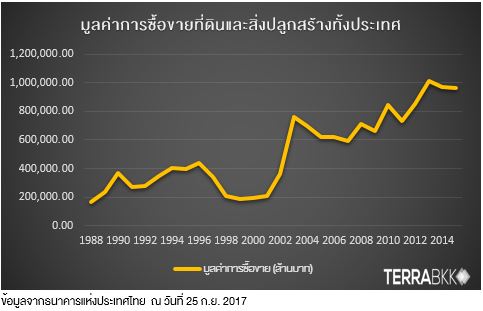
Indicator 5 “Value of Land and Property Transactions Nationwide”
The value of land and property transactions nationwide is estimated by the Bank of Thailand using reverse calculations from the registration fees collected by the Land Department.
Indicator 6 “Housing Sale Price Index”
The Housing Sale Price Index indicates changes in housing prices compared to the previous year and allows for comparisons of housing price indices by location to see which areas are more popular.
Indicator 7 “Housing Sales”
Housing sales indicate the market response to housing sales at that time.
Indicator 8 “Occupancy Rate”
The occupancy rate is calculated by dividing the number of occupied rooms by the total number of rooms. This metric is used for types of real estate such as hotels, office buildings, and rental properties, indicating the market potential at that time and whether it is still worth investing in. It shows which locations have more or fewer tenants. Typically, an occupancy rate of around 75-90% is considered good, but for hotels, seasonal factors may also come into play, which could adjust the rate based on the current economic conditions.
Indicator 9 “Absorption Rate”
The absorption rate applies to projects built for sale, calculated by dividing the number of units sold by the total number of units in the project. A higher value indicates that the project has been well-received and can predict good sales for the entire project, also indicating the “demand” in the real estate market for housing in that area.